PFF data spotlights FCS’s best returning quarterbacks in key passing metrics
Justin Lamson’s title run makes him the most consequential returning QB, but PFF’s passing splits show a crowded field with no safe consensus behind him.
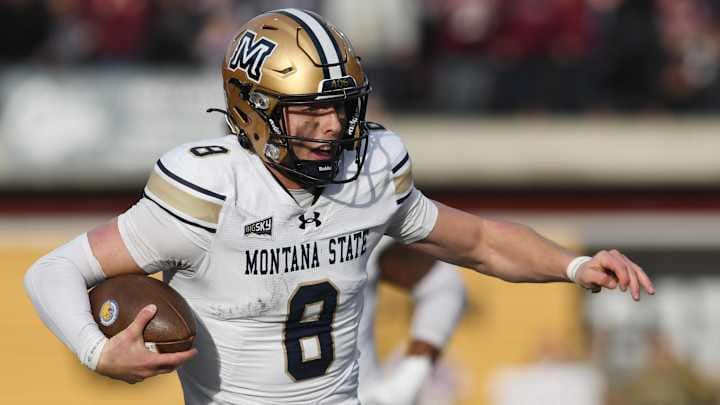
Montana State gave the 2026 quarterback conversation its loudest answer
Justin Lamson is not just another returning name with a good stat line. He quarterbacked Montana State through a 35-34 overtime win over Illinois State on January 5, 2026, a finish that delivered the Bobcats their first FCS national title since 1984. That matters because the best quarterback in this race is not being measured in theory anymore, he is being measured against a championship run that actually ended with a trophy.
Lamson’s numbers explain why his case carries so much weight. One report put him at 3,172 passing yards, 734 rushing yards, 26 passing touchdowns and 16 rushing touchdowns for the 2025 season. A playoff preview had him at 72.3% completions, 2,683 passing yards, 22 touchdowns and just three interceptions entering the semifinal stretch. That is the profile of a quarterback who can tilt a game without needing perfect conditions, and in the FCS, that is usually the dividing line between a good offense and a title threat.
Why the PFF lens matters more than reputation
The point of the PFF-based breakdown is not to crown the most recognizable quarterback and call it done. It uses six passing categories that actually tell you something useful about Saturday outcomes: overall accuracy, big-time throw rate, deep-ball effectiveness, under-pressure performance, ball security and sack avoidance. That setup matters because so many of the best FCS quarterbacks are also dual-threat players, and rushing production can blur the line between quarterback value and pure passing skill.
That is why the evaluation is careful about what it measures now and what it saves for later. Rushing impact will be folded into the formal ranking later in the summer, but this version isolates the passing profile and pocket management traits that tend to travel best against elite playoff defenses. In other words, it asks a sharper question: who is actually moving an offense through the air, and who is benefiting from the chaos that comes with being a running threat?
The accuracy group shows just how deep this field is
The accuracy list alone tells you this is not a one-man race. Justin Lamson of Montana State is there, along with Ty Pennington of Northern Arizona, Keali'i Ah Yat of Montana, Andrew Body of Alabama State, Beau Brungard of Youngstown State, Chris Parson of Austin Peay, Devin Farrell of Rhode Island, Collin Hurst of West Georgia, Hayden Johnson of Lehigh, DJ Williams of Southern Illinois, Chase Mason of South Dakota State, Pat McQuaide of Villanova, Jerry Kaminski of North Dakota, Jordan Cooke of Idaho State and Joshua Wood of Idaho.
That spread is the real story. You have title-caliber production from Lamson, a high-volume arm in Pennington, a rising focal point in Ah Yat, and several passers in systems that ask them to win from the pocket first and create second. If you are trying to figure out who can keep an offense on schedule, avoid the ugly third-and-longs and finish drives, this is the pool that matters.
Big-time throws separate clean production from real ceiling
Accuracy keeps the offense afloat, but big-time throws are where a quarterback starts changing the shape of a defense. The names in that bucket are Chris Parson, Hayden Johnson, Devin Farrell, Ty Pennington, Pat McQuaide, Jordan Cooke, Beau Brungard, DJ Williams, Collin Hurst, Andrew Body, Keali'i Ah Yat and Joshua Wood. That overlap with the accuracy group is the most revealing part of the exercise, because it shows which quarterbacks are doing more than simply taking what the defense gives them.
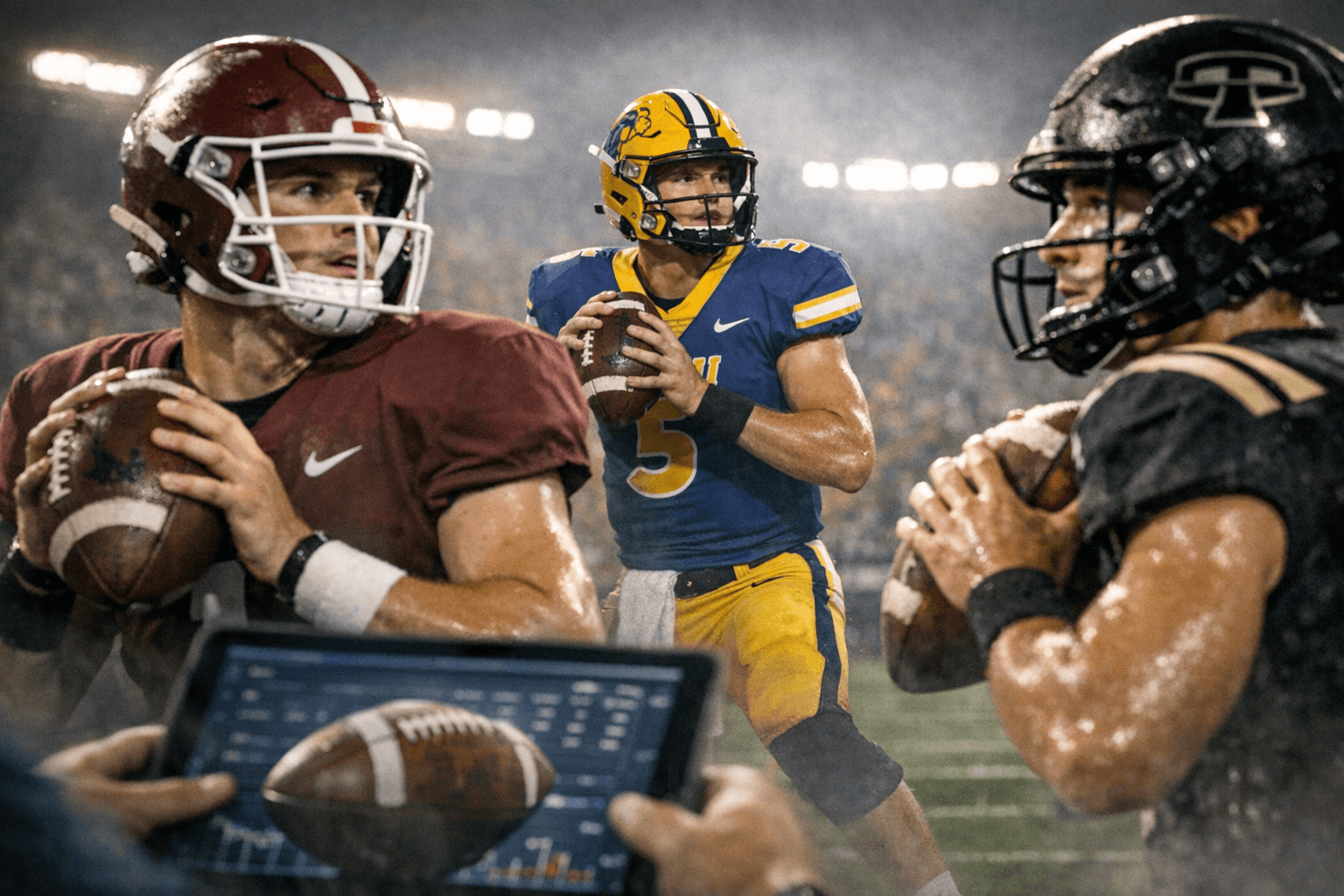
Chris Parson stands out here because HERO Sports reported 3,003 passing yards, 23 passing touchdowns and five interceptions, plus 743 rushing yards and 14 rushing scores. Ty Pennington posted 3,116 passing yards, 19 touchdowns and four interceptions, while Jordan Cooke threw for 3,052 yards with 16 touchdowns and nine interceptions. Those are not empty-calorie totals. They are the numbers of quarterbacks who can stress a defense vertically and still survive the drive-to-drive grind.
Montana’s quarterback battle still feeds the bigger picture
Keali'i Ah Yat’s place on both lists is no accident. Montana opened last season with a quarterback competition that also included USC transfer Jake Jensen before Ah Yat emerged as the focal point of the offense. That kind of rise is exactly why his profile deserves attention now: he is not just a developmental name, he is a quarterback whose role expanded fast enough to land him in both the accuracy and big-time throw conversations.
That matters beyond Missoula. When a quarterback wins a job in a crowded room and then shows up in both of the most telling passing categories, it usually means the production is not a fluke. It means the offense has found a player who can survive the structure of a game plan and still create something when the play breaks down.
McQuaide is the wild card, and the waiver issue changes the math
Pat McQuaide gives the field one more wrinkle. Villanova’s official roster lists him as a graduate transfer from Nicholls State and says he will battle for the starting quarterback job, but a report dated April 10, 2026 said the Wildcats were petitioning the NCAA for an eligibility waiver for one final season. That uncertainty is enough to keep Villanova’s quarterback outlook in flux, even before the ball is snapped.
The on-field sample is worth noting too. In Villanova’s 24-17 win over Colgate, McQuaide threw for 299 yards in his debut, a performance that hinted at what he can do if the waiver goes his way. He also appears in both the accuracy and big-time throw groups, which is a strong signal that the passing ceiling is real if the eligibility question gets settled.
The practical answer for the title race
This is where the numbers and the reputation finally meet. Lamson is the quarterback most directly tied to the 2026 title race because his play already proved it can carry a team all the way to a championship. The rest of the field is crowded with legit passers, and Parson, Pennington and Cooke all bring enough production to keep the gap from being wide.
But if you are asking whose play most directly raises a team’s ceiling on Saturdays, Lamson is the safest answer with the biggest proof behind it. Montana State already climbed the mountain with him steering the offense, and the PFF data only reinforces the idea that the 2026 race will be decided by quarterbacks who can do more than rack up yards. The best one is the one who turns passing efficiency into postseason leverage, and Lamson has already shown he can do that on the biggest stage.
This article was produced by Prism’s automated news system from verified source data, official records, and press releases, then run through automated quality and moderation checks before publishing. The system is built and supervised by the people who set the standards it runs under. Read our full AI policy.
Did this article answer your question?