Southern Illinois Announces 15-Player 2026 Transfer Class, Position Breakdown
Southern Illinois announced a 15-player transfer class with a heavy emphasis on the trenches; this guide breaks down positions, implications, and the wider portal landscape.

1. Southern Illinois announcement overview
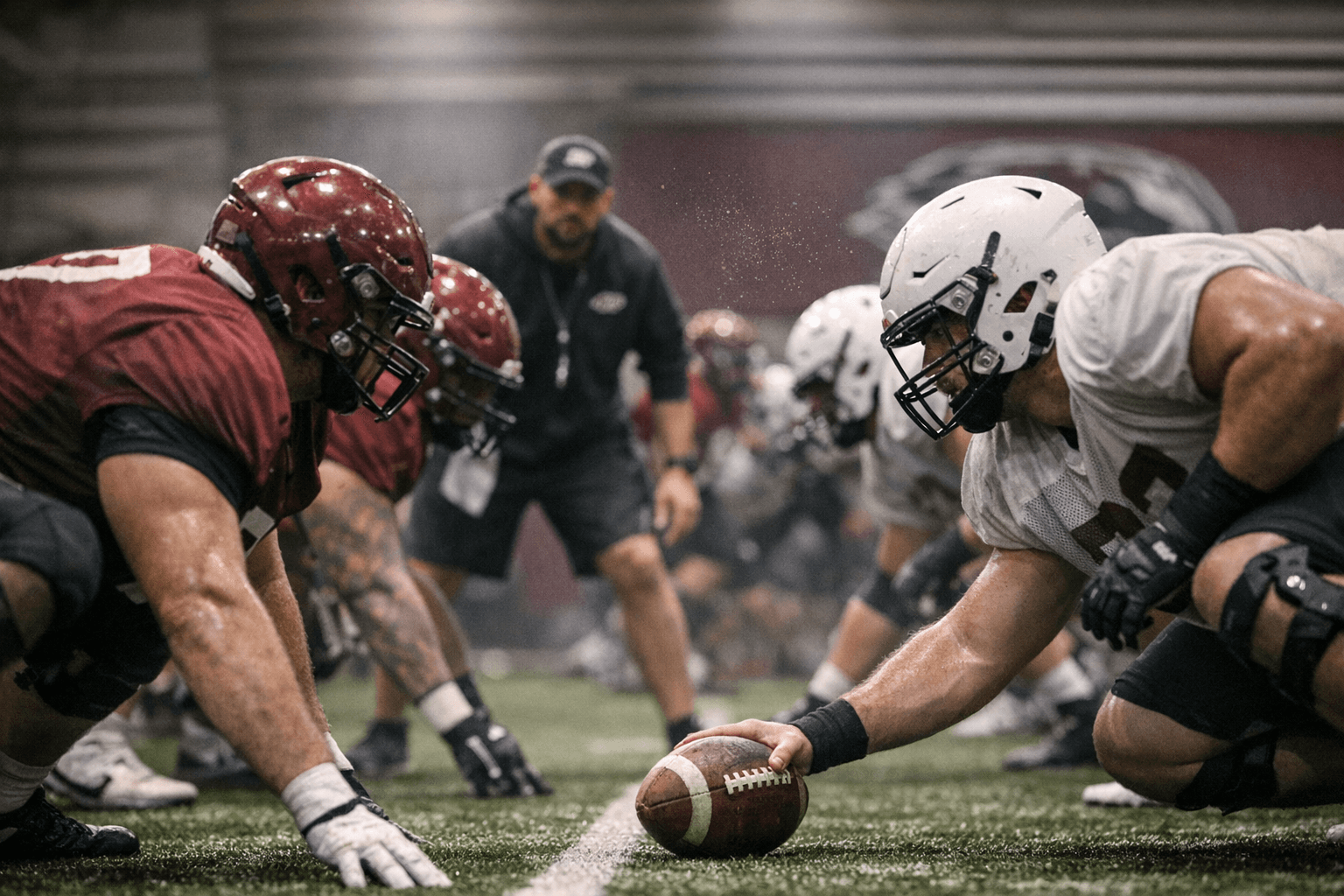
Southern Illinois football announced its 2026 transfer class from a CARBONDALE, Ill. dateline, signing 15 players in total. The release gives a clear head-count and positional mix while the detailed bios in the excerpt were truncated, so names and individual profiles were not available in the provided material.
2. Offensive breakdown: six players (4 WR, 2 OL)
Southern has signed six offensive players: four wide receivers and two offensive linemen. A 4-2 split on offense signals a tilt toward replenishing perimeter pass-catching depth while shoring up protection or run-blocking up front; for an FCS roster, that balance indicates intent to keep quarterback play supported by both route-tree volume and interior stability.
3. Defensive breakdown: eight players (5 DL, 1 LB, 1 CB, 1 S)
The defense-heavy haul includes five defensive linemen, one linebacker, one cornerback and one safety, totaling eight defensive additions. Stocking the defensive line at that volume suggests a focus on winning the line of scrimmage, pressing tempo control and improving run defense; for an FCS program, investing in the trenches is also a recruitment strategy that pays near-term dividends in stopping ball-control offenses.
4. Special teams: one K/P
Southern added one special-teams specialist listed as a kicker/punter (K/P). That single roster spot can have an outsized impact in close conference games and playoff bids, specialists can swing field-position battles and overtime outcomes, and adding a hybrid K/P reflects roster flexibility.
5. Truncated bios and missing names
The SIU announcement excerpt ends with a truncated line, "2026 Transfer Class Bios (selected entries from the r", so individual names and bios were not provided in the supplied excerpt. That gap matters for evaluation: without ages, eligibility statuses, previous schools or film, analysis must lean on positional strategy and institutional context rather than player-by-player scouting.
6. Toledo’s portal class: scale and context
By contrast, Toledo head coach Mike Jacobs announced a massive class of 36 transfer additions on 1/28/2026, a class that 247Sports ranks No. 1 in the Mid-American Conference. The contrast between SIU’s focused 15-player FCS class and Toledo’s 36-player FBS infusion illustrates two different roster-construction approaches: targeted positional shoring versus wholesale retooling enabled by a coach’s previous relationships and program resources.
7. Toledo notable signees (names and positions)
Toledo’s published additions in the excerpt include: LaDavion Osborn, CB; Israel Petite, CB; Isaac Prince, LB; Luke Rector, OL; Khamoni Robinson, QB; Ben Sahakian, DE; Dylan Senda, OL; Anthony Simpson, WR; Amorion Smith, S; Corey Smith, RB; Peyton Strickland, TE; Nick Thomas, OL; KJ Thomas, CB; Donovan Watkins, S; Andrew Zock, DE. This list, 15 of the 36 named in the excerpt, shows Toledo adding across the board and highlights the program’s multi-level recruitment from the portal.
8. Toledo roster note, Max Allen eligibility and the onboarding quote
Toledo’s release also lists Max Allen, LS, 6-4, 205, Fr. (R), Holly Springs, N.C.-Holly Springs (Mercer), and states: "Max Allen played two games at long snapper for Mercer in 2025 and retains his freshman eligibility in 2026." The Toledo announcement included this logistical gratitude: "I would also like to personally thank all of our on-campus constituents who were instrumental in onboarding such a large group in a very short window of time. It would not have been possible without the effort and cooperation from our Admissions team, Student Athlete Support Services, Compliance, Housing, and our UT Athletics Creative team." That operational line highlights the behind-the-scenes work required to integrate large portal classes.
9. National portal arms race: Oklahoma State and Caleb Hawkins
The broader transfer landscape shows powerful consolidation moves: "50 , Number of incoming transfers to Oklahoma State under new head coach Eric Morris from North Texas, the most of any FBS school." That pipeline also included running back Caleb Hawkins, and the dossier notes: "Hawkins led the FBS with 25 rushing touchdowns last season." Those numbers underline how program-to-program coaching migrations can trigger avalanche transfers and reshape competitive balance quickly, especially when a high-performing playmaker follows a coach.
10. Ohio State wide receivers and coaching ripple effects
Portal movement at Ohio State was notable: "6 , Ohio State wide receivers who hit the portal, with two heading to Notre Dame (Mylan Graham and Quincy Porter). Four have committed to new schools with two more undecided." The discourse ties departures to staff movement: "This departure is likely related to offensive coordinator and receivers coach Brian Hartline taking over as head coach at South Florida." That sequence shows how coaching changes, from position coach promotions to head-coach hires, can produce talent migration and recalibrate receiving-room talent pools nationwide.
11. Quarterback window narratives and developmental choices
Quarterback transfers dominated storylines too. The dossier reports: "One of the biggest storylines of this window was former Nebraska quarterback Dylan Raiola committing to Oregon. Well, starter Dante Moore decided to stay in Eugene after Raiola committed, but the former Cornhusker is staying put. It seems as though Raiola is following the same path Moore took, sitting behind Bo Nix after transferring from UCLA. The same goes for Husan Longstreet, a former top 25 overall recruit in the 2025 class who transferred to LSU, likely deciding to sit a year behind fellow incoming transfer quarterback Sam Leavitt from Arizona State. It looks like not everyone is eyeing a starting job, choosing development over minutes." Those examples reveal a growing trend: elite transfers accepting backup roles to develop within high-profile systems, shifting the calculus for both program builders and athletes weighing immediate starts versus long-term NFL paths.
12. 247Sports transfer-log snapshots (movement across levels)
The 247Sports portal log captured a range of moves from 02/01 through 01/29, including Jaylin Acevedo, Navy, South Florida and multiple Idaho State additions (Chedon James, Zedekiah Anahu-Ambrosio, Zoom Esplin, Sani Tuala, Titan Saxton), plus transfers to Alabama, Oklahoma and other programs. These updates show the churn between FCS, Group of Five, and Power Five levels, Idaho State’s cluster of picks is a reminder that FCS programs can also be active beneficiaries of portal depth, while Power Five teams selectively poach proven talent.
13. ESPN’s portal winners: Texas Tech, LSU and Tennessee case studies
ESPN framed portal winners and how those classes can flip program trajectories: "Nailing a transfer portal class can alter the trajectory of a program. Just ask Texas Tech, which dominated the portal in 2025, then reached the College Football Playoff." On LSU: "LSU knew hiring Lane Kiffin would invite plenty of scrutiny, but also plenty of big fish in the transfer portal. Kiffin lived up to his reputation as a dealmaker by securing multiple top players in the portal." The piece also lists impressive arrivals, Sam Leavitt, Husan Longstreet and a slate of receivers, while Tennessee’s haul featured Penn State defensive transfers led by Chaz Coleman, described as "The 6-foot-4, 240-pounder" with high upside. ESPN’s framing underscores a business reality: coaches who are perceived as dealmakers can monetize relationships and momentum to rebuild faster.
14. Recruiting class snapshot vs. portal classes
A recruiting-class excerpt from an encyclopedic listing names high-school recruits and top-ranked prospects (various names such as Xavier Griffin, Darius Gray and others). It serves as a reminder that the recruiting pipeline and the transfer portal are parallel but distinct talent streams: high-school rankings shape long-term program foundations, while the portal is an accelerant for immediate roster needs and strategic windows of opportunity.
15. What this means for Southern Illinois and peer FCS programs
For SIU, a 15-player class with a heavy defensive-line component and four new receivers is a surgical approach: it balances the offense for versatility while prioritizing run-stopping and interior disruption. For FCS peers, that model shows fiscal prudence and roster coherence, targeted portal usage can fill specific weaknesses without the onboarding costs and NIL pressures of a 30-plus class. Socially and culturally, targeted classes help programs maintain community identity and continuity, while larger FBS portal splashes can shift regional recruiting markets and fan expectations quickly.
16. Practical wisdom and takeaways for fans and practitioners
Think like a roster architect: smaller, positionally focused portal classes can create sustainable depth and cultural continuity; large classes can accelerate competitiveness but demand organizational bandwidth to integrate. For fans tracking rosters, prioritize eligibility notes, coach relationships and positional concentration, those are the signals that predict short-term impact. For coaches and athletic departments, the final lesson is operational: onboarding matters. As Toledo’s release acknowledged, "It would not have been possible without the effort and cooperation from our Admissions team, Student Athlete Support Services, Compliance, Housing, and our UT Athletics Creative team."
Closing insight: transfer windows are the new recruiting megaphone, use them to patch holes, not paper over systemic issues, and measure success not only by headline names but by how well new pieces fit the culture, scheme and institutional capacity to develop them.
This article was produced by Prism’s automated news system from verified source data, official records, and press releases, then run through automated quality and moderation checks before publishing. The system is built and supervised by the people who set the standards it runs under. Read our full AI policy.
Did this article answer your question?