Southland commissioner Chris Grant on playoff push, autonomy and league rise
Three Southland teams reached the 2025 FCS playoffs, and Chris Grant is using that momentum to push for more access, smarter scheduling and bigger conference power.
The playoff jump that changes expectations
Three Southland teams reached the 2025 FCS playoff field, and that is the clearest sign yet that the league is no longer trying to prove it belongs. It is trying to turn depth into leverage. Stephen F. Austin earned the automatic bid, Southeastern Louisiana landed the No. 16 seed, and Lamar got in as an at-large, giving the Southland its highest total since 2019 and tying it for the second-most selections among all conferences.
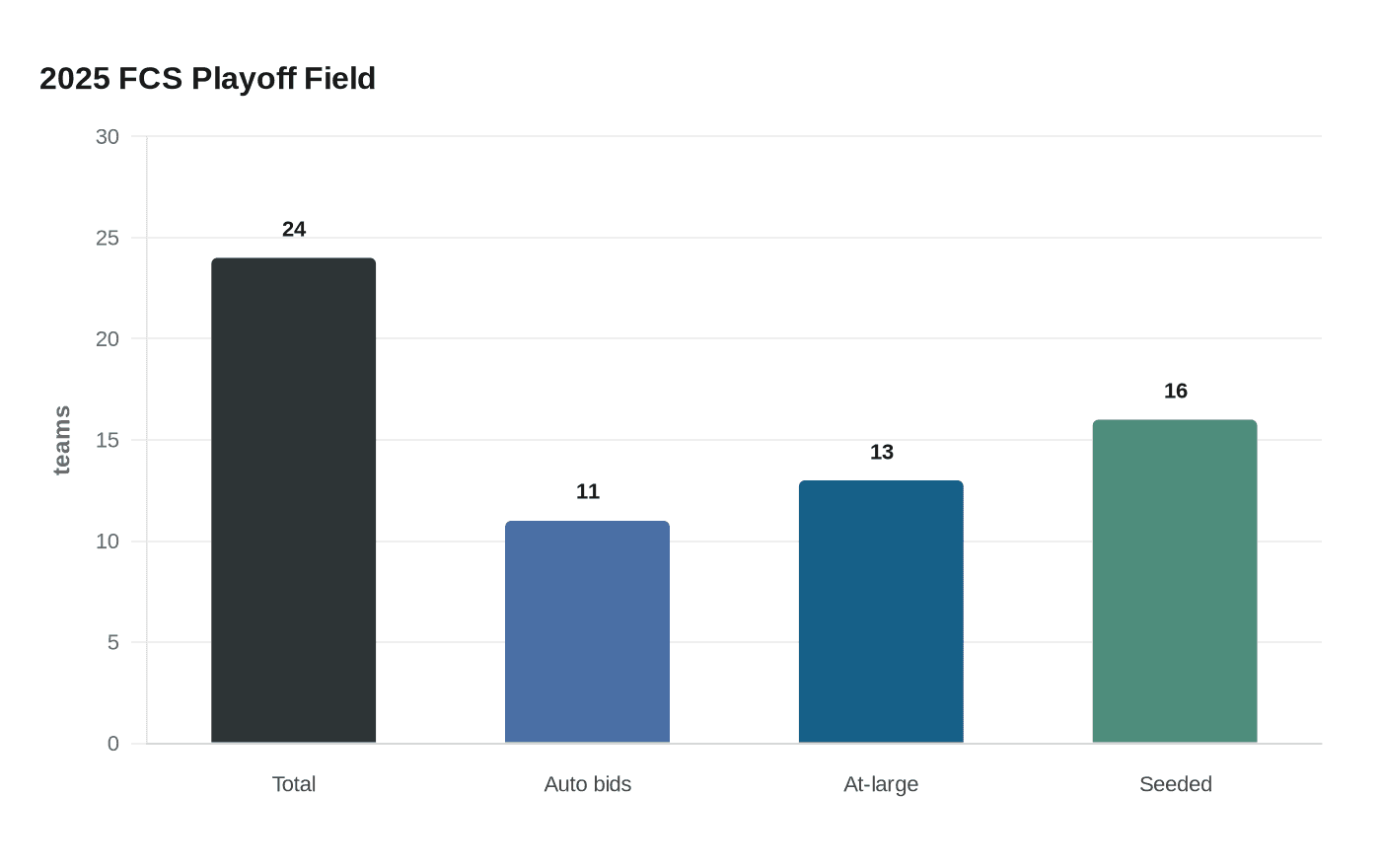
That matters because the 2025 bracket was only 24 teams deep, with 11 automatic bids and 13 at-large spots. In a field that small, every win, every ranked opponent and every nonconference showcase game carries real postseason weight. The top 16 teams were seeded, which meant there was a direct path to hosting, and for Southland programs, a home playoff game is not just a trophy moment. It changes gate receipts, visibility, donor energy and the way recruits see the league.
Why Chris Grant’s voice matters now
Chris Grant officially became Southland Conference commissioner on April 5, 2022, after previously serving as the league’s deputy commissioner and, before that, as Associate Commissioner of Sports Management and Championships at the Pac-12 Conference. That background matters because Grant is speaking from inside the machinery, not from the edge of it. He understands how access is granted, how championships are packaged and how governance decisions shape the path for every school in the subdivision.
In his conversation with Sam Herder on FCS Football Talk, the discussion ranged far beyond one upset win. The episode description pointed to Nicholls’ upset of No. 5 UIW on ESPN2, the Southland’s rise, UTRGV’s potential, a new media deal, a move to a 9-game conference schedule, the FCS championship moving to Nashville, conference realignment and new Division I governance. Put together, those topics reveal the real agenda: how the Southland can convert on-field momentum into structural power.
Scheduling is becoming a playoff weapon
The move toward a 9-game conference schedule is one of the most consequential pieces in the mix because scheduling is now a postseason strategy. In the current FCS setup, where only 13 teams can reach the bracket as at-large selections, leagues have to think carefully about how often their best programs face each other, how much space they leave for resume-building nonconference games and how much risk they want to absorb before November even arrives.
Nicholls’ upset of UIW on ESPN2 showed the value of a league win that travels nationally, and it reinforced a simple truth: the Southland can still produce results that matter beyond its own standings. At the same time, the broader FCS calendar keeps rewarding programs that seek out proof points. The 2025 FCS Kickoff Classic in Montgomery featured Mercer and UC Davis, two 2024 quarterfinalists, and that kind of opener is no accident. It is the clearest example of how ambitious programs use early showcases to strengthen their playoff case before conference play even settles in.
For Southland schools, that is the next competitive edge. A stronger conference schedule can sharpen the league’s identity, but each program still has to find a way to collect nonconference wins that hold up in the selection room. The better the Southland gets at balancing those two goals, the more often it can turn three bids into a regular expectation instead of a one-year spike.
UTRGV, media reach and the new Southland map
UTRGV’s arrival in 2025 expanded Southland football to 10 football-playing members, and that is not a minor footnote. It gives the league more geographic reach, a deeper footprint in Texas and another piece of inventory for scheduling, recruiting and media planning. UTRGV also connects the Southland more firmly to Edinburg, Texas, a market with real growth potential if the program can build quickly enough to matter on Saturdays and in the standings.
The league’s August 2025 media-rights extension with ESPN through 2031 is just as important. Grant said, “We’re proud to strengthen our long-standing relationship with ESPN.” That kind of deal does more than secure television windows. It gives the Southland a platform to showcase teams like Nicholls, UIW, Stephen F. Austin and Southeastern Louisiana in moments that can shape playoff perception, especially in a subdivision where visibility still drives credibility.
The championship backdrop also matters. The FCS title game was scheduled for January 5, 2026 at FirstBank Stadium in Nashville, which places the sport’s biggest stage in a different kind of market and underscores how much presentation now influences value. When the championship itself moves, the conversation around who controls the postseason grows even louder.
Autonomy, private equity and the fight for control
Grant’s comments on autonomy talks and new Division I governance point to a larger fight inside college football. The Southland is not just chasing better results on the field; it is positioning itself for a future where power may be redistributed through governance reforms, postseason structure and financial influence. That is why the mention of private equity in the playoffs is so notable. Even the possibility of outside money touching the postseason raises questions about who controls access, who benefits from growth and how much of the FCS identity can survive if the business model keeps shifting.
This is where the Southland becomes a useful case study for the entire subdivision. Leagues that win on Saturdays still need to win in boardrooms, media contracts and scheduling rooms. A conference with 10 football-playing members, three playoff teams and a six-year media extension has more room to argue for its place than one relying only on tradition. The Southland’s rise is not only about talent. It is about building enough institutional strength to matter when the next governance fight arrives.
What it means next
The immediate lesson for FCS fans is simple: the Southland is no longer an occasional spoiler, it is pushing to become a structural player. Three playoff bids, a nationally televised upset over a top-five team, a bigger membership footprint and a long-term ESPN deal all point in the same direction. The league wants to make the bracket harder to ignore and to make its best teams impossible to leave out.
That is the broader FCS story, too. In a 24-team playoff with 11 automatic bids, 13 at-large spots and only 16 seeds, the margin for error is small, but the opportunity is real for programs willing to schedule boldly and perform under pressure. The Southland is showing that instability in college athletics can also be opportunity, if a league has the results, the reach and the voice to turn momentum into power.
This article was produced by Prism’s automated news system from verified source data, official records, and press releases, then run through automated quality and moderation checks before publishing. The system is built and supervised by the people who set the standards it runs under. Read our full AI policy.
Did this article answer your question?