Top returning FCS receivers spotlight 2026 passing game depth
Montana State, UC Davis and Lehigh headline a receiver class that can swing title races, playoff seeding and NFL buzz all fall.
1. Taco Dowler, Montana State
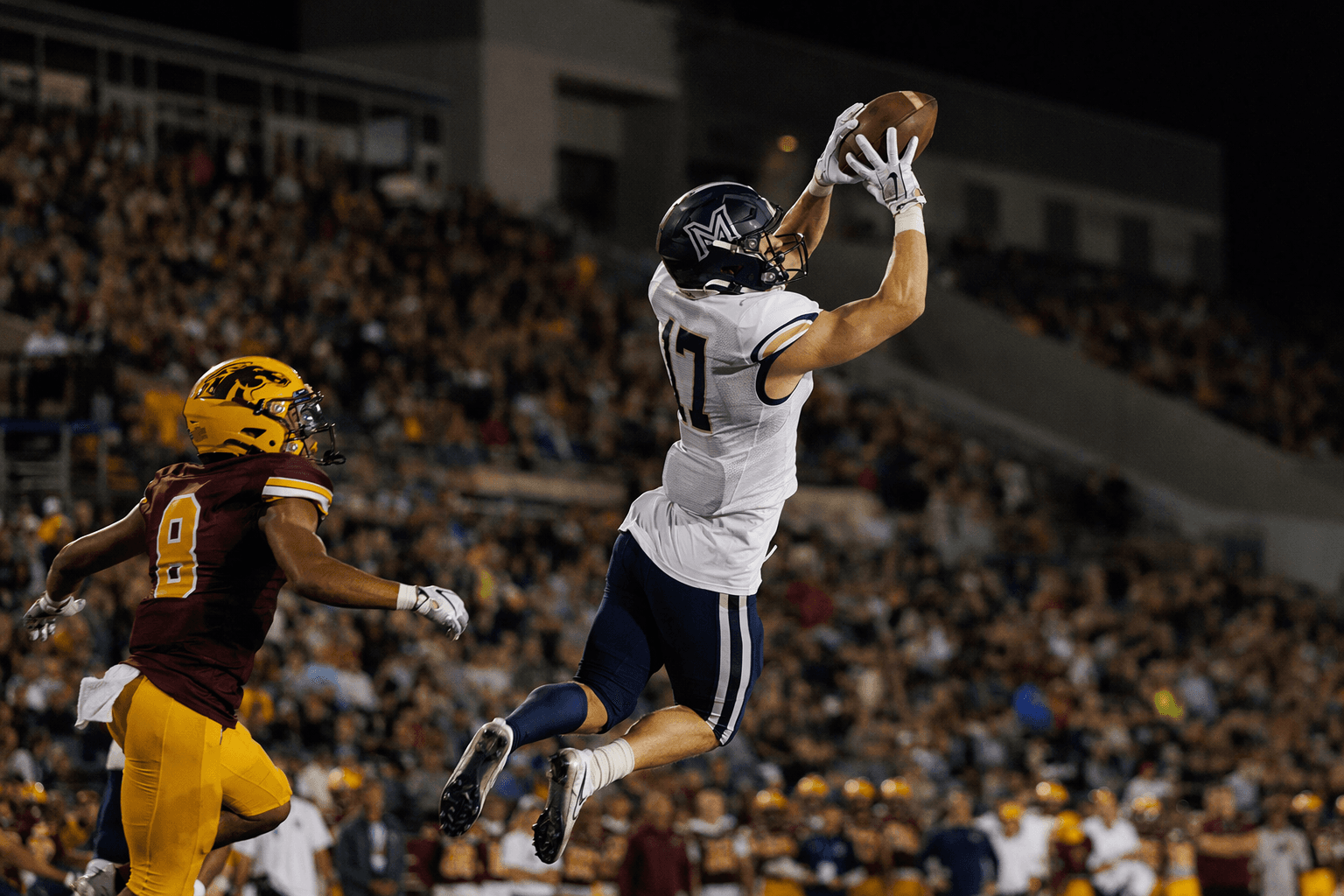
Dowler is the most consequential returner on this board because Montana State is defending a national title and still building around the same kind of explosive perimeter play that wins playoff games. His return keeps the Bobcats’ offense dangerous in the exact moments that decide championships, from late-game third downs to postseason shots over the top.
2. Samuel Gbatu Jr., UC Davis
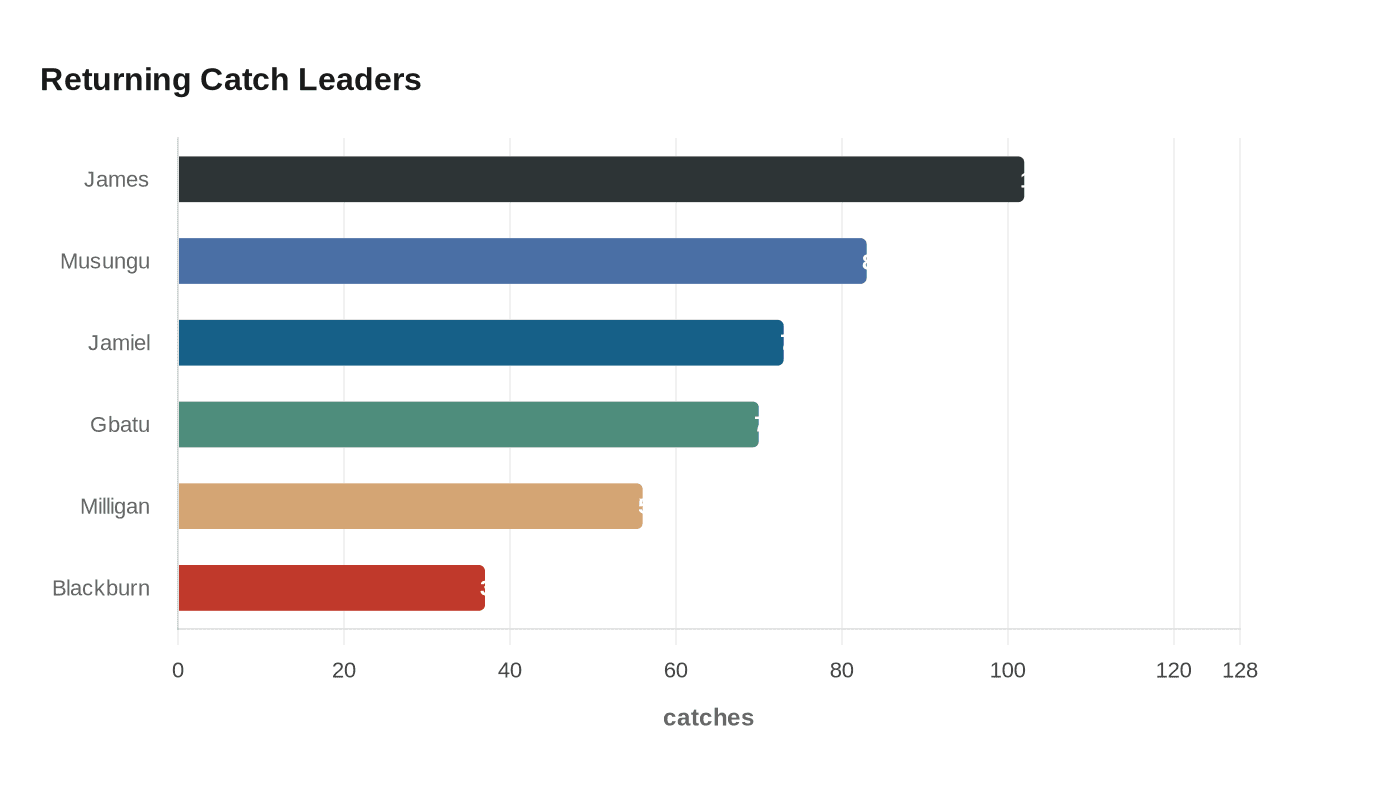
Gbatu brings the kind of production that forces a defensive coordinator to change the week’s plan, not just the coverage shell. He posted 70 catches, 1,169 yards and 11 touchdowns in 2025, earned second-team AFCA FCS All-America honors, and gives UC Davis a true Big Sky weapon in a league where passing efficiency can separate a playoff team from a contender.
3. Geoffrey Jamiel, Lehigh
Jamiel’s 2025 line, 73 receptions for 1,067 yards and eight touchdowns, made him one of the most reliable chain-movers in the subdivision, and his 14.6 yards per catch shows the vertical damage is real too. In a Patriot League race where one receiver can push a team from “good” to “autobid threat,” Lehigh’s senior wideout looks like the safest bet to bend an entire conference season.
4. Chedon James, Idaho State
James is the most electric comeback story in the group, returning to Idaho State after stops at Fresno State and UIW and reuniting with quarterback Jordan Cooke. His 2023 season still reads like a star season in any era, 102 catches, 1,045 yards and eight touchdowns, and that kind of volume can instantly alter how the Big Sky playoff picture looks.
5. Sam Milligan, Bucknell
Milligan’s jump from 19 catches in 2024 to 56 catches, 975 yards and 10 touchdowns in 2025 is the definition of a player turning volume into leverage. Bucknell does not just get a productive receiver back, it gets a 6-foot-3, 220-pound target whose 86.6 overall PFF grade ranked among the best at the position and whose presence gives the Patriot League a real downfield problem.
6. Samuel Musungu, Cornell
Musungu has already proven he can dominate an Ivy League scoreboard, and his 2024 breakout, 83 catches, 960 yards and 10 touchdowns, still hangs over the conference. Cornell needs that production because Ivy title races are often decided by which offense can create separation without wasting possessions, and Musungu gives the Big Red a receiver who can do both.
7. Brooks Davis, Montana
Davis matters because Montana is not just trying to stay relevant, it is trying to stay in the championship conversation after another deep run and a coaching change. The Griz call him an explosive young receiver, and that kind of burst is exactly what helps a playoff-caliber team replace lost production without losing identity.
8. Nate Rembert, Jackson State
Rembert gives Jackson State the kind of pass-game headliner that can change how SWAC opponents choose to defend on Saturdays. HERO Sports had him in the top 10 a year ago and still views him as one of the league’s best returning receivers, which tells you his role is bigger than a box score, it is about giving the Tigers a high-end answer in a conference where one explosive play can swing the standings.
9. Lofton O’Groske, South Dakota State
South Dakota State’s standard is title-or-bust, and O’Groske keeps the Jackrabbits from having to rebuild their passing identity from scratch. Any receiver who stays near the top of a ranking for a team with championship expectations matters twice, once for the playoffs and once for the chain reaction he creates for everyone else on the field.
10. Brady Blackburn, Harvard
Blackburn’s 2025 season, 37 catches, 705 yards and five touchdowns, was efficient in the Ivy League’s way, with a blistering 19.1 yards per catch. Harvard needs that sort of strike-rate because the Crimson cannot afford wasted opportunities in league play, and Blackburn already looks like the guy who can turn a tight game into a separation game.
11. Gavin Lochow, Dayton
Lochow gives Dayton a receiver worth building a game plan around, and in the Pioneer League that often means the difference between an ordinary Saturday and a title-swinging one. His place this high on the list says the Flyers have a real vertical threat to go with their conference ambitions.
12. Jalen Smith, Lindenwood
Smith’s 2025 season, 39 catches, 750 yards and four touchdowns, plus second-team All-OVC-Big South honors, shows a 6-foot-4 target who can stress defenses in every level of the field. Lindenwood does not get many chances to win the matchup battle, so a receiver with his size and yards-per-catch profile is a massive piece of the Lions’ playoff push.
13. B.J.
Fleming, Tarleton State
Fleming’s inclusion tells you how serious Tarleton State’s passing ceiling is, because he arrives with FCS production and a proven résumé from North Dakota. The Texans keep loading the room, and a transfer who already owns starting-level production is exactly the kind of piece that can turn a good offense into a conference-title threat.
14. Dylan Lord, Illinois State
Illinois State was already operating with national-level attention after its championship run, and Lord gives the Redbirds another reason defenses cannot tilt fully toward one side. In a room where every reliable route runner matters, the value is not just catches, it is how many ways the offense can force opponents to cover grass.
15. AJ Colombo, Western Carolina
Western Carolina showing up twice in this ranking is the loudest signal that its passing game is not a side story, it is the story. Colombo’s placement alongside another Catamount wideout means the SoCon has to deal with a room, not a single player, and that makes every conference weekend feel more fragile for opposing defenses.
16. Luke Mailander, Illinois State
Mailander’s ranking reinforces how deep Illinois State’s receiver room has become after its playoff surge. When a team can stack two top-20 wideouts in the same offense, the separator is no longer talent alone, it is timing, chemistry and how quickly a quarterback can feed the right mismatch.
17. Brayden Smith, Mercer
Mercer’s inclusion here matters because the Bears keep showing up with receivers who can carry the passing game on a weekly basis. Smith is the kind of name that can quietly swing the race in the SoCon, because a single dependable target often becomes the difference between finishing second and getting a playoff home game.
18. Gavin Nelson, Monmouth
Nelson stayed in the room after entering and then withdrawing from the portal, and that stability matters for a Monmouth offense that needs continuity after a 2025 season that produced 30 catches, 514 yards and six touchdowns for him. He is the kind of receiver who keeps a CAA attack from losing its identity when the roster churn gets loud.
19. Stacy Dobbins, UC Davis
UC Davis already has one of the best receiver statements in the subdivision with Gbatu, and Dobbins gives the Aggies the kind of secondary threat that makes coverages brittle. That matters in the Big Sky because offensive depth, not just star power, is what keeps a team alive through November and into the playoff bracket.
20. Tre’ Holloway, Tennessee Tech
Holloway keeps Tennessee Tech’s offense from becoming one-dimensional after a breakthrough stretch that put the Golden Eagles firmly in the league-title conversation. His ranking says the defending conference standard has to respect multiple threats, not just the quarterback or the ground game.
21. Chance Peterson, North Carolina Central
Peterson is a reminder that the MEAC still needs high-end perimeter play if it wants to stay relevant in the broader FCS playoff discussion. North Carolina Central’s path to another conference title gets easier when one receiver can win matchups without requiring a perfect throw every snap.
22. Tyrell Pollard, Central Arkansas
Pollard’s spot keeps Central Arkansas in the conversation as a program that can still throw itself into the postseason mix. In a Southland race where margins are thin, one trusted wideout often becomes the difference between chasing and controlling the standings.
23. Michael Rossin, Western Carolina
Rossin makes Western Carolina doubly dangerous because the Catamounts are not leaning on one hero to drive the offense. When a program can place multiple receivers in the top 25, it usually means the whole passing structure is healthy, and that is the kind of depth that can upset a playoff bracket.
24. Jaden Robinson, Austin Peay
Austin Peay’s inclusion here is another sign that the middle of the FCS has become far more dangerous in the air. Robinson gives the Governors a chance to win in space, and that matters because conference races are increasingly being decided by teams that can uncover one more explosive play than the other guy.
25. JC Roque Jr., Northern Iowa
Roque closes the list as a good symbol of the broader FCS arms race: every league, every style and every region now has a receiver who can tilt a game if the quarterback finds him on time. Northern Iowa has long leaned on toughness and structure, but a playmaker like Roque keeps the Panthers from being trapped in old assumptions about what their offense can be.
Know something we missed? Have a correction or additional information?
Submit a Tip