Track draft picks by college start, and FCS talent shines through transfers
Track where a draft pick started, and the FCS looks far bigger than the official ledger says.
The draft board hides the first stop
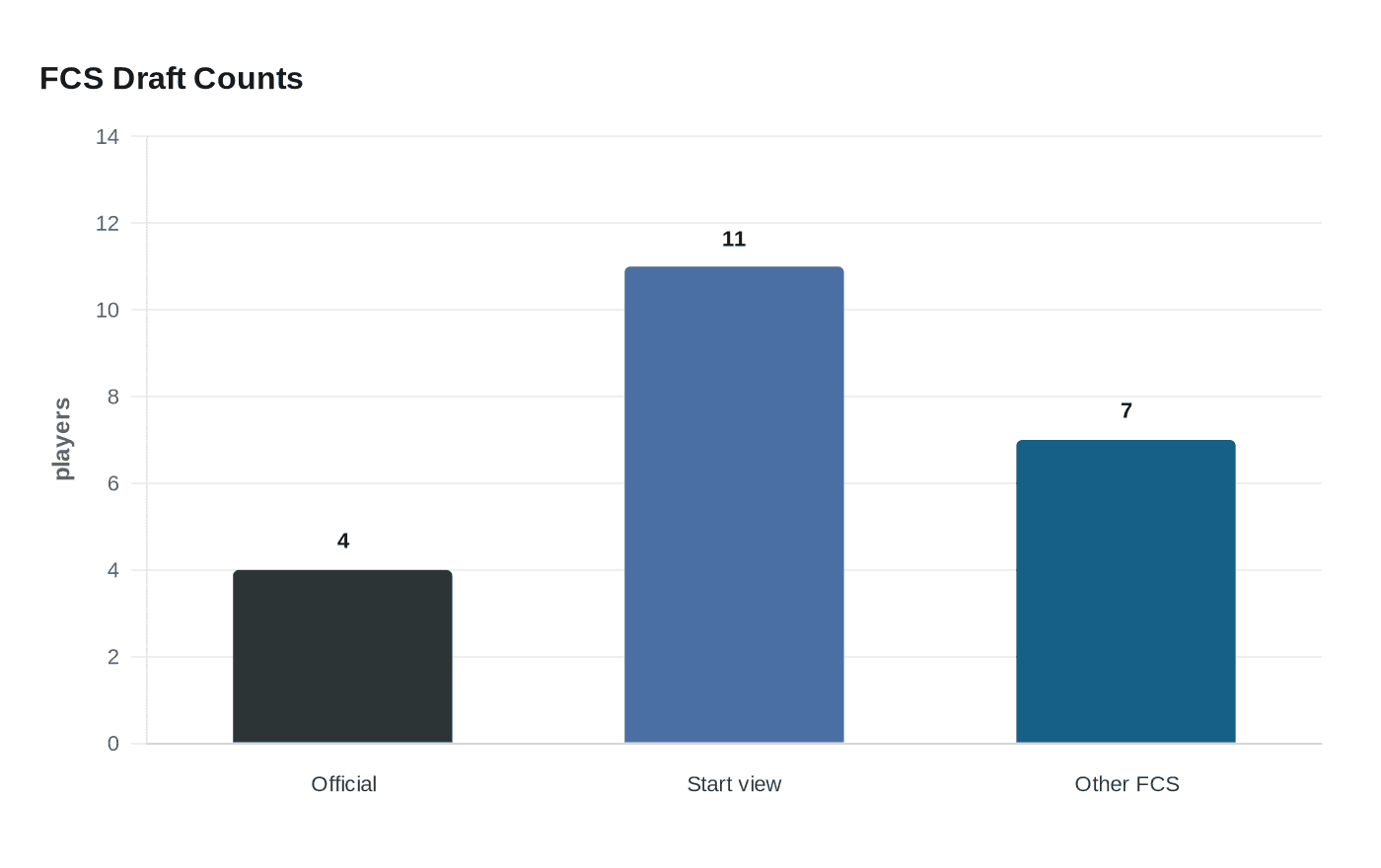
The 2026 NFL Draft in Pittsburgh told one story on television and another in the college game’s guts. The official count gave the FCS only four picks, yet a start-at-college view shows 11 draftees began their careers in the subdivision, a reminder that the final-school label often erases the place that found and formed the player first.
That is the measurement problem Matt Fortuna is pointing at. If draft accounting credits only the last college stop, then the school that took the first swing at a prospect, especially an FCS program that developed him before a transfer up, disappears from the record. In a transfer era defined by movement, the old ledger makes the pipeline look narrower than it really is.
The transfer era rewrites the path to the league
The 2026 draft made the churn impossible to miss. Of the 257 players selected over three days, 128 transferred at least once in college, 34 transferred twice, and seven moved three times. That is not a side note anymore. It is the structure of the modern draft, and it means the college listed next to a player’s name on draft night may say more about where he finished than where he was built.
The NCAA’s winter portal window ran from Jan. 2 to Jan. 16, 2026, and more than 10,000 football players entered the portal in that cycle. More than 410 FCS players moved up to FBS schools for the 2026 season, according to HERO Sports, after more than 500 made that jump the year before. When that much movement is normal, school-by-school draft tallies stop being a clean measure of development and start becoming a measure of finishing location.
Why the FCS looks smaller than it is
The FCS had one of its harshest draft weekends in 2026. No FCS player was selected in the first three rounds, the first time that happened in the FCS era dating to 1978, and the subdivision’s opening two days went by without a pick. The NCAA’s official accounting said only four FCS players were selected, a number that undersells the number of prospects who first entered college football at that level.
Other FCS-focused tracking counted seven 2026 draftees to the subdivision because it credited players who started at FCS programs before transferring out and finishing elsewhere. That difference is the heart of the story. It is not just a bookkeeping quirk; it changes how talent pipelines are understood, which programs get credit for identifying players early, and which conferences are rewarded in the public imagination for talent they did not originally land.
The players who expose the flaw
Southeastern Louisiana defensive tackle Kaleb Proctor was the highest-selected official FCS player in the draft, going No. 104 overall to the Arizona Cardinals. That alone showed how thin the FCS presence was on the board, but the deeper story came later with Northwestern guard Evan Beerntsen, taken No. 253 by the Baltimore Ravens. Beerntsen was a transfer from South Dakota State, which is exactly the kind of case that gets flattened by final-school accounting.
Under the official ledger, Northwestern gets the credit. Under a start-at-college lens, South Dakota State does. That distinction matters because it reflects the full development arc, not just the last jersey. For FCS programs, that is the difference between being seen as a feeder in name only and being recognized as the place where an NFL player’s career actually began.
What changes when fans track starts instead of endings
A start-at-college lens does not just help the FCS. It also sharpens the way the sport talks about every level, including the power conferences that benefit when a player transfers up after being developed elsewhere. If the industry wants a truer picture of who produces NFL talent, it needs a metric that follows the player’s origin, not just his final stop.
That shift would change more than draft-night graphics. It would alter how fans judge talent pipelines, how analysts talk about program-building, and how much credit is given to schools that identify and develop players before they become household names. In a transfer market where movement is routine, the old method rewards the destination. The better one rewards the program that started the journey.
For the FCS, that distinction is no small thing. It is the difference between being remembered for the picks officially attached to a roster and being recognized for how often its coaches and programs help launch the players who end up in the NFL.
This article was produced by Prism’s automated news system from verified source data, official records, and press releases, then run through automated quality and moderation checks before publishing. The system is built and supervised by the people who set the standards it runs under. Read our full AI policy.
Did this article answer your question?