Underdog Dynasty Ranks Top 10 FCS Teams That Surprised in 2025
Which FCS programs overperformed in 2025, why they mattered, and what their momentum means for recruiting, coaching moves, and 2026.
1. Illinois State
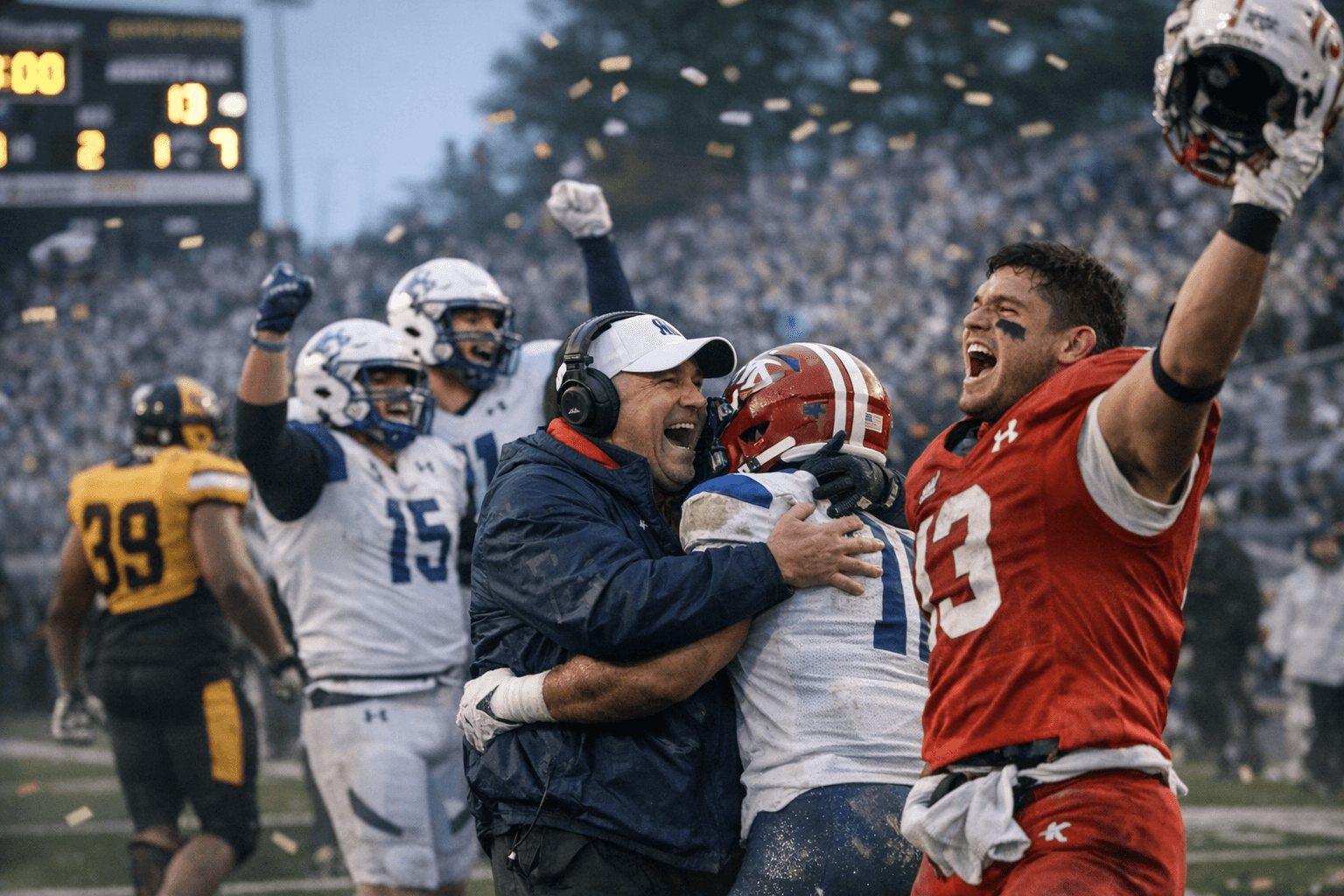
Illinois State tops the list after a Cinderella run to the national title game that galvanized small‑market college football and put the Redbirds on the national radar. Their 29‑28 road upset of defending champion North Dakota State was the signature win that proved Illinois State could beat blue‑blood FCS programs, and the team rode that belief to the title game as tournament runner‑up. From a performance angle, Illinois State combined timely defense with an efficient offense; from a business and recruiting standpoint, the run will bolster fundraising, transfer traffic, and broadcast interest for a program hungry to sustain upward momentum. Socially, their story reinforced the appeal of underdog narratives that drive fan engagement beyond traditional power centers.
2. West Georgia
West Georgia validated its jump from Division II in year two with an eight‑win season that announced the program as a legitimate FCS riser. The progress was clear on-field and in the program’s marketability; coach Joel Taylor’s success attracted immediate attention and resulted in him being hired away to Mercer, signaling how rapid winning accelerates coaching market activity. That coaching carousel underscores a broader industry trend: successful small‑school staffs are now prime targets in the portal and hire market, forcing athletic directors to balance competitive ambition with retention strategies. For recruits and fans, West Georgia’s trajectory shows how a disciplined transitional plan can pay off quickly in exposure and competitive credibility.
3. Delaware State
DeSean Jackson’s first season as head coach delivered an 8‑4 record and a pronounced uptick in competitiveness within the MEAC. The program leaned on portal additions to overhaul depth and playmakers, demonstrating how transfer strategy can quickly reshape conference pecking order. Delaware State’s turnaround has cultural resonance too, a historically overlooked HBCU program reasserting itself, and carries business implications in recruitment pipelines and increased visibility for MEAC matchups. On-field, the mix of coaching identity and roster infusion created more consistent performances and a clearer recruiting pitch for 2026.
4. UTRGV
UTRGV’s inaugural season was one of the year’s most fascinating storylines: nine wins, attractive offensive metrics, and early program buzz after victories over Prairie View A&M, Incarnate Word and Nichols. Launching a Division I program and delivering immediate success shifts the conversation about start‑ups: smart hiring, local recruiting outreach, and a modern offensive identity can produce wins and ticket interest right away. For the industry, UTRGV’s launch highlights how new programs are leveraging NIL, regional recruiting advantages, and scheduling to accelerate competitiveness and build a fanbase. Socially, the startup energized a region previously underserved by Division I football, giving local communities new cultural gatherings and economic activity on game days.
5. Lamar
Lamar ripped off a seven‑game win streak punctuated by a key victory over then‑#4 South Dakota, a result that propelled the Cardinals into the playoff conversation and earned a postseason berth. Their success was built on playmakers on both sides of the ball, names like DE Andrew Huff and RB Xavier Coleman drove momentum and created matchup problems for opponents. Lamar’s run underscores how single signature wins change perception and recruiting reach, turning a regional program into a national talking point. The team’s momentum also reminds athletic departments that competitive investment in coaching and development can translate to postseason revenue and broader brand growth.
6. Presbyterian
Presbyterian’s 10‑2 finish out of the Pioneer League was especially notable because the program does it without scholarships, yet still notched upsets over SoCon powers Mercer and Furman. QB Collin Hurst’s roughly 2,700 passing yards and 26 TDs anchored a high‑ceiling offense that complemented a disciplined team defense and smart situational play. Presbyterian’s season challenges assumptions about roster construction and shows how coaching, scheme, and player development can compensate for resource differences in an increasingly transfer‑driven landscape. Culturally, the run stirred pride in non‑scholarship football and renewed debates about parity and access in FCS.
7. Alabama State
A 10‑2 finish and an offense averaging 42.4 points per game put Alabama State squarely in Celebration Bowl conversation and back into national conversation for HBCU football. QB Andrew Body’s remarkable ball security, throwing only one interception all season, and RB Marcus Harris II’s 15 touchdowns made the offense both explosive and efficient. The Hornets’ profile highlights the intersection of player development, recruiting at HBCUs, and marketable offense that draws viewers; success like this strengthens HBCU positioning in postseason tie‑ins and television packages. Socially, Alabama State’s season contributed to the rising prominence and commercial viability of HBCU football on a national stage.
8. Lehigh
Lehigh’s role in the postseason picture, hosting playoff action and serving as a road opponent in Villanova’s run, places the Mountain Hawks among the season’s notable surprises even if detailed records weren’t the headline. Their competitive positioning in the playoffs reflected program stability and the value of home‑field advantage in tight conference battles. As a mid‑Atlantic program, Lehigh’s visibility benefits local recruiting and alumni engagement, and the playoff hosting translates into event revenue and community impact. The team’s performance is a reminder that traditional programs can still find new life through targeted recruiting and tactical game planning.
9. Tarleton State
Tarleton State’s place in the narrative comes via playoff involvement as one of Villanova’s road playoff opponents, indicating the Texans’ rapid assimilation into FCS postseason relevance. The appearance highlights the program’s investment in competing at higher levels and demonstrates the ripple effect of postseason exposure on recruiting and scheduling opportunities. For the conference ecosystem, Tarleton State’s competitiveness stresses the importance of depth across leagues and how transitions to FCS can quickly alter competitive balance. Community and booster engagement also benefit when a program begins to sustain postseason expectations.
10. Villanova
Villanova’s quiet but effective postseason run, totaling nine wins and playoff upsets over Harvard, then road wins at Lehigh and Tarleton State, rounds out the list and showcases a program peaking at the right time. The Wildcats blended veteran savvy and playoff poise to outperform preseason expectations, and their ability to win on the road speaks to disciplined coaching and situational preparedness. Villanova’s narrative stresses the postseason as a multiplier: late‑season success can reshape recruiting conversations, alumni support, and national perception in one toe‑to‑toe run. The cultural takeaway is classic FCS theater, small programs producing big moments that resonate far beyond campus.
Practical wisdom: when spotting next season’s dark horses, watch for teams with signature midseason wins, rapid portal gains or smart retention, and coaching staffs that turn identity into consistent execution, those are the ingredients that convert surprise seasons into sustainable programs.
This article was produced by Prism’s automated news system from verified source data, official records, and press releases, then run through automated quality and moderation checks before publishing. The system is built and supervised by the people who set the standards it runs under. Read our full AI policy.
Did this article answer your question?