West Florida’s FCS jump, inside the Argonauts’ rapid rise and investment
West Florida’s FCS leap is bigger than a title change: a $2 million entry fee, stadium upgrades and a three-year climb test whether the rise is real.

West Florida is making the kind of jump that forces a football program to prove everything at once. The Argonauts’ move from NCAA Division II into Division I, with football headed to the United Athletic Conference and the rest of the department shifting to the Atlantic Sun Conference, is not just a branding play. It is a full-scale test of whether a fast-rising program from Pensacola has the money, structure and institutional backing to meet FCS demands in practice.
A move built on speed and scale
The conversation that helped frame the move came on April 8, when Sam Herder and West Florida broadcaster Will Kennedy spent 29 minutes and 31 seconds digging into the Argonauts’ rise, the school’s investment in football and what comes next. That length matters. This was not a quick transaction recap. It was a deeper look at a program trying to translate on-field success into Division I credibility, with the spotlight on how the school’s ambitions line up with the realities of the subdivision.
The public announcement from the University of West Florida on April 2 made the leap official for Fall 2026. Manny Diaz Jr. described the move as a reflection of the university’s momentum, ambition and excellence, while athletic director Dave Scott called it the next chapter in the evolution of the athletics program. Those are big words, but the substance behind them is even bigger: UWF said it will pay a $2 million Division I entry fee and enter a three-year NCAA reclassification period, during which it will not be eligible for NCAA postseason events, including the FCS playoffs.
What meeting FCS standards really means
The phrase “meeting FCS standards” sounds neat until the bill arrives. In practice, it means more than changing conference logos or upgrading a schedule. It means funding enough scholarships to survive in a deeper talent market, maintaining facilities that look and function like Division I operations, building a roster with more size and speed, and supporting the program with the kind of administrative investment that can absorb higher travel, compliance and recruiting demands.
For West Florida, the key benchmark is not whether the program has been good. It has. The question is whether the university is ready to support the full FCS ecosystem around that success. That includes:
- scholarship support strong enough to keep pace with scholarship-driven recruiting
- stadium and training facilities that match the expectations of a Division I football home
- a roster build that can withstand the physical jump from Division II to the UAC
- administrative backing that can handle the $2 million entry fee and the operational costs of reclassification
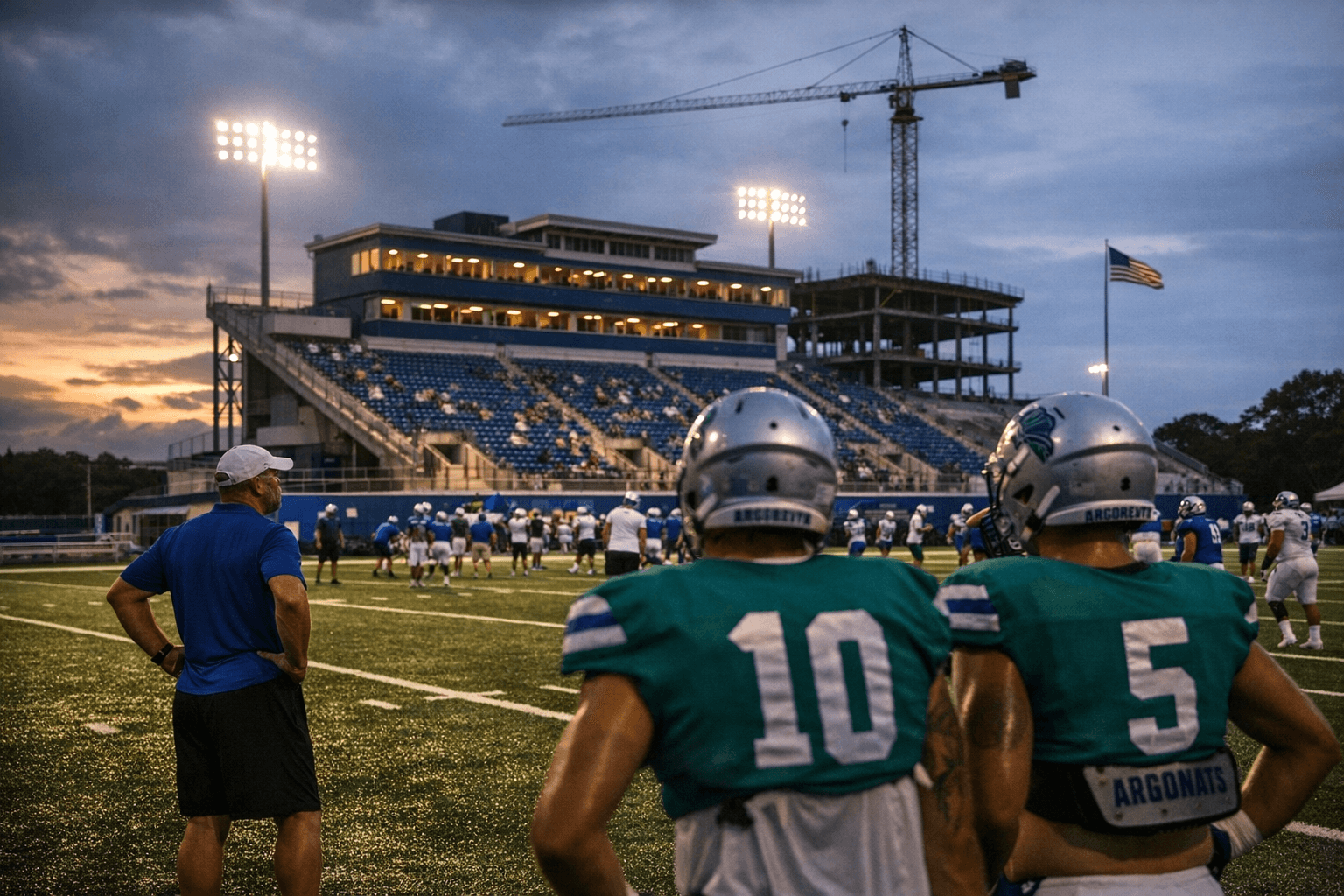
The school’s recent stadium renovations are a meaningful signal here. HERO Sports noted that UWF had broken ground on stadium work before the move, which suggests the infrastructure conversation was already underway before the formal announcement. That is often the difference between a leap that feels aspirational and one that looks credible.
The football case for the jump
West Florida has earned this conversation with performance, not just pitch-deck language. The program first played football in 2016 and reached the Division II national championship game in just its second season, in 2017. By 2019, the Argonauts had won the Division II national title. HERO Sports also noted that West Florida has won more than 70 percent of its games and made six Division II playoff appearances, numbers that explain why the move drew attention across the subdivision.
That kind of rapid rise is rare enough to matter culturally, not just competitively. West Florida is not entering the FCS as a sleepy newcomer trying to survive on reputation. It arrives with a title, a winning habit and a fan base that has already seen the program accelerate faster than most schools ever do. In a sport where many programs spend years trying to become relevant, UWF has already done it once and is betting it can do it again at a higher level.
There is also a broader institutional case behind the football story. UWF said its 15 varsity programs have collected 11 national championships and 136 conference championships at the Division II level, and the department posted a 3.37 cumulative student-athlete GPA in Spring 2025. That matters because the FCS conversation is not only about on-field toughness. It is also about whether the university can carry the academic and operational load that comes with Division I status.
Why the conference fit matters
The Argonauts will join the United Athletic Conference as a football-playing member while competing in the Atlantic Sun Conference in all other sports. That dual arrangement is increasingly familiar in modern college athletics, where football often drives a separate competitive identity. The UAC now lists eight football members: Abilene Christian, Austin Peay, Central Arkansas, Eastern Kentucky, North Alabama, Tarleton State, West Florida and West Georgia. The conference has framed the addition as a boost to both the league and the larger ASUN-UAC alliance.
For West Florida, the conference placement is significant because it offers a direct route into a football environment built around peer programs making similar investment decisions. The move also reshapes the Florida map. West Florida becomes the fourth FCS program in the state, joining Bethune-Cookman, Florida A&M and Stetson. That is a meaningful marker for a program that has spent less than a decade on the field but now wants a place in a much larger statewide football conversation.
The real verdict: ambition or a credible plan?
West Florida’s jump reads as both ambition and evidence. The ambition is obvious in the language from university leaders and in the decision to pay a $2 million entry fee while waiting out a three-year reclassification period with no NCAA postseason access. The evidence is in the football record, the championship pedigree, the academic profile and the stadium work already underway.
That is why this move feels different from a casual expansion announcement. West Florida is not asking the FCS to imagine what it could become. It is presenting a program that has already won at a high level, already drawn attention with rapid success and already started investing in the pieces that separate a hopeful transition from a serious one. The next chapter is not guaranteed, but the setup suggests the Argonauts are trying to build for it the right way.
This article was produced by Prism’s automated news system from verified source data, official records, and press releases, then run through automated quality and moderation checks before publishing. The system is built and supervised by the people who set the standards it runs under. Read our full AI policy.
Did this article answer your question?