eFoil or foil assist, which setup fits your riding style?
The real choice is not motor or no motor, but whether you need the fastest learning curve or the most flexible upgrade path.
The wrong call in foiling is usually made before the board ever touches water. If you are staring at incompatible mast and wing ecosystems, trying to decode controller-board firmware, or weighing battery weight against range, the real decision is not about horsepower at all. It is about how you want to learn, travel, upgrade, and keep the whole system working without turning every session into a setup project.
Start with the simplest question: do you want a complete system or an add-on?
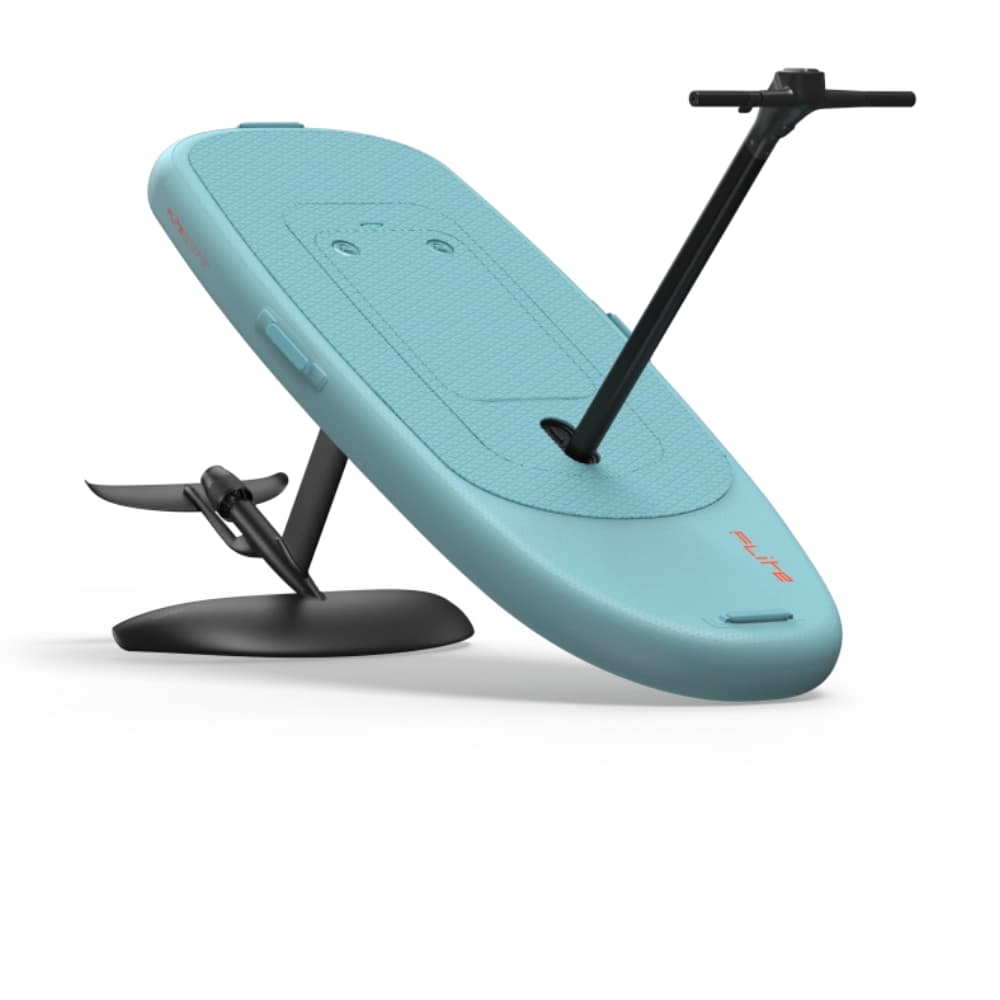
An integrated eFoil is the all-in-one path: board, foil, motor, and battery arrive as one matched package. That makes it the cleanest entry point if you have no foiling background and want the shortest route to standing up, throttling in, and flying above the water. Fliteboard says many riders can learn to eFoil in less than one hour, and that promise explains why the category still pulls in first-timers who want an easier first session than traditional prone or wing foiling.
Foil Assist is a different animal. It is a smaller motor kit added to a regular foil board, so the motor helps you get up, connect in light wind, or bridge weak sections of a wave, but once you are flying you are still riding a more traditional foil platform. That difference matters immediately if you already own prone or wing gear, because the add-on can extend the life of equipment you know instead of forcing you into a fully new platform.
If you are a first-time powered buyer, eFoil still has the lowest barrier
For a complete beginner, the integrated route is still the most forgiving. The package is designed to work together, the learning curve is gentler, and the rider is not also juggling board compatibility, foil fit, and power-module matching on day one. That is why eFoils remain the easiest way for someone with no foiling background to get moving above the water.
The tradeoff is that you are buying into a full system, not just a helper motor. That usually means more money up front and a larger logistics footprint. It also means you are stepping into a category that, in some places, is treated as a vessel. The U.S. Coast Guard has policy guidance covering mechanically propelled personal hydrofoils, and Fliteboard notes that rules can vary by state and country, with registration sometimes required. In other words, an eFoil is not just another board toy. In the legal and practical sense, it can carry more baggage than a standard foil setup.
If you already prone or wing ride, foil assist often makes more sense
The add-on path is built for riders who already have a foil habit and want more range in when and where they ride. If you are prone surfing, wing foiling, or moving between both, foil assist can help with takeoff in marginal conditions, keep you connected through weak patches, and give you a way to get more water time without abandoning your existing board feel.
That is also where the upgrade path becomes a real advantage. Instead of replacing a whole platform, you can start with a stable, forgiving setup and progress through wing sizes and wing geometry over time. The product decision becomes less about one giant purchase and more about how you want to evolve your quiver. For riders who already know what a calm takeoff feels like and what rail pressure they want once the board is flying, that flexibility can matter more than the simplicity of a full eFoil package.
The market is moving toward a hybrid middle ground
The old binary is getting blurrier. Manta describes a middle category under 20 kg, with battery systems in the 700 to 1,000 Wh range, where lighter integrated systems and advanced assist setups begin to overlap. That is an important shift because it shows the category is no longer split cleanly into “full eFoil” or “bare-bones assist.” Riders now have a spectrum of power, portability, and surf feel to choose from.
That hybrid zone is also where the smartest buying decisions are happening. A lighter integrated system may preserve more of the simplicity of an eFoil while trimming some of the transport pain. A more advanced assist setup may deliver enough power to expand your sessions without forcing you into the size and shipping burden of a full electric board. For a lot of buyers in 2026, the sweet spot is not at either extreme.

Price is a separator, but not the only one
Rigid eFoils sit at the expensive end of the market, while foil-assist systems can be much cheaper at the entry level and in used or modular form. Hybrids land in the middle. That price spread is one reason the decision has become so practical: you are not just choosing a ride feel, you are choosing how much of your budget disappears into a single device versus a modular system you can build over time.
The useful question is not, “What is cheapest?” It is, “What matches how I actually ride?” If you only need a powered boost on the same board you already trust, paying for a full integrated system may be overkill. If you want the least complicated route into powered foiling, the all-in-one premium can still be worth it because it buys simplicity, faster progression, and fewer compatibility headaches.
Battery size now shapes the buying decision as much as ride feel
Air travel is one of the biggest reasons foil assist has momentum. The FAA says lithium-ion batteries up to 100 Wh are generally allowed in carry-on baggage, and with airline approval passengers may carry up to two spare batteries in the 101 to 160 Wh range. IATA also says spare lithium batteries should be carried in the cabin, with carriage determined by watt-hour rating. That means battery design is not a side note. It is a product constraint.
Foil Drive has leaned directly into that reality. Its MAX Travel Battery breaks into three airline-approved sections, with two parts at 129.6 Wh and one at 97.2 Wh. Its Slim Travel Battery breaks into two 81 Wh sections and one 97.2 Wh section. Duotone says its Foil Assist batteries are air-travel-friendly at 159.6 Wh, just under the 160 Wh ceiling. Manta says its TakeOff Evo uses 97 Wh battery packs built for multiple-battery travel. Those numbers explain why foil assist often has the edge for riders who actually fly with their gear instead of just talking about it.
Maintenance and setup burden cut both ways
Integrated systems simplify the day-to-day because everything is matched, but they can lock you into a more closed ecosystem. Foil assist asks for more attention up front, especially when you are matching mast, wing, and power hardware. The upside is that the add-on route can be more adaptable, especially if you already have a favorite board or foil feel and want to preserve it.
This is where the friction points show up in the real world: controller-board firmware versions, incompatible foil ecosystems, and the constant tension between battery weight and usable range. The winning setup is not the one with the flashiest spec sheet. It is the one that gets you on the water faster, with fewer mistakes, and with a battery you can actually move, charge, and travel with.
The sport’s history explains why this choice feels so new
Motorized hydrofoils are still a young category. Fliteboard says the idea for a motorised hydrofoil emerged in 2016, Lift Foils says it made the world’s first commercially available eFoil in 2017, and Fliteboard says it hosted the first official international eFoiling race, the Flite Cup, in 2021. Lift Foils also points to 2016 as the year Kai Lenny footage helped push hydrofoil surfing into the mainstream. That timeline matters because it shows why standards are still shifting and why the market is still building around rider needs instead of fixed convention.
For now, the decision tree is clear. If you want the easiest possible entry, the integrated eFoil still wins. If you already ride prone or wing and want more range, more travel flexibility, and a lower-cost way to add power, foil assist is the sharper fit. The middle ground is growing fast, and the smartest buy is the one that matches your real sessions, not your fantasy quiver.
This article was produced by Prism’s automated news system from verified source data, official records, and press releases, then run through automated quality and moderation checks before publishing. The system is built and supervised by the people who set the standards it runs under. Read our full AI policy.
Know something we missed? Have a correction or additional information?
Submit a Tip