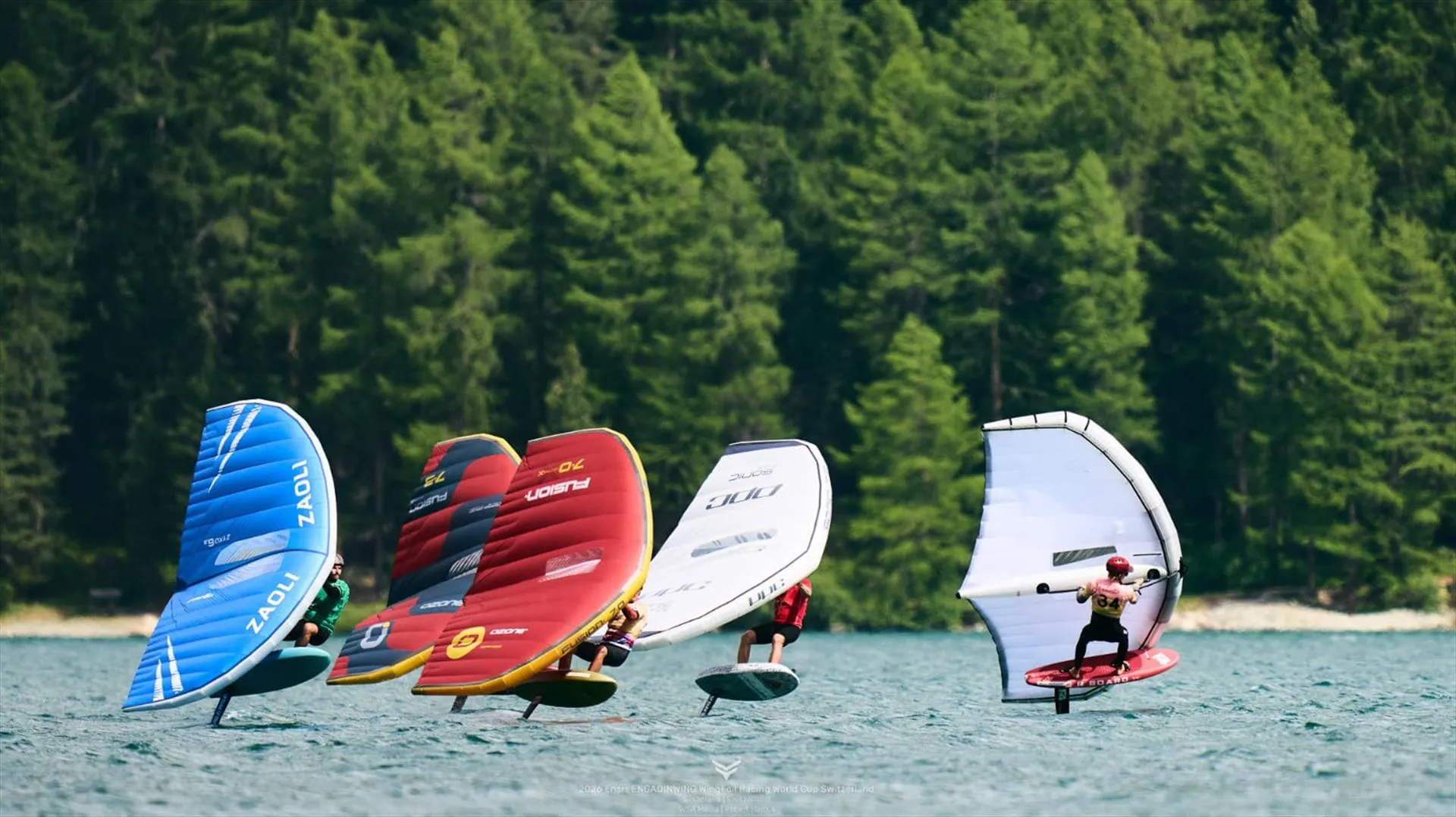
WingFoil Racing World Cup opener stalls in Switzerland for lack of wind
Silvaplana’s famed Maloja wind went missing on day one, stranding 58 riders and turning a five-day World Cup into a waiting game.

Lake Silvaplana did what it so often does at the top of wingfoil racing: it made the field wait. The 2026 ENSIS Engadinwing WingFoil Racing World Cup Switzerland opened with a full start list and no start gun, as the Maloja wind never built enough breeze to send the fleet racing.
That mattered more than a blank score sheet. Silvaplana sits about 1,800 metres above sea level in the Engadin valley, where thin air, cold water and a tight, short racecourse turn every forecast into a tactical puzzle. The venue is famous for its thermal Maloja breeze, but it is also famous for the days when the thermals never quite lock in. That is the tradeoff that brings the world’s best back to Graubünden anyway.
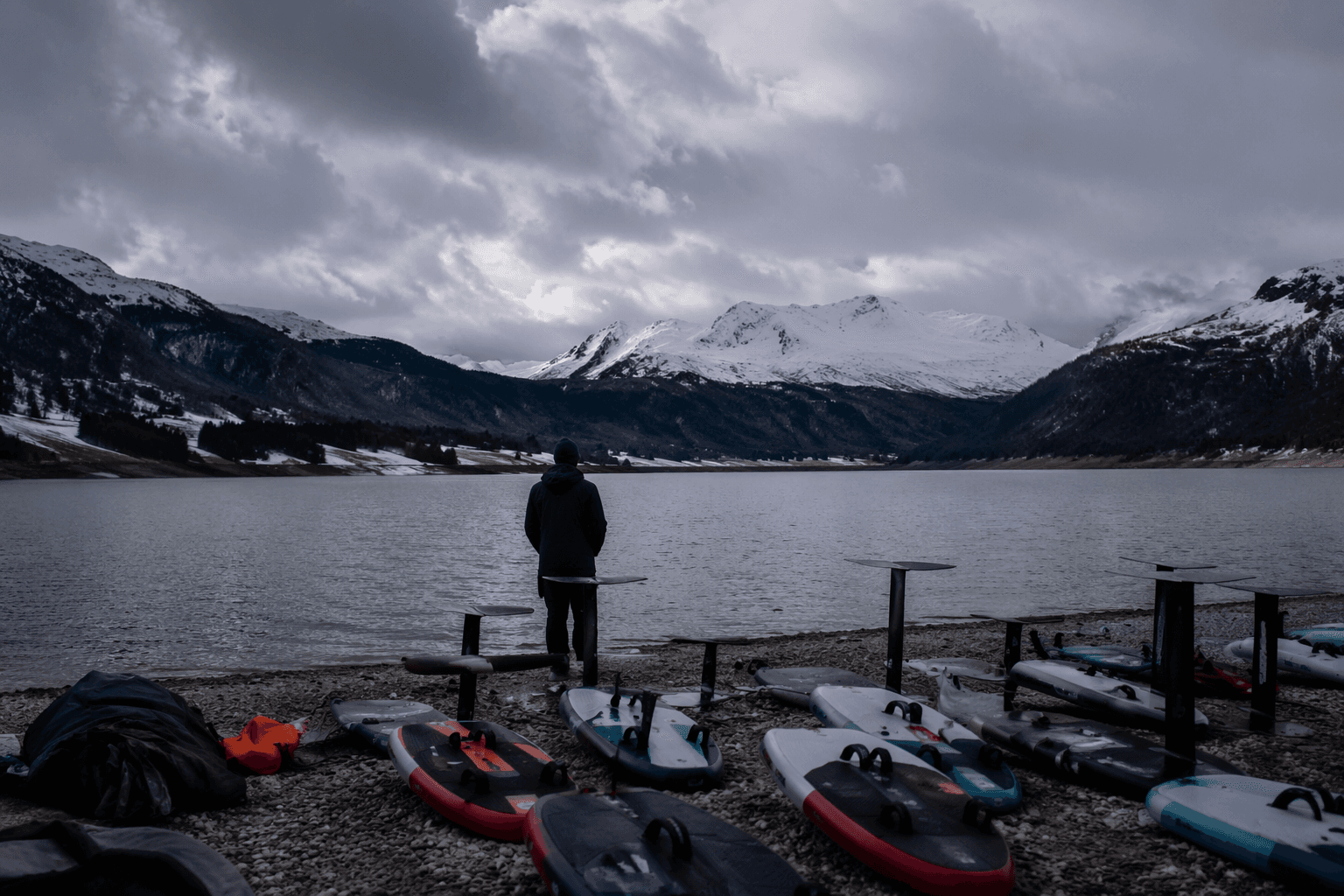
The scale of the stop showed why the opening missed matters. A total of 58 competitors were entered, 48 men and 10 women from 18 countries and six continents, giving the Swiss round a deeper international field than many stops on the calendar. Last year’s Silvaplana World Cup drew 54 riders from 13 countries and four continents, so this edition already carried more reach and more pressure before anyone got on the water.
The racing window runs from June 15 to June 20, with first possible starts set for 12:00 each day and prize-giving scheduled for 18:00 on Saturday, June 20. That leaves the fleet built for a compressed week if the wind window tightens. In a venue like Silvaplana, that can change everything fast. A late thermal can turn a quiet morning into a brutal short-track session, and riders who save energy, stay sharp and read the lake correctly usually get paid.
Organizers have framed Engadinwind and Engadinwing as more than a race stop, calling it a unique watersports and lifestyle event that mixes innovation with water sports, and the fifth Engadinwing on Lake Silvaplana fit that description even without a heat on the board. The next call will matter now: if the Maloja breeze fills, the athletes get rhythm and race time. If it does not, the points pressure builds, the schedule gets tighter, and the best riders on paper may have to wait for the lake to decide who gets a real chance.
This article was produced by Prism’s automated news system from verified source data, official records, and press releases, then run through automated quality and moderation checks before publishing. The system is built and supervised by the people who set the standards it runs under. Read our full AI policy.
Know something we missed? Have a correction or additional information?
Submit a Tip