Royal Armouries Museum shapes HEMA culture in Leeds
Leeds is where HEMA meets the source material in motion: free daily fights, rare manuals, and a deep archive still shape how the sport is trained.

Free daily combats at Royal Armouries Museum in Leeds can move a HEMA visit from spectacle to source material in the same hour. A gallery built around tournament arms, and an online collection of objects, archives, and library records, give fighters and researchers a live test bench for technique, armor, and interpretation.
Why Leeds matters to HEMA now
Leeds was not an accident of tourism. In 1990, after two years of preliminary research and deliberation, the Royal Armouries chose a new home in the north of England to house the bulk of its collection, then opened the Derek Walker-designed museum in a £42.5 million building on 30 March 1996. That move concentrated the majority of the museum’s holdings in a city that sits outside the Tower of London story but inside the live conversation about arms, armor, and fighting methods.
The Royal Armouries is the UK’s national museum dedicated to arms and armour, with research obligations under the National Heritage Act 1983, and its collection keeps growing rather than freezing in place. For HEMA, Leeds functions as a practical base camp: the museum holds the objects, the records, and the expertise that turn a club debate into a documented comparison.
What the live combats teach
For a fighter, the first stop is the daily combat program. The demos are free, usually happen every day, seat visitors on a first-come, first-served basis, and run about 10 to 15 minutes, with live interpretation always on offer even when staff sickness forces a substitute talk or character show. The examples are concrete enough to be useful: medieval longsword, 16th-century foot combat in armour, Roman versus Celtic combat, and the Japanese samurai first-draw attack all show the museum treating combat as a sequence of decisions about distance, protection, and timing rather than costume pageantry.
The interpretation team turns a source period into a live argument about movement, tempo, and gear. Visitors can handle objects and ask questions, giving the daily combats the feel of a short, public lab session rather than a one-way show.
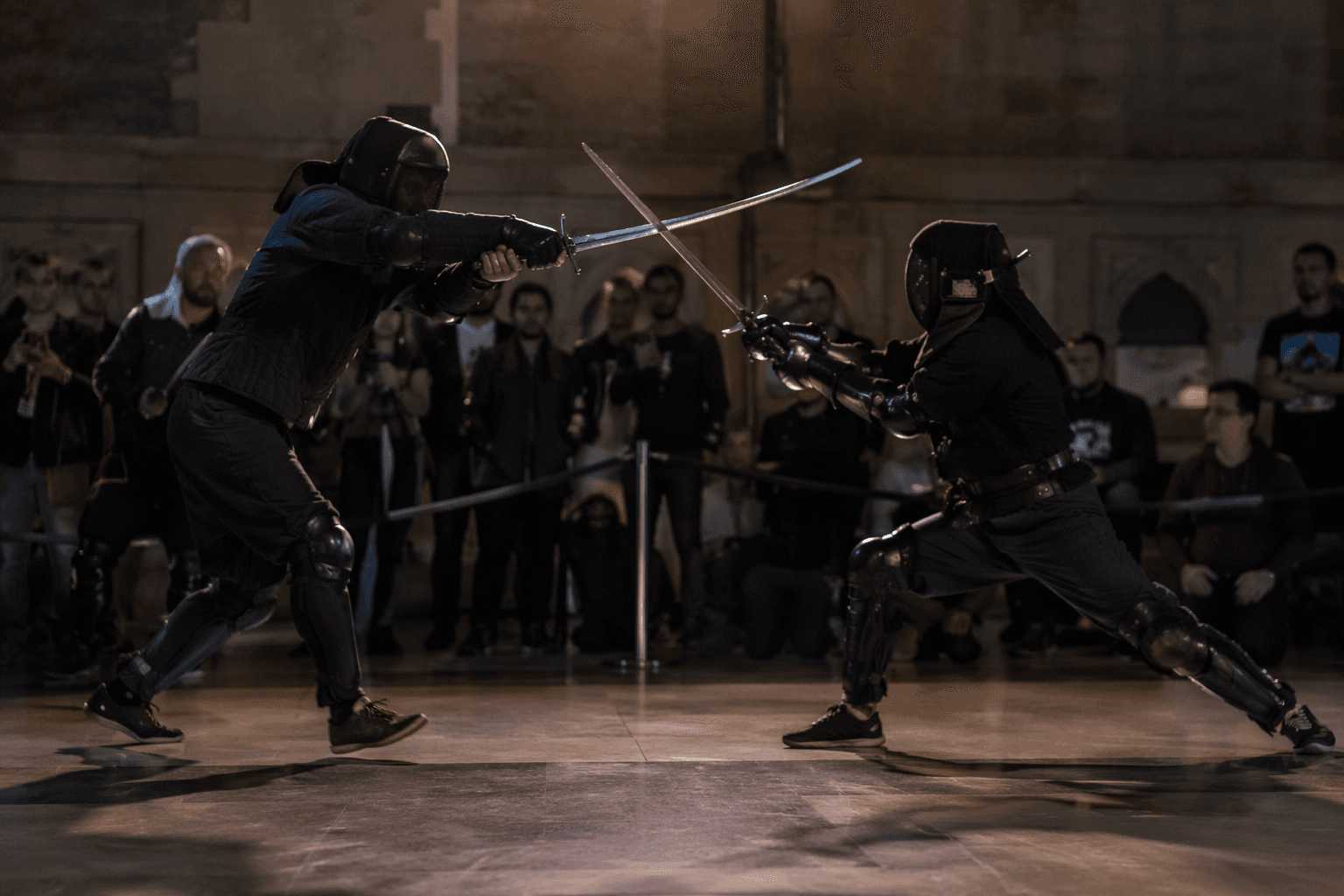
The Tournament Gallery is a study in competitive pressure
The Tournament Gallery makes the competitive logic explicit. Tournaments were extreme sporting events often organized to show royal or noble power, and the era of tournaments lasted 600 years. In Leeds, that story is told through fearsome weapons, special armour developed for different competitions, the Field of Cloth of Gold, Henry VIII’s armoury, gift armours, sporting weapons, and two innovative armours made for Henry VIII.
The gallery shows how armor changes when the fight has a rule set, a performance goal, and a crowd, which is exactly the pressure modern tournament formats create in different form. Royal Armouries has even added a display on modern jousting and how the institution reinvented tournaments for a new audience.
Manuscripts and facsimiles change the argument
The manuscript side is just as practical. Royal Armouries MS I.33 is the oldest known western swordsmanship manual, and the museum’s facsimile, The Medieval Art of Swordsmanship, gives practitioners a common edition to work from; the museum also publishes The School of Fencing, a facsimile of Domenico Angelo’s 1765 edition. That access gives clubs and researchers a shared text to test against instead of blurry scans or second-hand summaries.
The museum’s collection online widens that access further. Its online collection lets users browse thousands of records from objects, archives, and library materials, while the separate Objects and Stories platform invites searchers to uncover battles, legends, and craftsmanship behind the pieces. A club can compare a plate in a manuscript to an actual object record, or turn a gear discussion on what a historical weapon was really built to do.
A good example is the cinquedea project, where a replica was developed with Matt Easton and Windlass Steelcrafts and approved by curator Iason Eleftherios Tzouriadis and assistant curator Scot Hurst. It turns an object in storage into a modern reference point for shape, balance, and use.
The archive is the quiet engine behind the sport
The archive side of Royal Armouries is larger than many visitors expect. The Leeds holdings sit inside nearly 500,000 documents, files, bound volumes, photographs, films, and videos, with main material tied to the collection itself, arms and armour research, the Royal Small Arms Factory, the MOD Pattern Room, and company records such as Wilkinson Sword. Researchers can access the archives at all three sites, use copying services in Leeds, and draw on exhibitions, talks, seminars, and the library, which is open on Thursdays by pre-booking.
The collection can be studied online or in person, and the archives, library, and research staff supply source material for everyone from independent fighters to academic historians.
Why the curator matters
Iason Eleftherios Tzouriadis links scholarship and the floor in Leeds. He is Curator of European Edged Weapons, and his research interests include European martial arts and foot combat tournaments; he studied at the Aristotle University of Thessaloniki and the University of Leeds, completed PhD studies there from 2012 to 2017, and has lectured at international conferences, public engagement events, and university seminars.
This article was produced by Prism’s automated news system from verified source data, official records, and press releases, then run through automated quality and moderation checks before publishing. The system is built and supervised by the people who set the standards it runs under. Read our full AI policy.
Know something we missed? Have a correction or additional information?
Submit a Tip