Scientific analysis confirms Tuscany’s medieval sword in the stone is real
Chemical analysis has kept Tuscany’s Montesiepi blade from becoming just another Excalibur story: it is genuine medieval iron, still set in bedrock since the 1180s.
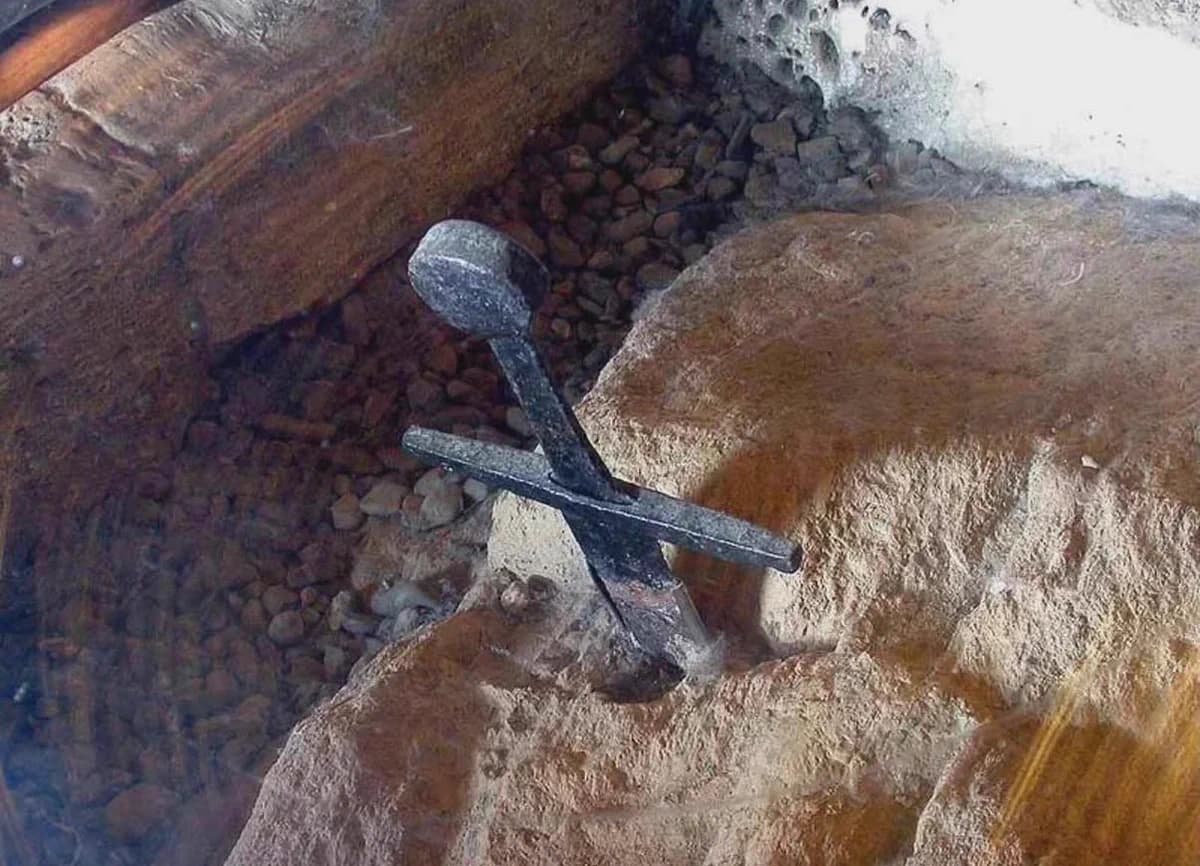
The sword at the Hermitage of Montesiepi in Tuscany is not a prop, a later souvenir or a romantic fake. Scientific analysis confirmed the blade is genuine medieval iron, and the object has reportedly sat in bedrock since the 1180s, turning a legend tied to Galgano Guidotti into one of HEMA’s sharpest reality checks.
That matters because modern sword culture often starts from assumptions about how a 12th-century blade should feel in the hand, how it should track through the cut and how much authority it should carry in training drills. This sword says the medieval world was not working from simulation. It was producing functional iron, then sometimes turning that iron into relics, rituals and sanctuaries. At Montesiepi, the blade still visible in Tuscany keeps those categories tangled together: weapon, votive object and historical evidence.
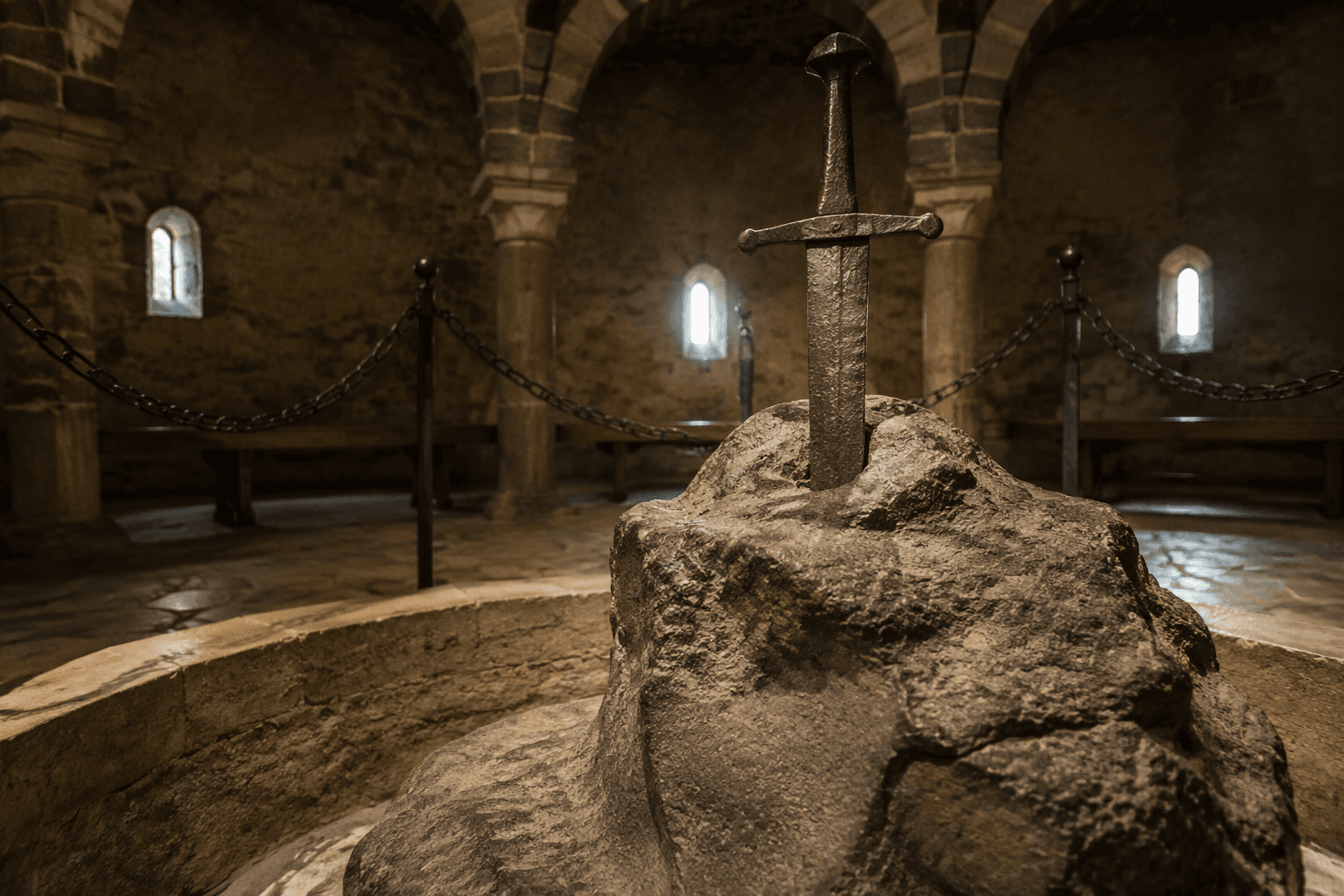
Galgano Guidotti, later venerated as San Galgano, was born in 1148 in Chiusdino, in the province of Siena. The sword tradition is tied to his late-12th-century renunciation of violence, and the artifact remains linked to that local saint’s story at Montesiepi, near San Galgano Abbey. That connection has long made the blade more than a curiosity. It is a fixed point for anyone trying to separate medieval martial practice from the legends built around it.
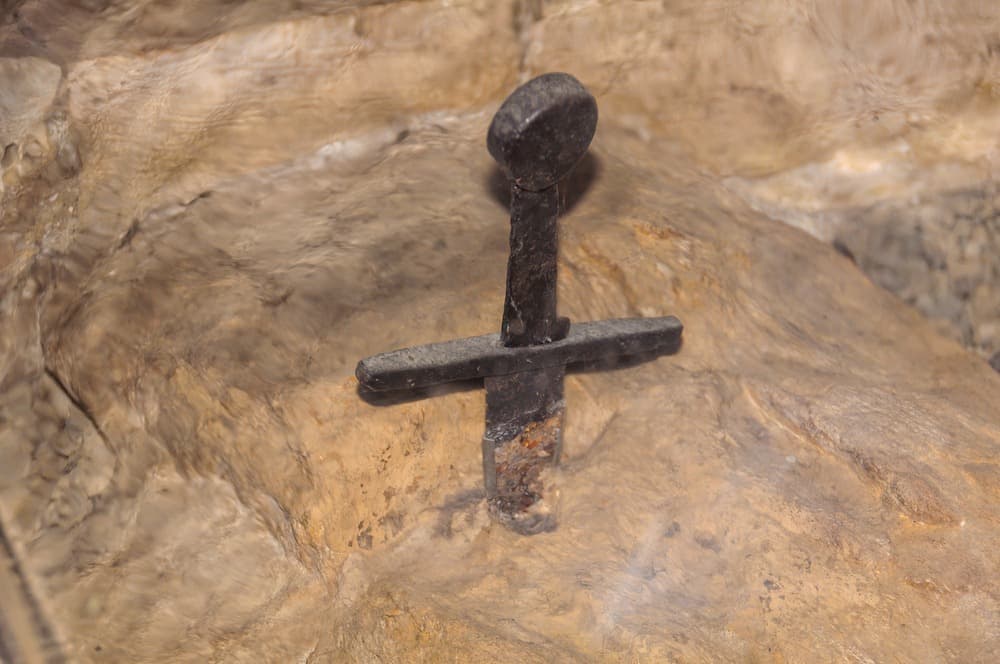
The comparisons with Excalibur have never stopped. An Archaeology Magazine archive item from January and February 2002 called it Tuscan Excalibur, and a 2023 report on chemical analysis again said Italy’s sword in the stone was not a fake. The persistence of that label is useful for HEMA because it exposes a common mistake: treating the best-known sword stories as if they automatically explain how real swords were used. The Montesiepi blade does the opposite. It shows how a genuine weapon can become a devotional object without losing its material truth.
For makers, instructors and competitors, the takeaway is not that training manuals should suddenly be rewritten around a sword embedded in rock. It is that real medieval steel lived in a world of belief, status and ritual as much as motion and edge geometry. The blade at Montesiepi is still there to see, and it keeps the conversation honest: before anyone argues about how a 12th-century sword moved, they have to remember that one of the era’s most famous blades ended up in a chapel, not a bout.
This article was produced by Prism’s automated news system from verified source data, official records, and press releases, then run through automated quality and moderation checks before publishing. The system is built and supervised by the people who set the standards it runs under. Read our full AI policy.
Did this article answer your question?