SwordFight Club adds rare 1901 Hungarian duelling text to collection
SwordFight Club added a 1901 Hungarian duelling text tied to Royal Hungarian Hussars officers, a find that could shape research, drills and club identity in Bromley.
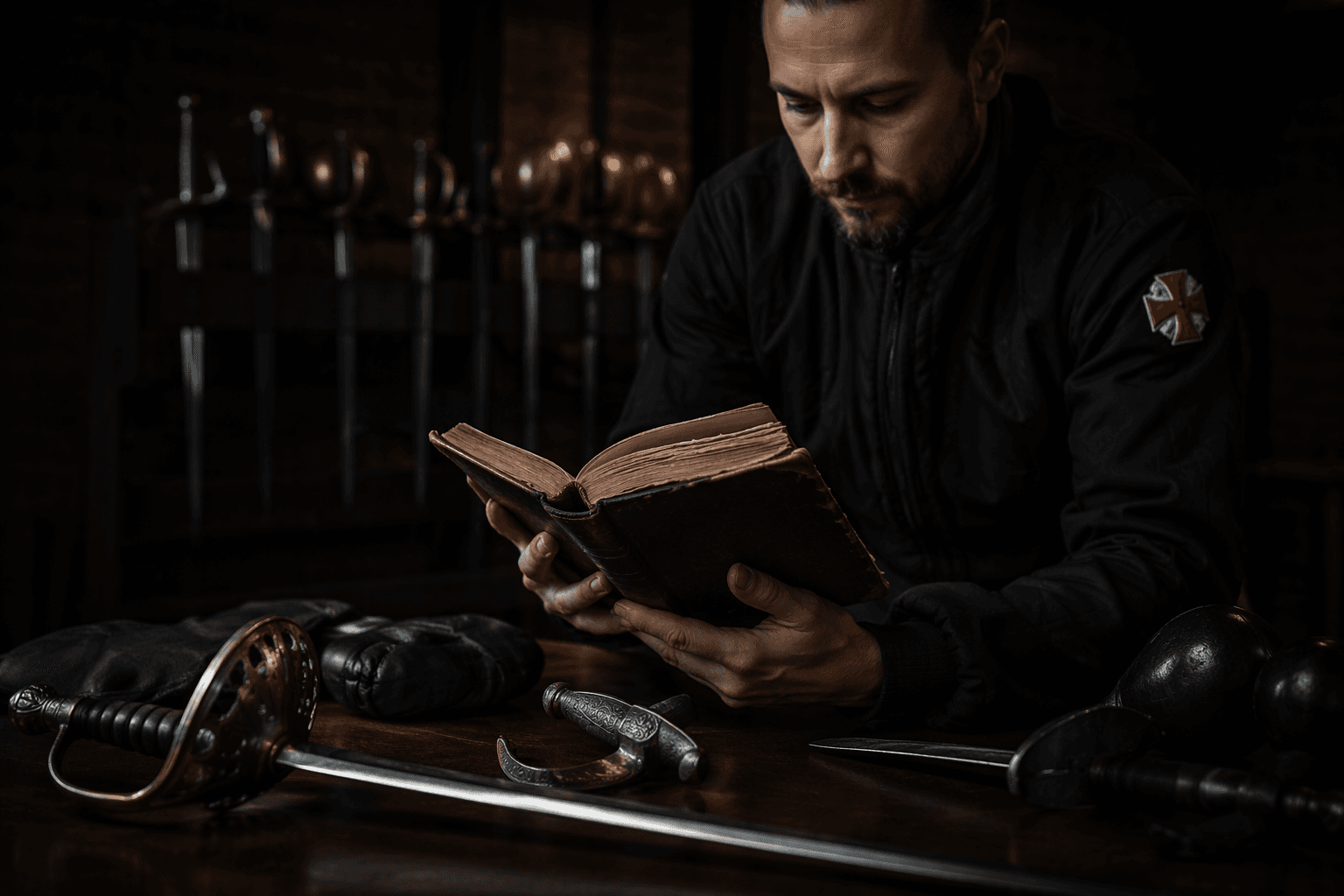
SwordFight Club added a rare 1901 Hungarian duelling text to its collection, and the new book reaches well beyond shelf value. The Bromley HEMA club now holds A kardpárbaj veszélytelen kimenetele és annak eshetőségei, a work by First Lieutenant Zoltán Cseresnyés Felső-Eőri of the Royal Hungarian Hussars, with a foreword by Baron Jenő Bothmer, a captain of hussars.
That combination makes the volume unusual even by historical fencing standards. It sits at the edge of the source base most practitioners know best, opening a window onto the late duelling world of Austria-Hungary, where officer honor, military codes of conduct and formalized sword culture still shaped the way men wrote about violence, etiquette and reputation. In that sense, the book is not just an old title for a collector’s shelf. It is a snapshot of how swordsmanship was understood inside a military culture that still treated duelling as part of officer identity even as criticism of the practice grew.
For Bromley practitioners, the significance is immediate. SwordFight Club, founded by Gábor Antali in 2023 and based in South London, already trains Historical European Martial Arts with a focus on longsword in Wednesday group classes at The Pavilion Leisure Centre, Studio 1, High Street, Bromley, from 19:30 to 21:00. A source like this can influence more than reading lists. It can shape workshop themes, spark translation projects and sharpen discussion around what historical fencing looked like when the sword was tied to honor culture as much as battlefield use.
The hussar connection matters too. Hungary’s hussar tradition is widely recognized as a long-running military symbol, and that background gives the book extra weight for anyone studying cavalry culture, officer education or the social status attached to weapons in Central Europe. A foreword by a captain of hussars reinforces that world even more clearly, placing the text inside the military and literary network that sustained duelling knowledge at the turn of the century.
For a club like SwordFight Club, this kind of acquisition does more than broaden a library. It strengthens the link between practice and scholarship, which is where HEMA often gains its sharpest edge. Rare texts can change how a group interprets technique, frames historical context and explains the culture behind the blade, and this Hungarian volume could feed that work long after the June 1 addition.
This article was produced by Prism’s automated news system from verified source data, official records, and press releases, then run through automated quality and moderation checks before publishing. The system is built and supervised by the people who set the standards it runs under. Read our full AI policy.
Know something we missed? Have a correction or additional information?
Submit a Tip