Wardragon refreshes HEMA school finder to help Europeans train
Wardragon’s refreshed school finder tackles HEMA’s oldest hurdle: finding a real club nearby. In a sport built on local groups, that kind of map can turn curiosity into training.
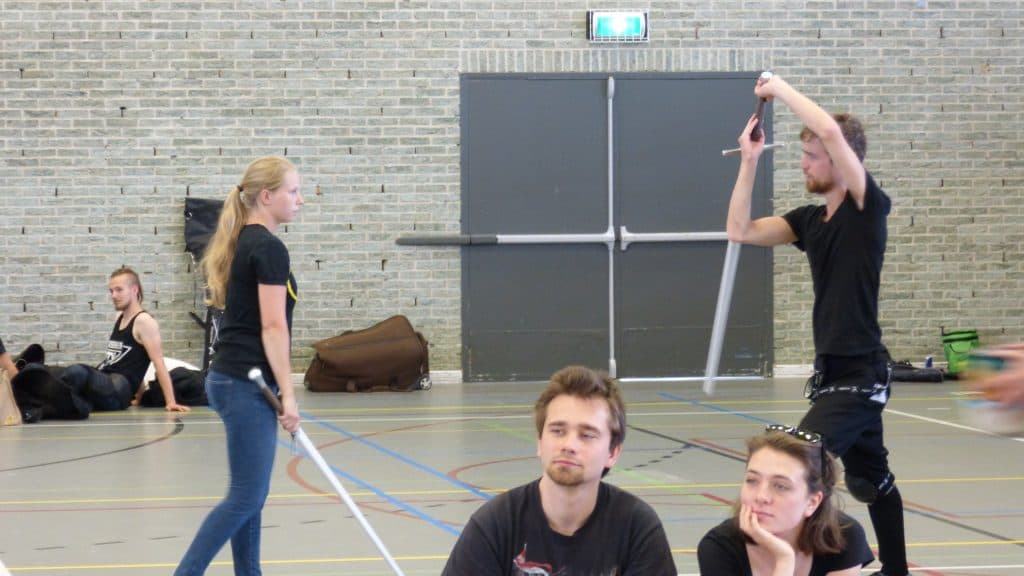
Wardragon’s updated H.E.M.A. Schools page goes after the most ordinary problem in Historical European Martial Arts, and the one that keeps too many curious newcomers outside the door: finding a legitimate place to train. The directory is meant to help European fencers locate clubs, academies, and study groups nearby, then move from online interest to an actual training hall. In a sport where the first breakthrough is often not technique but access, that makes the refresh more than a housekeeping change.
Why a school finder matters in HEMA
HEMA does not usually start with a league office, a school district, or a central registration desk. It starts with a search for a nearby club, a message to someone already in the scene, and a first night borrowing gear and learning the basics from more experienced fencers. That structure makes discovery the real bottleneck, because the hardest part is often not showing up to practice, but knowing where practice exists in the first place.
Wardragon is trying to reduce that friction. The H.E.M.A. Schools page is framed as a school finder for historical European martial arts, and the site says it keeps extending and editing the page so practitioners can find a club and get on the path to sword fighting training. That gives the directory a clear purpose: it is meant to be a living map of active groups, not a static list that goes stale the moment a club changes location, shuts down, or adds a new class.
What Wardragon is building around the directory
The school finder does not stand alone. Wardragon describes itself as an HEMA and swordsmanship website built to share useful information for Historical European Martial Arts, including history, club locations, equipment guidance, and reading material before training begins. It also presents itself as specialized for Europe, which matters because the site is designed for a regional audience that may be dealing with language barriers, national federations, and highly localized club networks.
That broader setup is part of the value. Wardragon’s home page positions the site as a place for news, information, reviews, clubs, equipment, and events, with a specific promise of a European school finder and coverage of tournaments, seminars, and masterclasses. In practical terms, the directory becomes a gateway into the rest of the platform, guiding a beginner from the first search for a club to the next decision points: what to read, what to buy, and what event might be worth attending after the first few lessons.
The access problem is bigger than one site
Wardragon’s refresh lands in a wider HEMA ecosystem that already depends on discovery tools. The HEMA Alliance says its club finder helps people locate a group near them, and its New to HEMA page says there are hundreds of clubs and schools across the world. IFHEMA says the push to establish an International Federation of Historical European Martial Arts began in 2010, a reminder that the sport has been building organizational structure for years even as it remains decentralized in daily practice.
Other directories show just how scattered the scene can be. HEMA Resources says its club finder lists over 300 HEMA clubs teaching sword fighting worldwide. HEMA Ratings’ club database shows 1,936 club entries. Those numbers tell the same story from different angles: there is plenty of HEMA out there, but it is spread across a wide and uneven map, and a newcomer can still spend a lot of time trying to separate active clubs from outdated pages and dead links.
From late-1990s movement to post-pandemic growth
The scale of the directory problem makes more sense against HEMA’s growth pattern. An essay on the sport’s rise says the modern movement first appeared in the late 1990s and gained popularity through the 2010s. It also says clubs and competitions saw a dramatic increase in membership and registration after the COVID-19 pandemic. That kind of rebound usually stresses the same weak points in any grassroots sport: more interest, more demand for beginners’ entry points, and more pressure on the systems that help people find where they belong.
That is where a living school finder becomes useful beyond simple convenience. If HEMA is expanding, then visibility becomes part of participation. A directory that actually reflects active clubs can help people connect with a nearby study group, an academy with structured instruction, or a smaller club that still has room for another beginner. It also gives clubs another path to being found by people who may never encounter them through social media algorithms or word of mouth.
What this means for European practitioners
Wardragon’s emphasis on Europe gives the directory a specific edge. HEMA is international, but training is local, and local discovery still drives the first step into the sport. For a European beginner, a well-maintained school finder can narrow a search that might otherwise cross national borders, language communities, and scattered event calendars before landing on a place to train.
That is why the refresh matters even without the flash of a tournament result or a championship bracket. A school finder is quiet infrastructure. It does not award medals, but it can determine whether a new fencer ever gets to the first lesson, the first borrowed mask, or the first controlled bout. In HEMA, those first encounters often define whether someone stays.
The bigger picture
Wardragon is not trying to solve HEMA’s access problem alone, but the update shows how much a better directory can matter in a sport built on clubs. By pairing a school finder with news, equipment guidance, reading recommendations, and event coverage, the site is positioning itself as a practical starting point for European practitioners who are still figuring out where to train and how to enter the scene.
The larger lesson is simple. HEMA keeps growing, but growth only becomes participation when the path is visible. The more accurately clubs, study groups, and academies can be mapped, the less likely interested fencers are to get lost before they ever touch a sword.
This article was produced by Prism’s automated news system from verified source data, official records, and press releases, then run through automated quality and moderation checks before publishing. The system is built and supervised by the people who set the standards it runs under. Read our full AI policy.
Know something we missed? Have a correction or additional information?
Submit a Tip