Why historical fencing books put wrestling and daggers at center stage
Historical fencing books put the body first: Fiore’s Getty manuscript opens with unarmed and dagger plays, and that changes how HEMA reads distance, clinches and weapon retention.
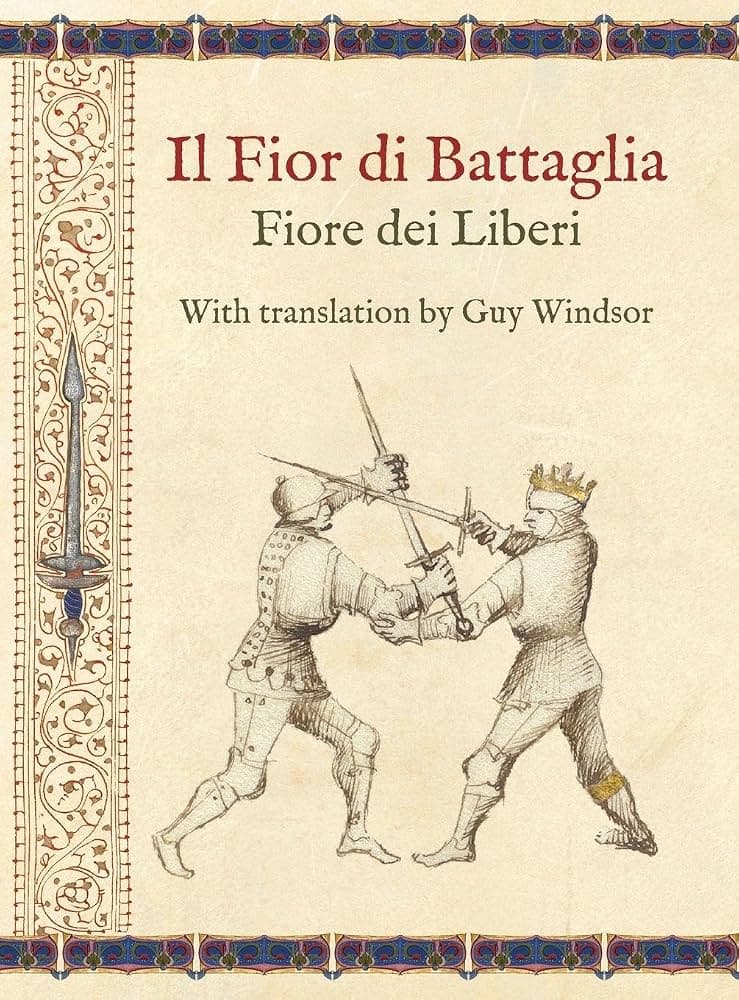
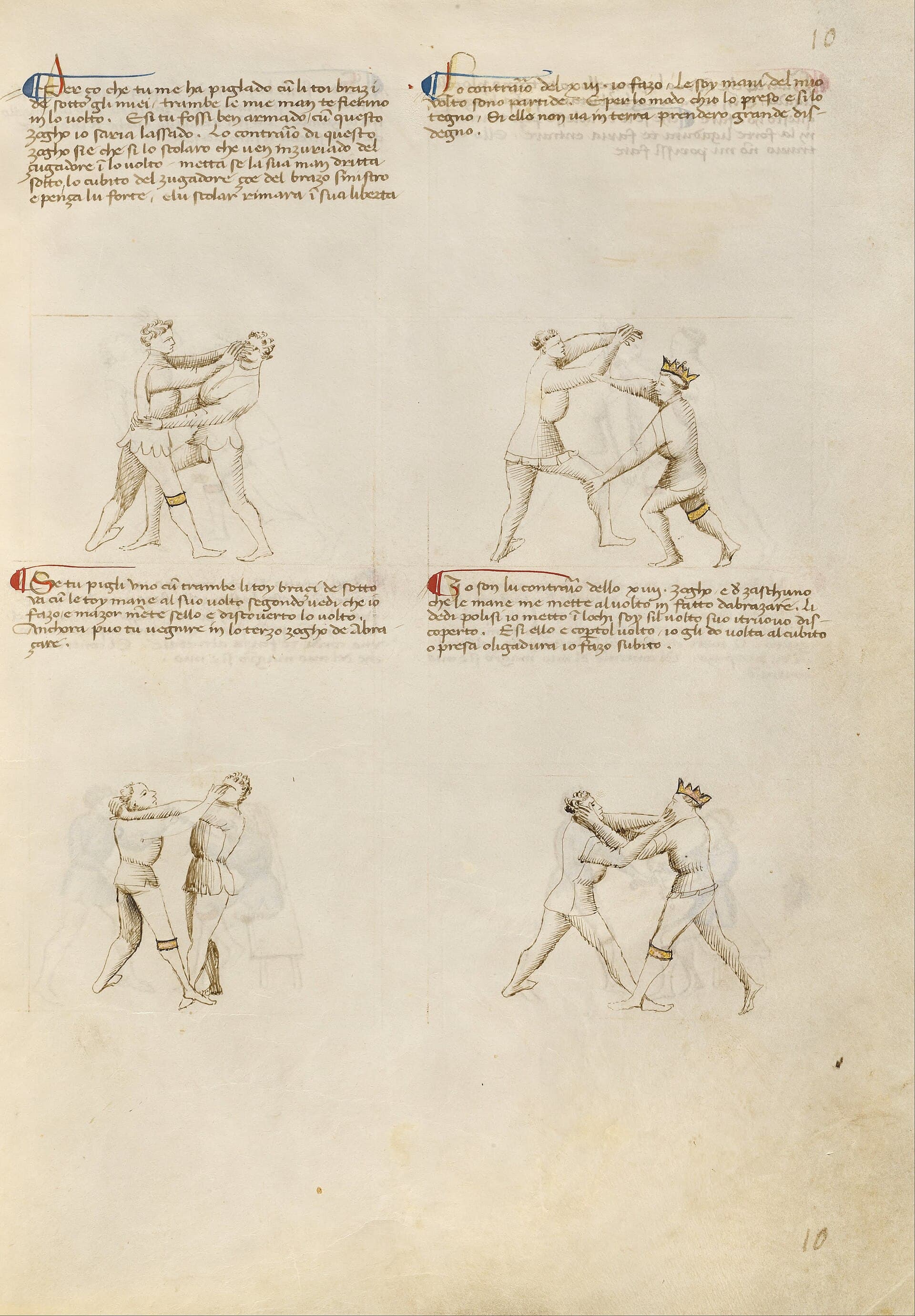
In Fiore dei Liberi’s Il Fior di Battaglia, Unarmed Combat runs from folios 5v to 7v, and Combat with Rondel and Dagger and Combat with Dagger begin on folio 8. That layout puts grappling and knife work at the front of the source instead of in the margins.
The manuscript starts with close work, not long blades
The Getty manuscript is dated to about 1410 and belongs to one of the oldest surviving fencing traditions. Fiore dei Liberi, dated from about 1350 to after 1409, is the earliest Italian master from whom an extant martial arts manual survives, and the Flower of Battle is among the oldest surviving fencing manuals. The manuscript is not a narrow notebook of a single weapon, either. It is a broader combat treatise with weapons and instructional imagery, which means the unarmed and dagger sections sit inside a system built to explain fighting, not a museum display of separate tricks.
Fiore was a fencing master at the court of Niccolò III d’Este in Ferrara and the greatest fencing-master of the late 1300s. The manuscript is aimed at practical instruction in the intricacies of combat.
Wrestling shows up because the fight does
Most 15th-century martial arts manuscripts include at least one wrestling treatise, and wrestling was often treated as part of armed combat rather than as a separate discipline. The body is not an interruption between weapon exchanges; in many manuscripts, it is part of the same fight, especially once distance collapses and the opponent gets inside the blade.
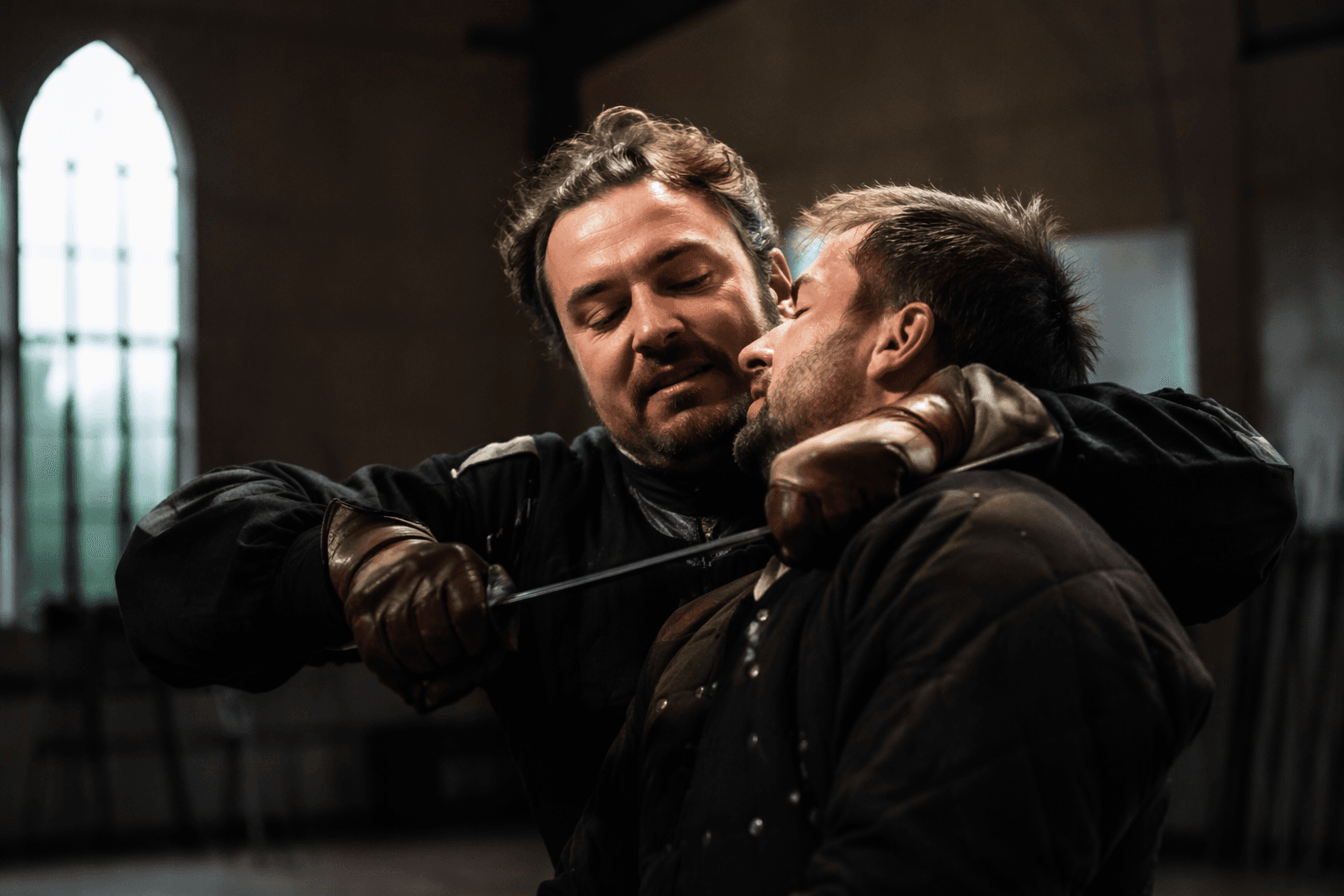
Reconstructing HEMA requires consulting fencing treatises, wrestling treatises, and books of military strategy. Sword work, clinch work, and battlefield or tactical context were not isolated silos. The manuscripts were handwritten books until the mid-15th century, which helps explain why the surviving material often moves fluidly between weapon play and unarmed control rather than presenting a modern-style split between “fencing” and “wrestling.”
Dagger work changes how longsword distance is understood
The dagger sections in Fiore are not side notes. Close-range control is a core part of the system. Once a fight compresses that far, distance, posture, and hand fighting matter as much as edge alignment or thrust placement.
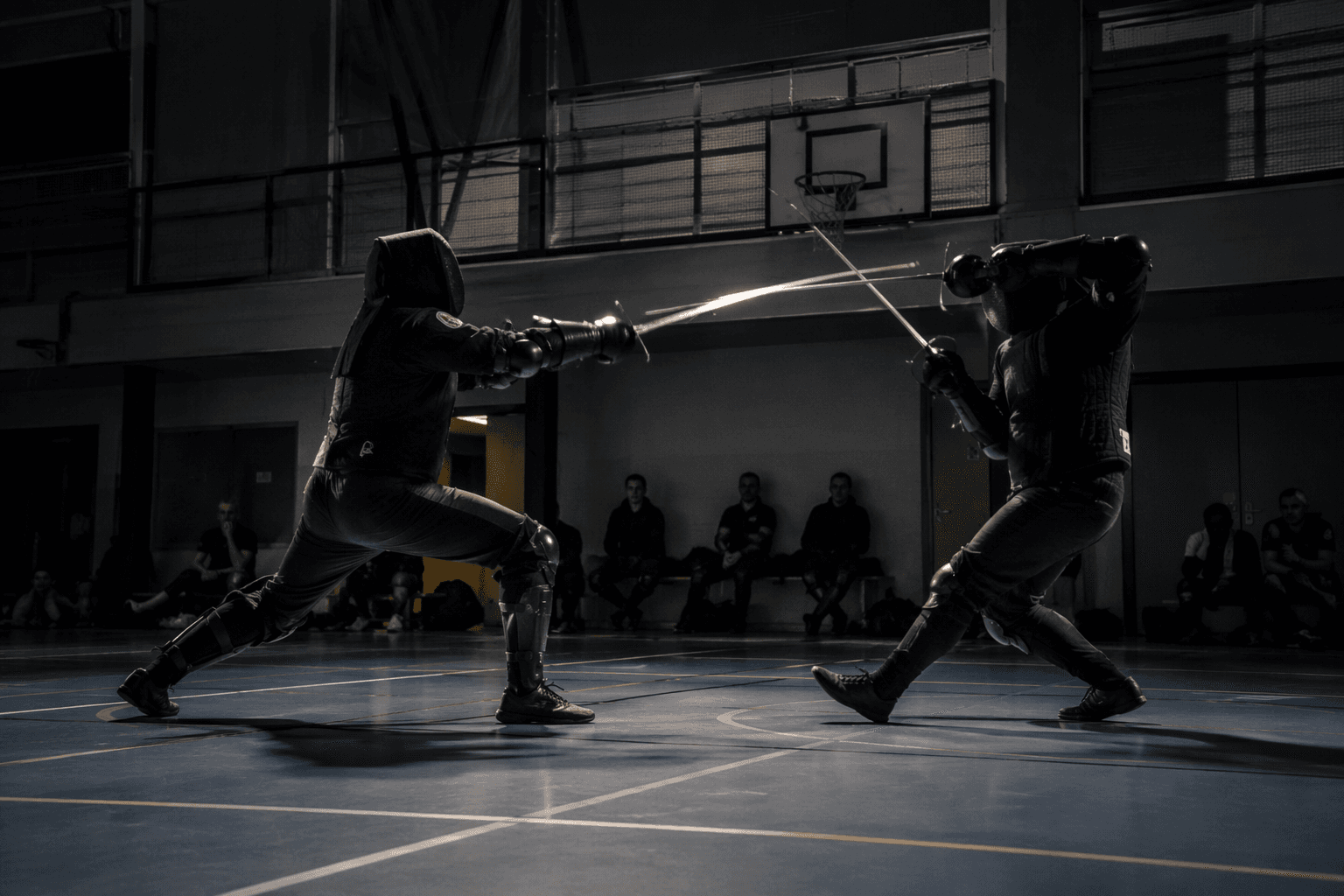
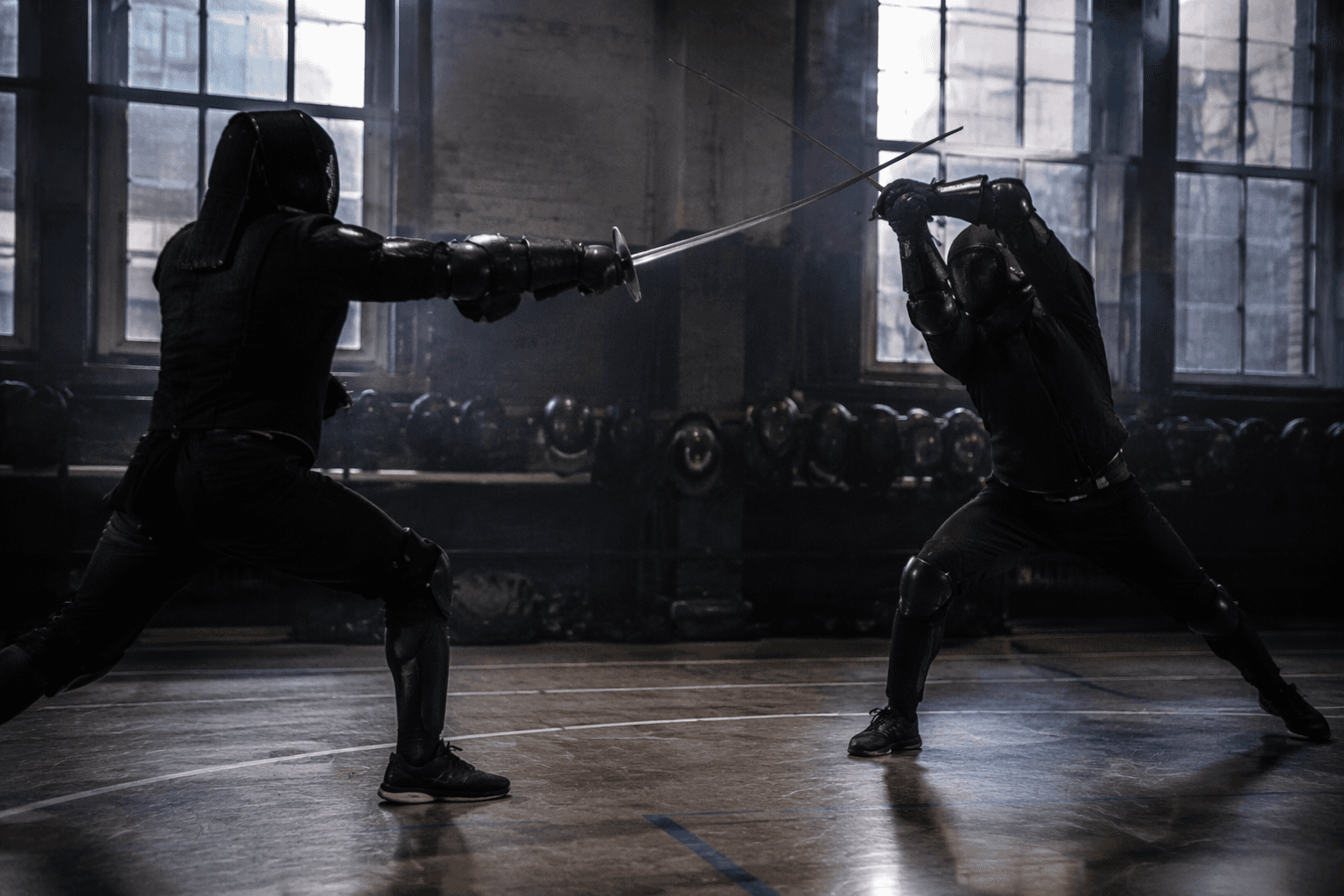
Dagger and empty-hand skills improve the way fencers read longsword exchanges today. A bout that starts at measure can turn into a clinch, and the historical sources repeatedly anticipate that shift. If you only train for blade-on-blade space, you miss the moments when a fight becomes a problem of balance, grips, takedowns, and weapon retention. In armored contexts, that same close work becomes even more important, because armor changes the value of cuts and makes control, disarms, and throws harder to ignore.
Western martial methods contain considerable understanding of grappling, disarms, takedowns, ground-fighting, and submission holds.
Why modern clubs keep coming back to the same material
The HEMA Alliance counts hundreds of HEMA clubs and schools across the world, along with active online communities and shared resources such as Wiktenauer and HEMA Scorecard. Clubs have to teach close-range, high-contact material in a way that is both historically grounded and safe to spar.
The HEMA Alliance’s training guidance focuses on enforceable safety frameworks and on reducing physical and social harm. For dagger and unarmed material, intent, speed, and body contact can escalate quickly if the format is not controlled. In practice, the same material that makes the sources historically rich also makes modern coaching more demanding: fencers need to learn when to enter, when to disengage, and how to keep a training bout both realistic and responsible.
The broader movement treats this as mainstream
IFHEMA’s initiative to establish an International Federation of Historical European Martial Arts began in 2010. Tournaments, clubs, and coaches have a shared stake in how wrestling, dagger, and weapon-retention work are taught and scored.
This article was produced by Prism’s automated news system from verified source data, official records, and press releases, then run through automated quality and moderation checks before publishing. The system is built and supervised by the people who set the standards it runs under. Read our full AI policy.
Did this article answer your question?