Branch McCracken led Monrovia to back-to-back Tri-State titles
Monrovia beat Aurora 29-21 for one Tri-State crown, then repeated in 1926, showing how a tiny school from 32 boys could measure up against Ohio and Kentucky powers.
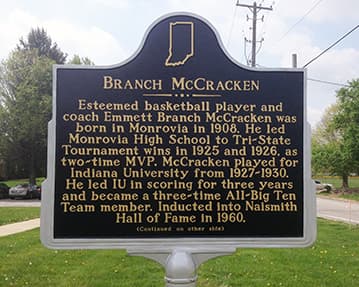
Monrovia’s back-to-back Tri-State Tournament titles showed that Indiana basketball reputations were once forged far beyond the state tournament bracket. In Cincinnati, where high school teams from Indiana, Ohio and Kentucky met on neutral ground, Branch McCracken turned a small Monrovia program into a regional standard by winning the 1925 final 29-21 over Aurora and then returning to claim the title again in 1926.
The 1925 field put that accomplishment in sharp relief. The Indiana Historical Bureau says 53 teams entered the tournament that year, including 14 from Indiana, with Anderson, Columbus and Logansport among the contenders expected to matter most. That kind of field made the Tri-State Tournament more than a weekend showcase. It was an interstate audit, one that tested whether a team could survive outside the comfort of sectional rivalries and the familiar language of Indiana gym culture. Monrovia did more than survive. After six consecutive victories, it left Cincinnati as champion, and McCracken’s place on the mythical All Tri-State Team confirmed how much weight the event carried.
The scale of the feat becomes even clearer when set against the size of the school. A later biography notes that Monrovia had only 32 male students, a tiny pool from which to build a tournament winner, much less a team capable of beating the best from three states. McCracken was named a two-time MVP of the event, and the state historical marker ties both of Monrovia’s Tri-State crowns, in 1925 and 1926, to his rise as one of Indiana’s most decorated young players. The Indiana Basketball Hall of Fame lists Monrovia as his high school and 1926 as his senior year, a reminder that his legend began before he ever reached Bloomington.
What Indiana lost when interstate proving grounds like the Tri-State faded was not just one more trophy chase. It lost a broader measuring stick. Before rankings, national showcases and the modern overemphasis on the state finals bubble, the Cincinnati tournament forced Indiana powers to answer to Ohio and Kentucky programs on the same floor. McCracken’s later career at Indiana University, where he played from 1927 to 1930, led the Hoosiers in scoring for three years, earned three All-Big Ten selections and eventually guided Indiana to NCAA titles in 1940 and 1953, only deepens the significance of those early Tri-State wins. The future Hall of Fame coach was already being tested on a bigger stage, and he passed.
This article was produced by Prism’s automated news system from verified source data, official records, and press releases, then run through automated quality and moderation checks before publishing. The system is built and supervised by the people who set the standards it runs under. Read our full AI policy.
Did this article answer your question?