Central Indiana's Top Class of 2029 Freshmen to Watch After Impressive 2025-26 Season
Three Central Indiana freshmen — Lillia Tapak, Maliyah Evans, and Lillian Clark — earned varsity minutes in 2025-26, with Tapak helping Center Grove reach the 4A state finals undefeated.
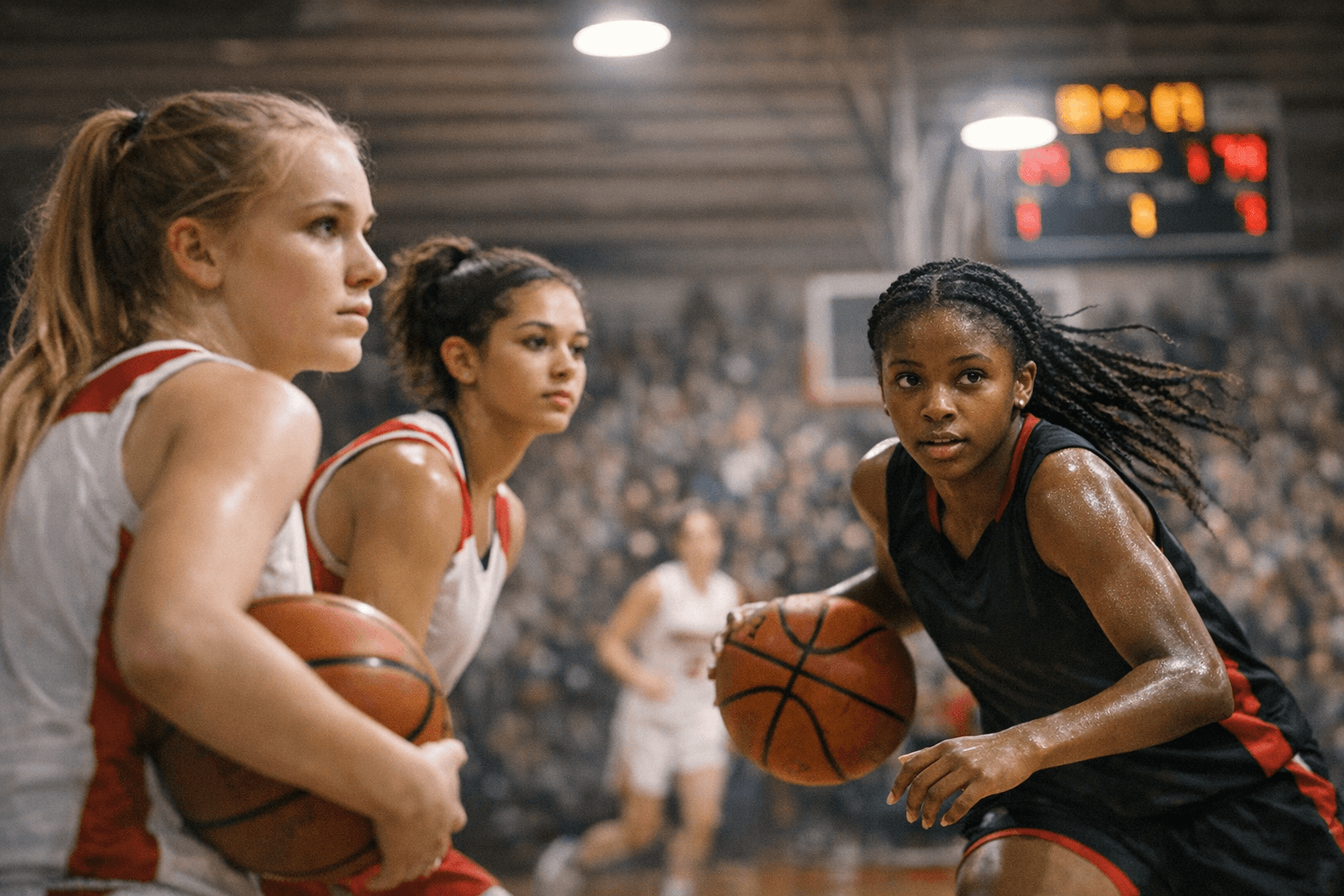
Cracking a varsity rotation as a Central Indiana freshman is not a participation trophy. It is a filter. The IHSAA's girls basketball schedule is brutally front-loaded with 4A programs that play deep, experienced rosters, and postseason rounds against the state's best. When a player born in 2010 or 2011 earns real minutes in that environment, the summer circuit, college scouts, and rival coaches all take notice. After the 2025-26 season concluded at Gainbridge Fieldhouse in February, the Class of 2029 had three names from Central Indiana on the radar: Lillia Tapak, Maliyah Evans, and Lillian Clark.
To understand what their freshman seasons actually mean, consider the players they are being measured against. Jessica Carrothers emerged at Lawrence Central (Indianapolis) as a high-impact underclassman on a program that competed annually on the 4A stage, drawing Division I attention well before her junior year. Sydney Parrish built her recruiting file at Columbus North on the strength of early varsity contributions in a demanding schedule, eventually signing at the highest level. The throughline in both cases was identical: postseason film at a competitive classification, not just regular-season numbers. That is precisely the standard this current group is being evaluated against, and early returns suggest at least one of them is already clearing the bar.
1. Lillia Tapak
The 5-9 point guard from Center Grove authored the most eye-catching freshman season in Central Indiana in 2025-26. Tapak averaged 6.7 points, 2.7 assists, and 3 rebounds per game while keeping her turnover rate below two per contest on a team that finished the regular season and postseason at 26-0 before competing at the 4A state finals at Gainbridge Fieldhouse. That backdrop matters as much as the stat line: producing at that level on a deep, undefeated 4A program means every one of her minutes came against the program's highest competitive standard. She appeared in the IHSAA regional championship game, giving her the postseason film that college evaluators prioritize. The path forward is straightforward: if Tapak holds her assist-to-turnover ratio steady next season and pushes her scoring into the double-figure range, mid-major Division I programs are unlikely to wait until her junior year to make contact. The summer exposure circuit this June and July, where she should be on every elite camp shortlist, will accelerate that timeline.
2. Maliyah Evans
Evans arrived as one of the most physically advanced freshmen in the Central Indiana class, and the 2025-26 season validated that projection. She posted a double-figure scoring performance in a sectional game, the kind of high-pressure environment that often separates prospects from players. The combination of age, skill level, and willingness to produce on postseason film puts Evans in the same early-development lane that Carrothers occupied at Lawrence Central: a player whose varsity debut doubles as a recruiting audition. To become a postseason difference-maker by her sophomore year, Evans needs a defined offensive role in the half-court, consistent minutes in the 20-plus range, and at least two high-profile summer circuit appearances to generate the recruiting data points that move evaluators from "watching" to "contacting." The 2026 off-season is her most important yet.
3. Lillian Clark
Clark's freshman contribution came primarily on the defensive end, where she was used to protect the rim during key wins. Interior presence from an underclassman on a competitive Central Indiana schedule is a specific and difficult skill to develop, and Clark demonstrated enough of it to earn trusted varsity minutes. The challenge for Clark heading into year two is translating defensive credibility into a more complete film package. Rim-protecting freshmen who add reliable mid-range production between their first and second seasons are the players who tend to attract the most sustained recruiting interest by the end of their sophomore campaigns. For Clark, the path runs through expanded offensive responsibility in 2026-27, particularly on a 4A or deep 3A schedule where she will face the kind of competition that draws evaluators to gyms. Her late-season growth in ball-handling already earned her an invitation to summer exposure events this off-season, a direct signal that the circuit is treating her as a legitimate prospect, not a developmental long shot.
The 2026 summer exposure window, running roughly from June through early August, is when the Class of 2029 either locks in their early recruiting narrative or resets it. Tapak, Evans, and Clark all enter it with something most freshmen lack: real varsity film from real postseason games. What they do with the next eight months will determine whether this watchlist still applies to them in two years or whether they have outgrown it entirely.
This article was produced by Prism’s automated news system from verified source data, official records, and press releases, then run through automated quality and moderation checks before publishing. The system is built and supervised by the people who set the standards it runs under. Read our full AI policy.
Did this article answer your question?