Crispus Attucks basketball dynasty rises from segregation to state titles
Crispus Attucks did not just win state titles. Its championships forced Indiana basketball to confront who was allowed to represent excellence, and when.
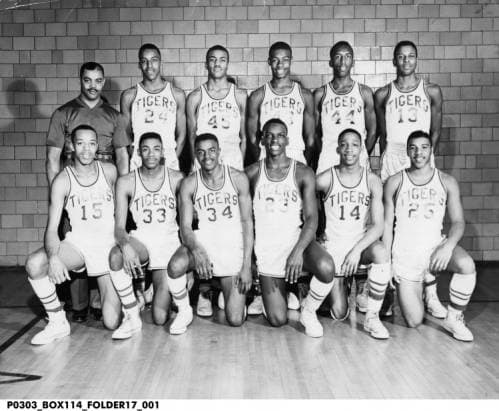
Crispus Attucks did more than collect trophies. The Tigers turned championship runs into a direct challenge to Indianapolis basketball’s old social order, winning state titles in 1955, 1956 and 1959 after growing up inside a system that had barred them from equal competition. That is why Attucks still carries singular weight in Indiana hoops: the program’s greatness cannot be separated from the fight over access, representation and power.
The school that had to wait for the same stage
Crispus Attucks High School opened in 1927 as Indianapolis’ all-Black high school, and for years it was locked out of the same competitive lane as white schools. The Indiana Historical Society notes that Attucks was not allowed to compete against white schools until 1942, a detail that changes the way the program has to be read. The Tigers were not simply chasing a crown in the abstract. They were trying to prove themselves in a system that had already defined where they were allowed to stand.
That context matters because Indiana basketball has always loved the clean mythology of the gym, the tournament bracket and the next banner on the wall. Attucks complicates that story in the best possible way. The school’s rise came out of segregation, not around it. The players wore the same uniform every other powerhouse wore, but they carried a different burden: every game was being measured against assumptions about who belonged in the state’s most visible basketball conversation.
A dynasty, not a flash
The basketball case for Attucks is overwhelming on its own terms. In 1955, led by Oscar Robertson, the Tigers won the state title. They repeated the feat in 1956 and returned to the top again in 1959, building one of the most iconic dynasties in Indiana high school basketball history. This was not a one-season surprise or a hot shooting month at the right time. It was sustained proof that the program belonged among the state’s elite, year after year.
Robertson’s name gives the run its national reach, but the broader lesson is about the program itself. Championships have a way of freezing time, but Attucks kept forcing the state to watch the same truth from different angles. The Tigers were not validated by one perfect run. They kept winning after the first title, which made it impossible to dismiss the program as a novelty. In a basketball state that treats titles as currency, Attucks cashed them three times.
The repetition matters because it is what turned admiration into recognition. One banner can be explained away. Three title teams, spread across the decade, make a case that is much harder to ignore. Attucks did not just produce a famous player and a famous season. It created a standard that demanded to be taken seriously inside the state’s most competitive era.
When winning became a public argument
The strongest part of the Attucks story is what happened beyond the box score. The Indiana Historical Society notes that a Justice Department suit ended school segregation in Indianapolis, and Indianapolis Star columnist Bob Collins argued that Attucks basketball helped integrate the city’s high schools. Those two facts sit at the center of the program’s legacy. The Tigers were winning games while the city was being forced to rethink the rules of public life.
That is the real turning point. Attucks basketball became a public argument for equality because it was impossible to ignore excellence when it arrived in a black-and-gold uniform from a school that had been separated from white competition for decades. The championships did not erase segregation by themselves, but they changed the social meaning of achievement in Indianapolis. The city could no longer treat Black athletic success as separate from the question of who deserved access.
Attucks also exposed a contradiction that still echoes through high school sports history. Black athletes were asked to prove they could dominate a system that had already limited their opportunities. The Tigers answered on the court, and the response reverberated off it. That is why the program matters beyond nostalgia. It shows how sports can become a stage where the old order is challenged not with speeches, but with repeated wins in front of the whole state.
Why the legacy still lands
Attucks remains unlike any other Indiana program because its championships were never just about basketball culture. They were about representation in the state’s most cherished game. The Tigers forced fans, administrators and rivals to confront a basic fact: excellence had a face they had not been prepared to accept.
That is why the program’s legacy still sits above routine championship talk. Indiana has produced plenty of excellent teams, but few can claim to have changed the terms of the conversation the way Attucks did. The Tigers moved from an all-Black school barred from white competition to a state title team led by Oscar Robertson, and then proved it was no one-off by winning again in 1956 and 1959. Each title added pressure to the old boundaries until those boundaries started to crack.
The story also explains why Attucks still carries unusual emotional and historical weight in Indiana hoops. Fans can admire the banners, but the deeper significance is in what those banners represented at the time. They stood for a school that had to fight for access, a community that watched its team succeed in public, and a state that had to reconsider who could embody basketball excellence.
Attucks did not ask Indiana to hand over its crown. It took the court, won the games and changed the terms. That is why the program is remembered not as a sentimental footnote, but as one of the moments when Indiana basketball became bigger than the segregation that once tried to contain it.
This article was produced by Prism’s automated news system from verified source data, official records, and press releases, then run through automated quality and moderation checks before publishing. The system is built and supervised by the people who set the standards it runs under. Read our full AI policy.
Know something we missed? Have a correction or additional information?
Submit a Tip