Indiana Coaches' Four-Phase Offseason Playbook for Program Development
Four structured phases, from medical clearance to installing a 4-6 late-clock play package, give Indiana programs a measurable roadmap to close the gap before November tip-off.
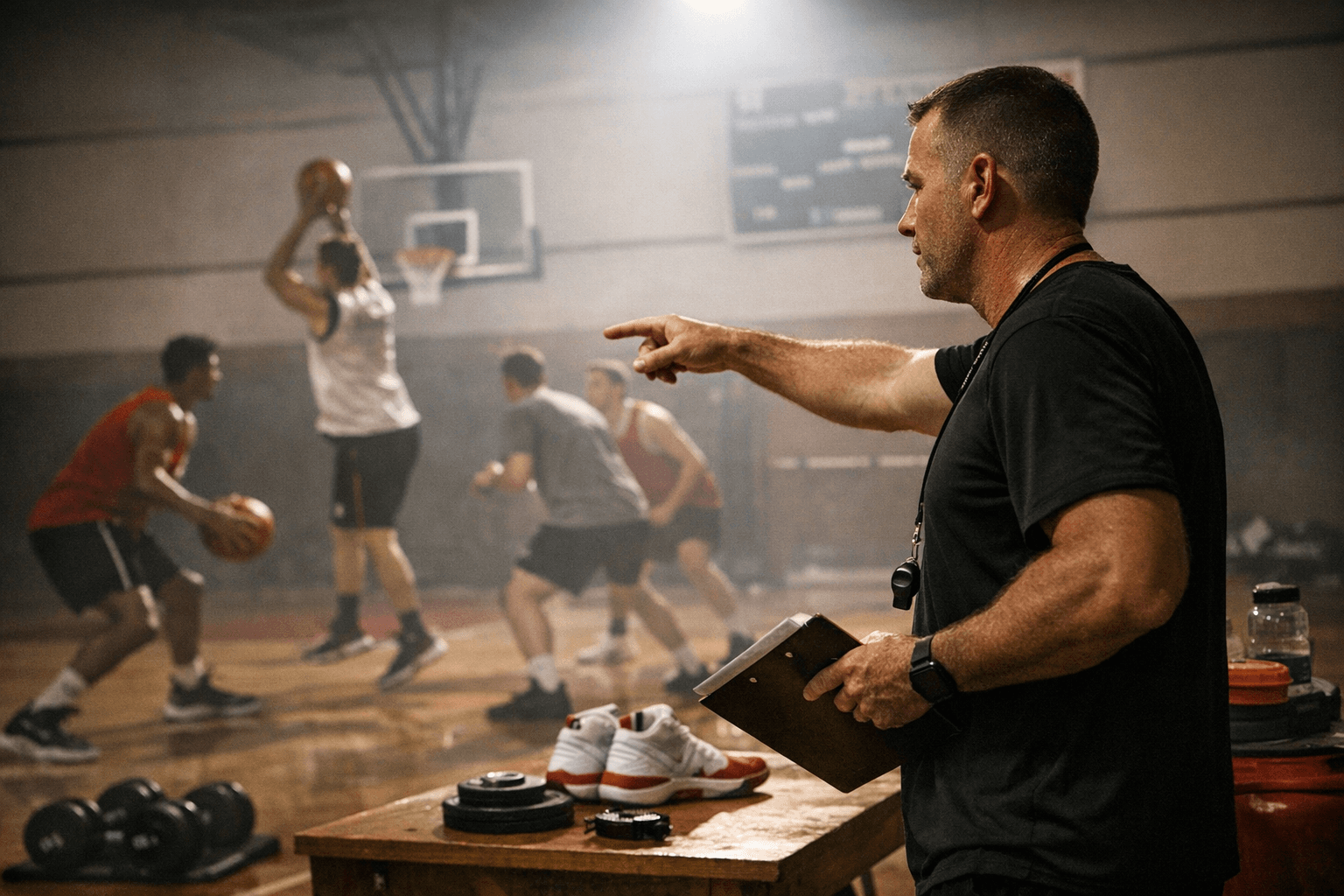
The IHSAA tournament exit is not the end of the season. It is the starting gun for the offseason work that determines who wins sectionals next March. Programs that treat the weeks after elimination as downtime fall behind; programs that attack them with structure and intention raise their competitive floor before the first practice of November. What follows is a phase-by-phase operational framework built for Indiana high school coaches, athletic directors, and players who refuse to lose the same way twice.
Phase 1: Immediate Postseason (Weeks 0-2)
Medical Clearance and Rest
The first order of business after the final buzzer is not a film session. It is making sure every player is physically accounted for. Any athlete who missed time during the season due to injury must be evaluated by the program's medical staff or trainer before any offseason activity begins. Concussions require documented written clearance following progressive return-to-play protocols; verbal sign-offs are not sufficient. Build a short medical recap for each player and attach it to their individual offseason plan so the information travels with them.
Rest is not optional. The first two days after the season ends should be completely free of organized basketball activity. After that, light movement, mobility work, and walking are appropriate before any structured ramp-up begins. Coaches who skip this window invite burnout and overuse injuries that compound across a long offseason.
Film Review and Honest Assessment
Within the first week, gather the team for a 45-to-60-minute film session that prioritizes team concepts over individual highlights or lowlights. Show what worked: end-of-clock execution, pick-and-roll defense, rebounding schemes. Show what did not. Invite team leaders to speak candidly about locker-room culture, and collectively identify at least three specific, concrete areas for improvement, whether that is defensive closeouts, free-throw percentage, or late-clock decision-making. The precision of those three targets will shape every practice rep between now and November.
Academic and Eligibility Check-In
Coordinate with guidance counselors before the school year ends. Seniors with college interest need to complete NCAA or NAIA academic paperwork on a defined timeline. Underclassmen need a clear plan for fall classes, potential eligibility concerns, and summer school options if grade recovery is necessary. Indiana programs that compete at the highest levels share one common denominator: they treat academic alignment as a non-negotiable part of program culture, not an administrative footnote.
Phase 2: Recovery and Individual Development (Weeks 2-6)
Individual Skill Plans
Every player should receive a written 6-to-8-week skill development plan with measurable targets attached. Vague goals produce vague results. Specificity matters: add 30 made three-pointers over six weeks, improve free-throw percentage by seven points, finish 50 weak-hand layups per session at a defined make rate. Plans should cover shot volume targets, ball-handling progressions, weak-hand finishing, and defensive footwork. Use smartphone video submissions to monitor mechanics and make corrections remotely. A player with a personalized, written plan is a player who shows up in June closer to where the program needs them.
Strength and Conditioning
Partner with the school's strength coach or a vetted local trainer to establish baseline testing at the start of this phase. Measure vertical jump, three-cone agility, and a lower-body strength benchmark such as max-rep squat or a bodyweight-scaled alternative. From those baselines, build a progressive strength cycle focused on injury prevention: hip strength, core stability, hamstring and glute development, and reactive plyometrics for on-court explosiveness. For younger or less-experienced players, movement competency and bodyweight control come before any heavy loading. A sophomore who can sprint, decelerate, and change direction without mechanical breakdown is more valuable than one who can back-squat but can not guard a dribble drive.
Position-Specific Development
Small-group sessions by position allow coaching staff to target role-specific skill gaps with precision. Post players work footwork and interior finishing. Wings focus on spacing reads, off-ball cuts, and catch-and-shoot mechanics. Guards develop pick-and-roll reads and pull-up shooting under pressure. Assign measurable goals to each group and schedule a mid-cycle check-in with coaching staff. These sessions also begin re-establishing competitive habits and coachability standards before full-team work resumes.
Phase 3: Team Systems and Chemistry (Weeks 6-12)
Summer League and Controlled Scrimmages
Voluntary, coach-directed scrimmages and five-on-five control days serve a dual purpose: they install a base offensive and defensive identity while maintaining competitive engagement through the summer. Limit full-contact games to protect players during a period of heavy strength and conditioning volume. Use practice themes deliberately: late-game execution one session, defensive rebounding rules the next, baseline out-of-bounds plays the session after that. Every rep should connect to a specific problem identified in the Phase 1 film session.
Installing Core Plays
By week 10, the team should have a defined package in place: four to six plays specifically designed for late-clock situations, one primary transition action, and a zone-defense coverage built around the personnel returning next season. These are not suggestions; they are the structural pillars the program will rely on when the margin in a sectional game shrinks to two possessions. Repetition in low-pressure summer environments builds the confidence to execute correctly when the stakes are highest. Late-game errors almost always trace back to under-rehearsed systems, not poor talent.
Leadership Development and Team Accountability
Host a day or overnight retreat focused on the leadership layer of the program. Captains need structured sessions on their specific responsibilities, conflict resolution inside the locker room, and basic public speaking as it relates to representing the program. The goal is not a team-bonding exercise for its own sake; it is to translate the lessons directly into on-court accountability expectations before school starts. Programs that define what accountability looks like in August have far fewer discipline problems in January.
Phase 4: Recruiting, Scheduling, and Administrative Preparation (Ongoing Through Summer)
College Recruiting Communications
For players generating college interest, the program's responsibility is to ensure documentation is complete and current: game film cut to position-specific highlights, updated statistics, and an academic profile that reflects the player's current standing. Log all recruiting calls and provide players and families clear guidance on official and unofficial visit rules under NCAA and NAIA guidelines. Coaches who take an active role in this process build program credibility and keep the recruiting environment organized.
Preseason Scheduling and Compliance
Athletic directors carry a parallel checklist through the summer. Summer strength schedules need to be finalized and communicated. Travel planning for early-season tournaments requires lead time. District and state compliance paperwork must be submitted before applicable deadlines. Coaching certifications and background checks need to be current before any fall activity begins. None of these tasks are complicated individually; they compound quickly when left until October.
Data Tracking for Next Season
Build a simple spreadsheet that logs player progress on the metrics that matter most: three-point percentage, free-throw percentage, offensive rebounding rate, and turnovers per game. Use last season's numbers as the baseline. Set specific team targets for the upcoming season and revisit them at each phase checkpoint. This converts the offseason from a feeling into a measurable progression, and it gives the coaching staff an honest answer to the question every program eventually asks: are we actually getting better?
The Practical Checklist
For programs that need a one-page reference, the framework distills to four windows:
- Weeks 0-2: Postseason medical clearances, two days of rest, team film review, academic and eligibility check
- Weeks 2-6: Individual skill plans submitted, baseline strength testing completed, trainer-led program started
- Weeks 6-12: Team systems installed, controlled scrimmages running, leadership retreat completed
- Ongoing through summer: Recruiting documentation, scheduling, data tracking, and compliance review
The overriding principle threading through all four phases is balance: protect athletes' long-term health and academic standing while using focused, measurable work to raise the team's competitive ceiling before the next IHSAA cycle begins. Offseasons do not guarantee championships, but they make them possible. Programs that structure these months with the same intentionality they bring to a January road game are the ones that are still playing in March.
This article was produced by Prism’s automated news system from verified source data, official records, and press releases, then run through automated quality and moderation checks before publishing. The system is built and supervised by the people who set the standards it runs under. Read our full AI policy.
Did this article answer your question?