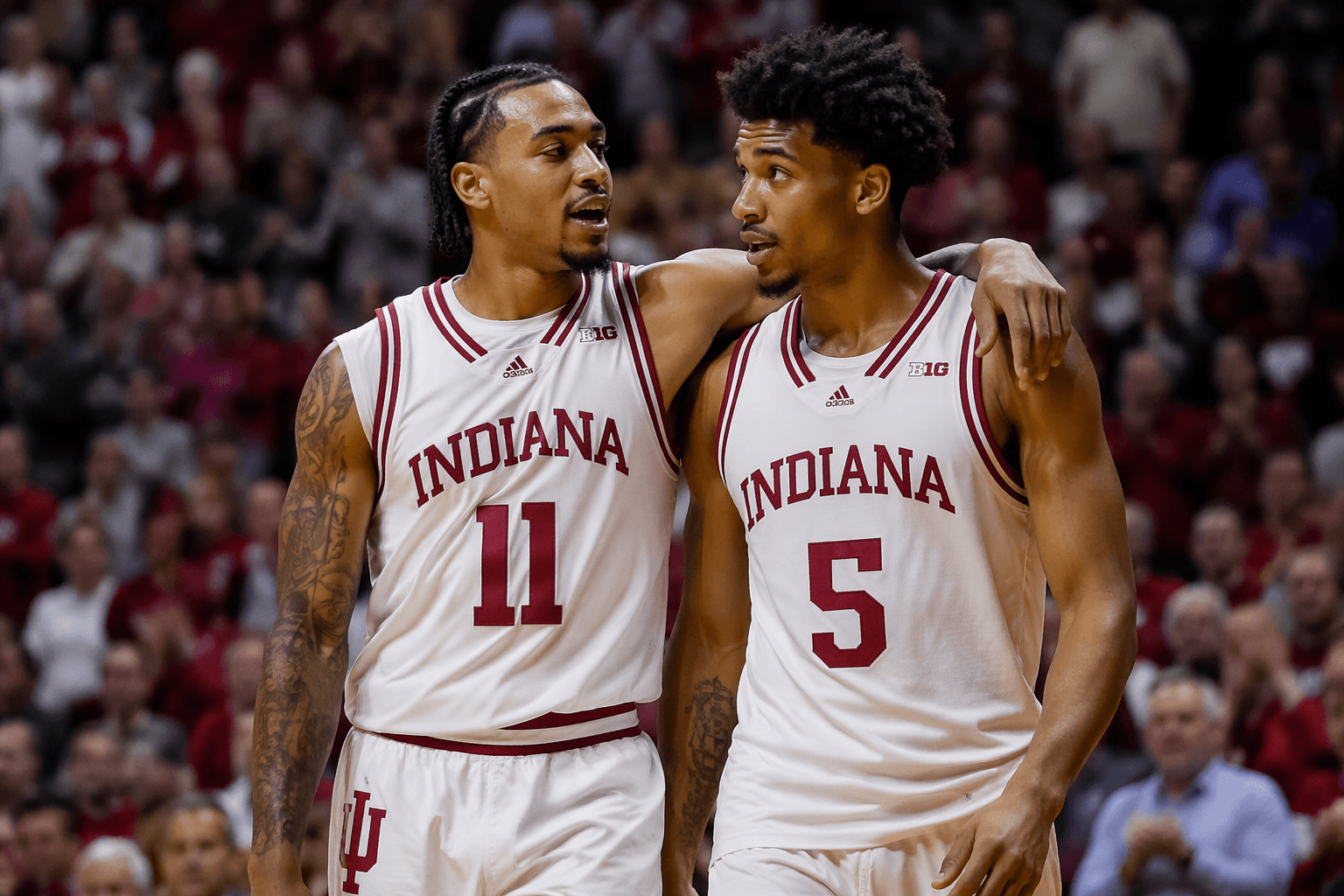
Indiana’s 2027 wings rise in prep girls hoops rankings debate
Indiana’s 2027 wing crop is bending the rankings conversation, with versatile small forwards forcing a recheck of where the class really stands.
The small forward debate is now driving the class conversation
Indiana’s 2027 wing conversation has reached the point where evaluators are no longer asking whether the class is deep. They are asking how much the small forward spot should reshape the entire rankings board. The position has been one of the loudest through the AAU season because the players rising there are not just collecting points, they are influencing games in every direction.
That matters in Indiana more than in most places. The state has long valued players who rebound, defend, compete and stay useful when the action gets tight, and this group of wings fits that mold. Prep Girls Hoops has already framed the 2027 class as one of the deeper groups in the Midwest, and the fact that the Indiana rankings page already includes 100 players in the class shows how crowded the discussion has become. When the overall 2027 list grows from 185 prospects to 200, movement at one position can quickly change how the whole class is read.
Why this wing surge is changing the math
The clearest reason the small forward spot is forcing a rethink is that the best names in this group are proving they can do more than score in bursts. Prep Girls Hoops has emphasized versatility as the separator, and that means these players are being valued for scoring, rebounding, defending multiple positions and supplying energy in big moments. That kind of profile plays up in statewide evaluations because it translates across styles and against better competition.
Indiana’s girls basketball culture has always rewarded complete players, not just highlight-makers, and that gives this crop extra weight. The state’s competitive backdrop is not abstract either. The Indiana High School Athletic Association staged its 51st annual girls basketball state finals at Gainbridge Fieldhouse on February 28, 2026, a reminder that the road through Indiana hoops still runs through high-pressure environments where execution and adaptability matter. The classifications announced for 2024-25 and 2025-26 on April 2, 2024, also frame a landscape where schools and prospects are judged against different levels of competition, adding even more value to wings who can hold up across matchups.
Chyanne Brown looks like the clearest fit for the modern wing
Chyanne Brown is one of the strongest examples of why the rankings debate is getting sharper. MaxPreps lists the Valparaiso High School player as a “positionless basketball player,” and that description matches the broader direction of the conversation around Indiana’s 2027 wings. Hudl also places her on Valparaiso’s girls varsity roster, which reinforces that she is already part of a high school program where she is being tracked as a real varsity piece, not just a future projection.
What makes Brown matter in this debate is not just that she is flexible, but that flexibility shows up as basketball usefulness. A player who can be moved around the floor and still read the game well is exactly the type of prospect who can climb when evaluators revisit the class after more club competition. In a crowded state pool, the athletes who can fit several roles often move faster than the ones who only project into one lane.
Taylee Fisher brings the size-and-switch answer evaluators love
Taylee Fisher gives Indiana another wing who complicates a tidy rankings order. SportsRecruits describes the Carmel High School prospect as a bigger guard wing who can defend both guard and post positions and rebound inside the arc, which is the kind of line scouts notice immediately. Hudl also lists her on Carmel’s girls basketball profile, underscoring that her game is being framed around actual two-way responsibility.

That profile matters because it hits the exact category that keeps moving players up in spring evaluations: usable skills against higher-level opposition. A wing who can help on the glass and then switch into perimeter defense is no longer just a development bet. She becomes the kind of player who can stabilize lineups, and that kind of utility can matter as much as raw scoring when rankings are recalculated.
McKenzi Rutland brings leadership value to the wing discussion
McKenzi Rutland pushes the debate beyond pure athleticism. Hudl lists her as a North Central girls varsity player in the class of 2027, and a North Central feature describes her as personable, approachable and a leadership presence with teammates. Indy Magic Girls Basketball Club also reported that she received her first college offer from Mount St. Joseph University, giving her profile another signal that colleges are already watching the broader package.
Rutland’s value is important because ranking movement often comes from more than production. Players who organize a team’s energy, communicate on the floor and keep their edge in tight games can climb because they translate cleanly into winning basketball. That is especially true in Indiana, where the line between promising prospect and real impact player often comes down to whether the player does the unglamorous work that keeps a possession alive or a run from turning into a collapse.
Miley Sherrill and Carly Holmes add more depth to the pileup
Miley Sherrill adds another layer to the wing market correction. Hudl and NCSA profiles place the Bedford North Lawrence prospect at Bedford North Lawrence High School and describe her as a 2027 recruit, while other recruiting references list her as a 5-foot-9 wing post player linked to DistinXion C.H.A.M.P.I.O.N.S. That blend of wing and post language matters because it shows how elastic the position has become. The best players in this group are not being boxed into one role, and that makes them harder to ignore.
Carly Holmes is also part of the conversation as one of the players Prep Girls Hoops says deserves a stronger look. Even without the same level of public profile detail as some of the others, her inclusion in this group tells the larger story: the position is deep enough that evaluators are not debating one breakout name, they are sorting through multiple wings who keep proving they belong in the statewide mix.
What this means for Indiana recruiting stock
The bigger takeaway is that Indiana’s 2027 class is not just deep in the abstract. It is deep in a way that changes how rankings get built. When a state already has 100 ranked 2027 players and the overall national-style pool grows from 185 to 200 prospects, every versatile wing becomes more valuable because there is more competition for attention and more ways to separate from the pack.
That is why the small forward debate matters. Brown, Fisher, Rutland, Sherrill and Holmes are not being discussed simply because they had one hot run. They are getting traction because they can affect winning in more than one way, and that is the currency that travels best in Indiana. As the AAU season keeps stretching evaluations and college staffs keep looking for wings who can defend, rebound and adapt, this group is making a strong case that the 2027 class’s shape may be defined at the small forward spot as much as anywhere else.
This article was produced by Prism’s automated news system from verified source data, official records, and press releases, then run through automated quality and moderation checks before publishing. The system is built and supervised by the people who set the standards it runs under. Read our full AI policy.
Know something we missed? Have a correction or additional information?
Submit a Tip