Penn High School Broadcast Cut After Student Makes Racist Remarks
A Penn student broadcaster used the N-word three times and made monkey noises targeting Riley star Kelin Webster during a live sectional playoff stream, prompting calls for an athletic boycott.
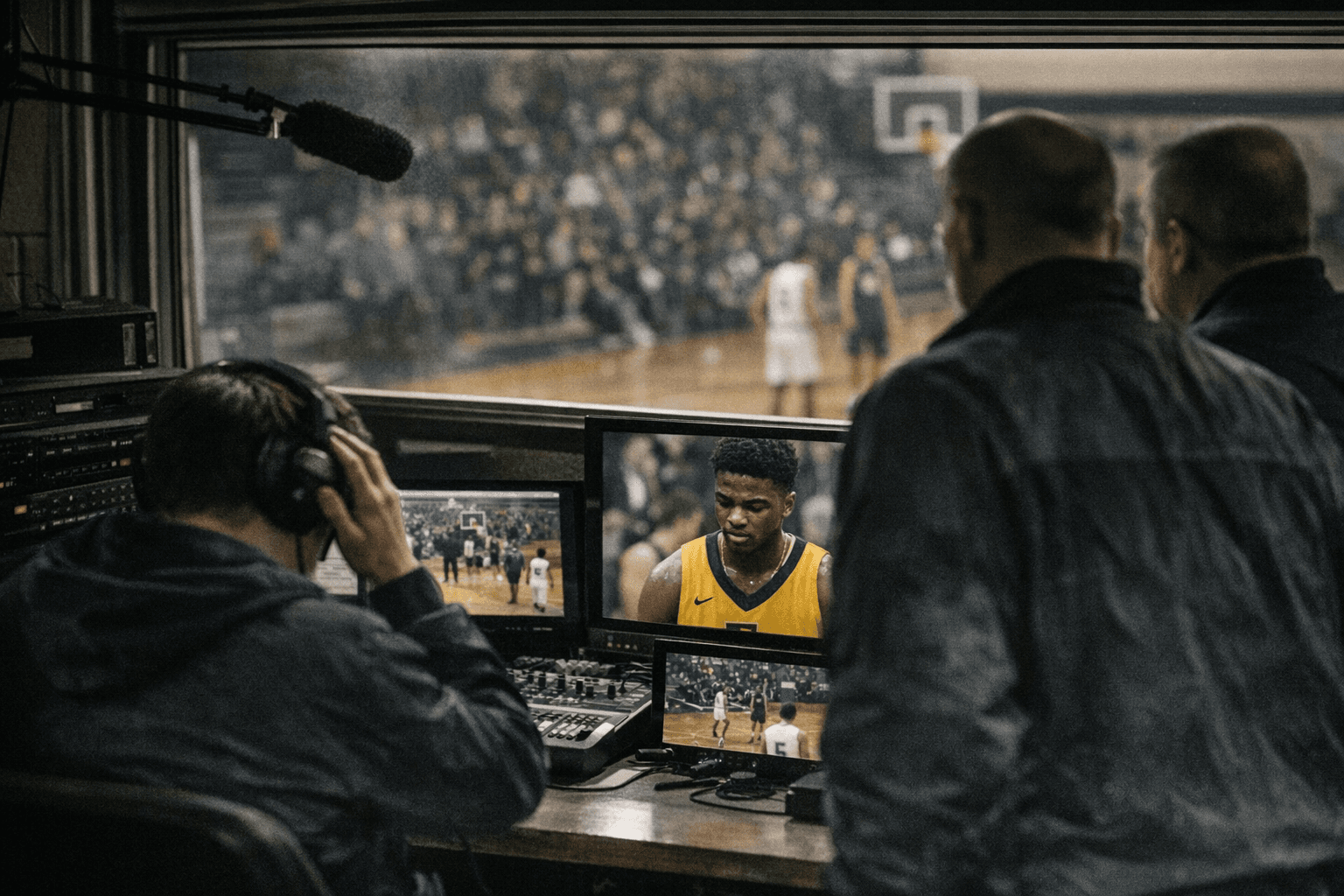
A Penn High School student operating the school's live broadcast used the N-word three times and made monkey noises targeting South Bend Riley senior Kelin Webster as Webster stepped to the free-throw line during a boys basketball sectional playoff game on March 6, held at Mishawaka High School. A second student on the broadcast reacted immediately, saying "Whoa! Whoa! Whoa! Simon, c'mon now," before instructing someone to cut the stream. The feed was pulled, but the damage was already done: clips spread across Facebook and TikTok within hours, turning a sectional matchup into a national story about what Indiana high school athletics allows to happen in real time.
Penn High School Principal Rachel Fry released a statement the following day confirming the school was investigating the incident and that consequences would follow. "We are taking this matter very seriously and are actively investigating the situation," Fry said. "The student code of conduct will be followed as we address this behavior." Fry also said the livestream was ended as quickly as possible and that the recording has since been removed and is no longer accessible.
The broadcast ran through The Pennant, Penn's student-operated YouTube sports channel. The video link was disabled after the incident, but the response timeline exposed a structural problem: there was no broadcast delay, no adult supervisor with kill-switch authority present, and no mechanism to prevent a student from going live with no guardrails during a state tournament event. The South Bend chapter of the NAACP said its review of the Penn-Harris-Madison student handbook found no clear provisions addressing the use of derogatory language, and called for policy revisions and accountability measures.
The NAACP asked that the student broadcaster write a paper "examining the harmful impact of racist language on individuals and communities and present those findings to the SBCSC School Board during a public meeting." The South Bend NAACP also noted it had been compelled to meet with teachers, students, and administrators in response to ongoing incidents of racial discrimination within the PHM School District, framing the broadcast failure as part of a broader institutional pattern rather than a single bad actor.
Black Lives Matter South Bend held a news conference demanding stronger protections for students, asking the Penn-Harris-Madison School Corporation to investigate racial disparities and better address what the group called systemic racism and implicit bias. The group called for policy changes at the district, athletic conference, and state athletic association levels.
Former South Bend councilman Henry Davis Jr., whose son plays basketball at Riley, said parents of affected players were not contacted directly by the district and called that response inadequate. "If we can't play together in harmony, then we need to be separated until we have a clear understanding of what respect really is between the two," Davis said. Davis and Black Lives Matter South Bend called for an immediate suspension of all athletic competition between South Bend schools and Penn until the NAACP's demands are addressed.
The South Bend NAACP initially believed the footage to be AI-generated; it was the principal's own public statement that confirmed the video was real. That detail encapsulates the policy vacuum at the center of this story: no protocol stopped the language from airing live, no adult pulled the stream in real time, and the institution responsible for IHSAA tournament broadcasts operated without a written standard prohibiting the exact conduct that unfolded on camera. Until the IHSAA, Penn-Harris-Madison, and student media programs like The Pennant establish mandatory broadcast delay protocols, adult supervisory requirements, and explicit conduct codes for student broadcasters, every future sectional stream carries the same structural risk that materialized on March 6.
This article was produced by Prism’s automated news system from verified source data, official records, and press releases, then run through automated quality and moderation checks before publishing. The system is built and supervised by the people who set the standards it runs under. Read our full AI policy.
Did this article answer your question?