Structured 60-Minute Shooting Drills Built for High School Basketball Players
A structured 60-minute shooting session can be the difference between a player who looks good in warmups and one who delivers when the game is on the line.
Developing into a high-level shooter is one of the most valuable skills a high school basketball player can cultivate, but most players never build the structured repetition that actually produces results under pressure. The problem isn't effort; it's architecture. High school players and coaches often need a structured, repeatable shooting and finishing session that fits into a 60-minute practice or individual workout, and without that framework, even the most motivated player spins wheels instead of building real skill.
The template outlined here, drawn from Pro Skills Basketball's workout guides, solves that problem with a session designed specifically for Grades 9-12. It runs roughly 45-60 minutes, can be repeated two to four times per week depending on age and season, and works equally well solo or with a partner.
Why 60 minutes is the right unit
An hour is long enough to move through meaningful progressions and short enough to maintain intensity throughout. Pro Skills Basketball's approach is built around that window deliberately: "Each workout below is about 45-60 minutes and can be repeated 2-4x per week depending on age and season." That frequency matters as much as the duration. Two to four quality sessions per week, each anchored to the same repeatable structure, compounds faster than occasional marathon gym sessions with no plan.
The philosophy behind these sessions is equally specific. "At Pro Skills Basketball, we believe in teaching smart, game-relevant habits, not hype or shortcuts," the organization states in their workout guides. The goal isn't to pile up volume; it's to build habits that transfer when a defender closes out hard and the shot clock is running.
Building toward the high school session: the middle school foundation
Before breaking down the high school workout, it helps to understand what players should already have internalized before reaching Grades 9-12. The middle school shooting workout, targeting Grades 6-8, runs 45 minutes across four components with a clear goal: "Build consistency, mechanics, and confidence."
That session is structured as follows:
- Warm-Up: 5 minutes to establish rhythm and body mechanics before any real load
- Spot Shooting: 15 minutes of stationary work building repeatable form from defined floor locations
- Game-Like Shooting: 20 minutes of shooting integrated with movement and realistic reads
- Finishing Free Throws: 5 minutes of mental and physical closeout under simulated pressure
The arithmetic adds up to exactly 45 minutes, and each block earns its place. Spot shooting builds the mechanical foundation; game-like shooting stresses it. Free throws at the end train the skill at the moment when fatigue is highest and focus is hardest to maintain, which is precisely when free throws are actually shot in games.
A player who arrives at high school with those 45 minutes of structured habit already in their body is starting from a far stronger place than one who has simply shot around unstructured for years.
The high school session: training for college-level demands
The high school workout sharpens everything from the middle school template and reorients it toward a specific target: "Train for college-level spacing, pace, and decision-making." That isn't abstract language. College coaches evaluate recruits on precisely those dimensions.
As Pro Skills Basketball frames it: "College coaches look for players who can space the floor, knock down shots under pressure, and make quick decisions off the catch or bounce. Shooting is a separator. But being a great shooter isn't about volume; it's about consistency, footwork, balance, and the ability to shoot at game speed."
The high school session moves through three documented phases:

Dynamic Shooting Warm-Up (5 minutes)
The shift from "warm-up" in the middle school session to "dynamic shooting warm-up" at the high school level is intentional. Static stretching and casual form shooting gives way to movement-integrated preparation. Five minutes here means the body is already firing through game-relevant ranges of motion before the real work starts, not just loosening joints.
Off-the-Catch and Off-the-Dribble (15 minutes)
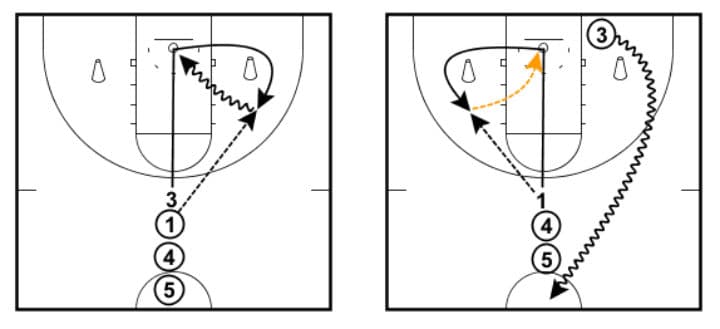
This is the technical core of the session. Splitting the 15-minute block between catch-and-shoot scenarios and off-the-dribble situations reflects how shots actually present themselves in a game. A player who can only shoot off the catch becomes predictable and is easier to scout. A player who can shoot off one or two dribbles forces a defense to cover more ground and creates better looks for teammates, too. The dual emphasis here directly addresses what Pro Skills describes as the ability to "make quick decisions off the catch or bounce."
Advanced Game-Read Shooting (20 minutes)
The longest block of the session is reserved for the most complex skill: reading the game and shooting within it. This 20-minute segment represents the highest-order demand of the workout, pushing players beyond mechanics into decision-making. The "game-read" framing signals that shots here aren't predetermined; they emerge from movement, spacing reads, and defensive reaction, which mirrors what a player faces in an actual possession. Pro Skills' session design notes indicate further detail exists within this block, and the full depth of drill sequences within it, including specific rep counts, spacing patterns, and coaching cues, makes this segment worth exploring directly with a Pro Skills trainer or coach.
Quality over volume: the coaching philosophy that holds it together
None of these blocks function without the right mindset around repetition. "The following shooting workouts are designed for players who want to become reliable shooters under pressure, in motion, and in a variety of game situations," Pro Skills states. "Each plan focuses on quality reps, skill progression, and real player development."
That distinction between quality and volume is the core of everything here. A player who sprints through 200 bad-mechanics jumpers has not built a better shot; they've reinforced a flawed one. The structured progression from warm-up to mechanical work to game-read shooting forces each rep to carry purpose. Footwork, balance, and shot release at game speed are not accessories to this workout; they are the workout.
Making it repeatable for Indiana high school players and coaches
For Indiana high school coaches fitting this into a practice schedule, the session's two-to-four times per week recommendation offers real flexibility across the season. In-season, two focused shooting sessions per week can layer on top of team practice without overcrowding the schedule. In the off-season, pushing toward four sessions per week accelerates the mechanical gains that show up most visibly when fall workouts begin.
The fact that all drills can be completed solo or with a partner matters particularly for Indiana players who want to put in extra work outside of organized team time. A gym, a ball, and 60 minutes of focused attention on this structure is a complete development session; no trainer or full team required.
Developing into a high-level shooter demands consistent shooting development, as Pro Skills Basketball puts it plainly. Players who treat these 60 minutes as a serious, repeatable commitment rather than an informal shootaround will find that their shooting becomes, over time, exactly what college coaches describe as a separator.
This article was produced by Prism’s automated news system from verified source data, official records, and press releases, then run through automated quality and moderation checks before publishing. The system is built and supervised by the people who set the standards it runs under. Read our full AI policy.
Did this article answer your question?