Biometric Sensors Show Promise for Predicting Racehorse Injury Risk
Wearable sensors did not replace the vet, but they flagged injury risk before the breakdown. The bigger shift is barn-level prevention, not gadget hype.
A new kind of warning light for the shedrow
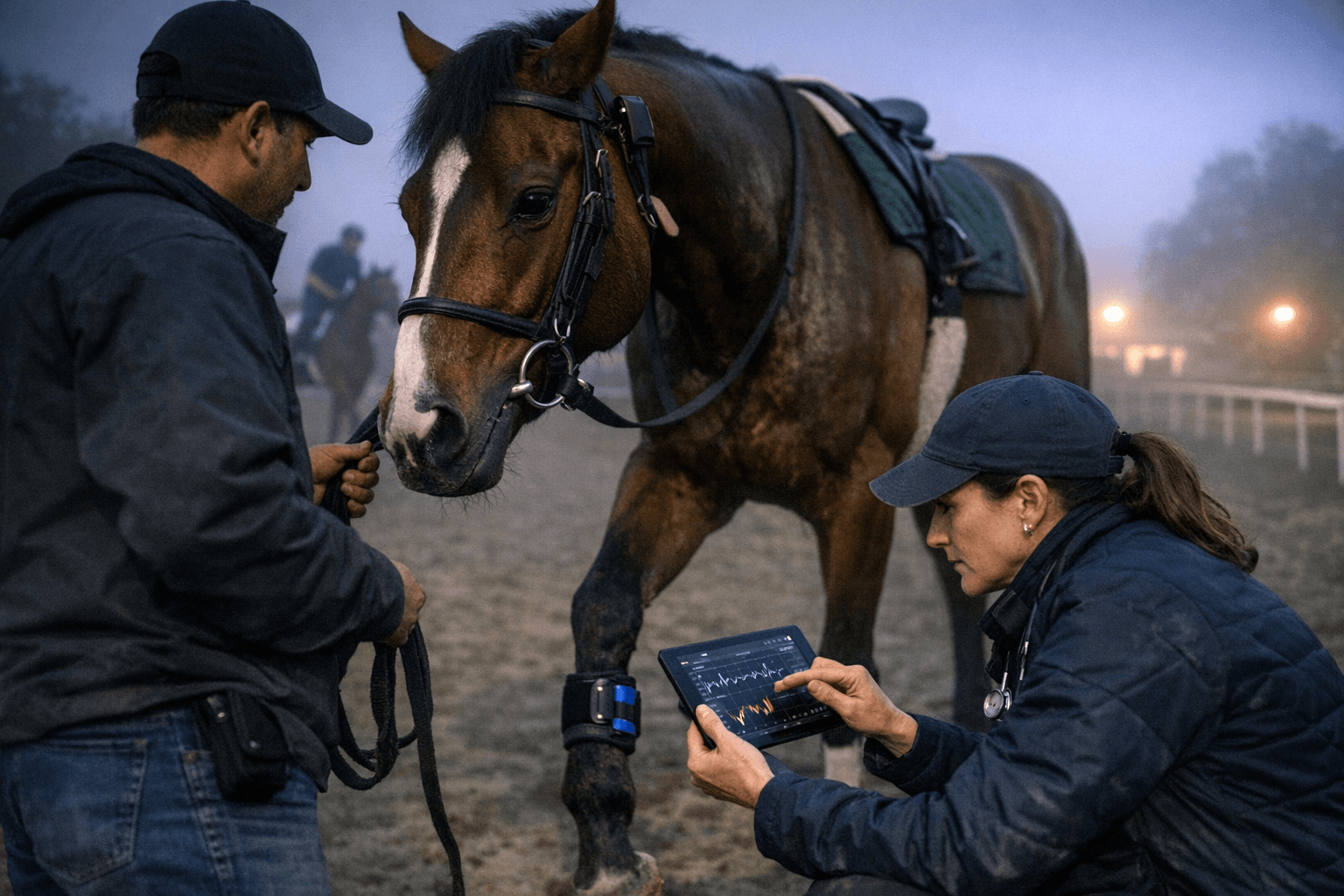
Racehorse safety has usually moved in reverse: a horse goes wrong, then the vet works backward through scans, exams and records to explain why. This study points in a different direction, showing that wearable biometric sensors can help identify Thoroughbreds at higher risk before a musculoskeletal injury shows up in the formbook or on the gallop sheet. The practical promise is not novelty, but prevention, with the barn and track staff gaining an earlier signal that a horse may need a change in training or a closer look.
The project carried real industry weight. Ten Thoroughbred industry and charitable organizations funded it with a combined $785,000, and the American Association of Equine Practitioners built the work around six sensor companies, each asked to recruit 100 2-year-old Thoroughbreds. Those companies were Alogo Analysis, Arioneo, Stable Analytics, Equimetrics, Garmin and StrideSafe, and the study tracked data from February 15 through December 31, 2025. AAEP framed the effort as a test of whether wearable sensors could serve as an early-warning system during high-speed work, not as a replacement for veterinary judgment.
What the study actually showed
The final analysis drew usable information from four companies, Alogo Analysis, Arioneo, Stable Analytics and StrideSafe. One version of the report described 4,552 breezes from 561 horses, while another cited 4,252 breezes from the same 561 horses, but both accounts point to the same central conclusion: the system found meaningful patterns in training data. Of those breezes, 2,651 produced green, yellow or red flags, with red readings tied to gait anomalies that could signal future injury risk.
The injury data were just as striking. Within 48 hours of a breeze, participants reported 221 musculoskeletal injuries, including 142 bone injuries and 79 soft-tissue injuries. Peta Hitchens of the University of Melbourne said horses flagged yellow or red were twice as likely to suffer a musculoskeletal injury after that breeze, and another report put the odds ratio for both yellow and red flags at 2.2. That is the core breakthrough here: the sensor data did not merely describe motion, it helped separate breezes that looked routine from breezes that preceded trouble.
The timing of injury sharpened the message. The study found horses reached injury at a median of the sixth breeze, or about 10 weeks into training. One report said 77% of distinct injuries followed the last unofficial breeze, 17% followed the last official breeze and 7% came after a race. That pattern matters because it suggests the most useful intervention window may arrive early, long before a horse is asked for maximum speed in competition.
What remains unproven
This is still a prediction tool, not a crystal ball. The strongest single risk factor in one report was prior injury during the study period, with an odds ratio of 27.9, far larger than the sensor signal itself. That matters because any real-world safety protocol will have to combine biometric readings with the old-school clues that matter on every backside: past injury history, veterinary records, soundness checks, workload, and how a horse is actually moving day to day.
The numbers also need refinement before anyone treats the system as a final authority. The study showed that horses flagged yellow or red were more likely to get hurt, but that does not mean every flagged horse was destined to break down, or that every unflagged horse was safe. The signal was useful, not perfect, and the report itself showed that some of the strongest-looking associations, including a comparison of two breezes back, were not statistically strong enough to make the final model.
Even so, the study added an important layer of confidence: the devices did not appear to interfere with training or racing. Larry Bramlage said the sensor companies shared monitoring results with trainers so they would cooperate with the project, and he suggested some trainers likely used the information while evaluating training and progress. That is an important detail because adoption in racing rarely comes from abstract science alone; it comes when a tool fits the reality of daily horsemanship without disrupting it.
Why the results matter at the barn and track level
The clearest takeaway is that biometric sensors could shift injury detection from reactive veterinary work to earlier intervention in routine training. A yellow or red reading can prompt a trainer to ease a horse, adjust a breeze, review recovery, or call for a closer veterinary exam before the horse reaches the point where soreness becomes a breakdown. In modern racing oversight, that kind of early signal fits naturally beside out-of-competition testing, veterinary record review, hands-on examinations, advanced diagnostics and track maintenance.
There is also a useful business and safety angle here. Half the horses in the study made at least one start, which compares favorably with the roughly 40% of eligible juveniles who started in 2025 by Jockey Club and Equibase comparisons, or the 50.5% of study horses versus 39.8% for all 2-year-olds in The Jockey Club Fact Book. That suggests the project did not only capture lightly used training stock, but horses actively moving toward the races, which makes the findings more relevant to everyday racing operations.
Katie Garrett called the effort a transformational opportunity to protect equine athletes, and that description fits the scale of the moment. Racing has spent years pushing on multiple safety fronts, but this study suggests sensors can add a practical layer of prevention at the point where decisions are made most often: in the barn, on the track, and before a horse is asked to do too much. The most important change may not be the device itself, but the habit it encourages, catching risk earlier and acting on it before the injury becomes a headline.
This article was produced by Prism’s automated news system from verified source data, official records, and press releases, then run through automated quality and moderation checks before publishing. The system is built and supervised by the people who set the standards it runs under. Read our full AI policy.
Did this article answer your question?