Cameo’s Lingfield data points to Oaks promise after strong trial run
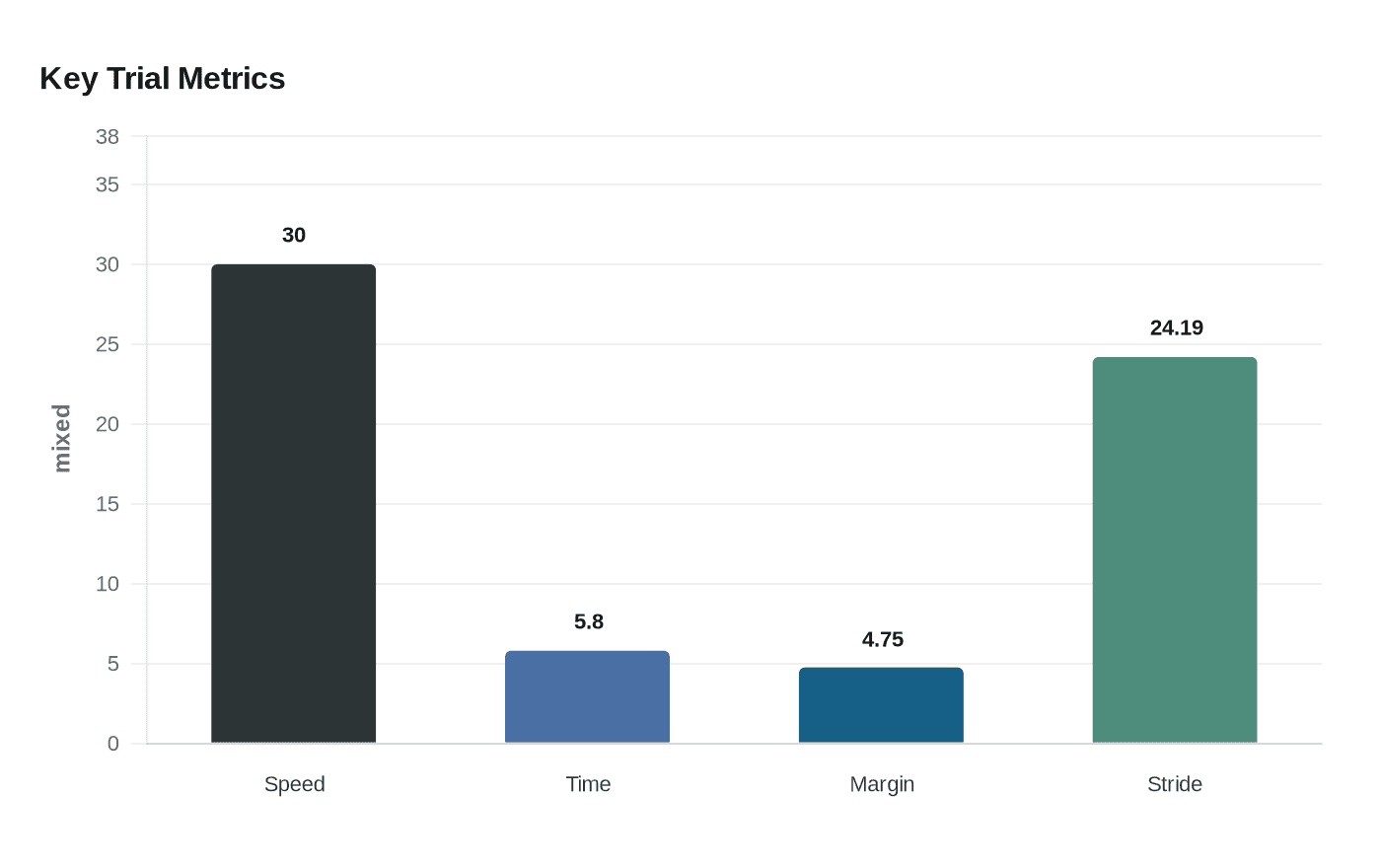
Cameo’s Lingfield win looked even better in the splits: 30 mph early, the longest stride in the field, and a market move into Oaks contention.
Why Lingfield mattered more than the result
Cameo did not just win the William Hill Oaks Trial Fillies’ Stakes at Lingfield Park. She produced the kind of trial that forces you to look past the bare finishing order and into the machinery underneath it. On good-to-firm ground over 1m 3f 133y, she beat five rivals by 4¾ lengths, and the stopwatch made the case that the race said as much about her Oaks prospects as the margin did.
That matters because Lingfield is supposed to expose weaknesses. It is not a gentle audition. The bend, the position battle, and the need to keep a filly balanced under pressure often strip away the polish and show who can truly handle the demands of Epsom. Cameo came out of it looking like a filly with the traits you want for the next step: speed to secure her place, economy to settle once she got there, and enough finishing force to make the trial look controlled rather than laborious.
The race pattern that built her case
Ryan Moore was keen to get Cameo across early and onto the inside rail, and that decision mattered from the first few strides. She hit 30 mph in just 5.8 seconds, the fastest opening-furlong speed figure in the field, which gave her a clean route into the race before the shape of the contest had a chance to turn messy. In a small-field trial, that kind of early efficiency is not just cosmetic. It is often the difference between a filly who travels like a classic prospect and one who needs luck to look good.
Once she had position, Cameo did not waste energy fighting the race. The review of the data highlighted low stride-frequency numbers through the middle stages, a useful sign that she was able to relax rather than overwork herself. She also posted the longest average stride length in the field at 24.19 feet, which is exactly the sort of metric that suggests efficiency, balance, and the ability to lengthen rather than scramble when the race begins to quicken.
That combination is the real story. Fast early, calm in the middle, and still strong enough late to put the race away by a wide margin. Plenty of fillies can win a trial; far fewer do it while ticking the boxes that point toward a bigger stage.
What the form tells you, and what it does not
The most honest reading of the race is that Cameo may have run better than the result alone indicates, but the strength of the opposition is still open to debate. Prizeland is viewed as useful, but probably not a genuine Oaks contender, and Bloom, Romantic Symphony and Amora Queen all left questions behind them. That does not erase Cameo’s performance. It does mean the form should be handled with some caution before anyone stamps her as the next sure thing.
Still, Lingfield did not hand her the kind of soft, empty win that can be dismissed out of hand. Bloom, another filly from the Aidan O’Brien stable, finished third, which at least gives the race some internal depth. Romantic Symphony, the unbeaten Godolphin filly who had been framed as a serious test in the buildup, disappointed and finished unplaced, and that result sharpened the focus on Cameo’s performance rather than blunting it.
The key point is that Cameo answered the trial in the right way. She did not merely outstay weaker runners. She showed she can travel, hold a place, and finish with purpose, which is a more convincing profile for Epsom than a flashy late burst in a race run to suit everything else.
Why the market moved so quickly
The betting response told its own story. Cameo was around 10/3 on the day and was later cut to around 12/1 for the Oaks by Betfred and around 10/1 for the Irish Oaks by Paddy Power. That is a meaningful shift because it shows the market did not treat the Lingfield result as routine O’Brien success. It treated it as a sign that a filly had moved into the right conversation at the right time.
The timing matters too. The 2026 Epsom Oaks is scheduled for Friday, June 5, 2026, so Lingfield landed in the critical late-spring window when the best fillies separate themselves from the rest of the Classic picture. Aidan O’Brien has now won this trial four times, and this latest success reinforced the feeling that his yard keeps arriving at the right moment when the fillies’ season starts to harden into a true Oaks narrative.
That is also why this was more than just another Ballydoyle box ticked. O’Brien has plenty of trial winners over the years, but not all of them come with a data profile that strengthens the visual impression. Cameo did. The pace figures, the early control, the stride efficiency and the clean positioning all line up with a filly who can improve again when the distance, the pace, and the track shape ask different questions.
What Cameo now looks like for Epsom
The best way to read Cameo’s Lingfield run is as a proof-of-concept. She showed the speed to secure the rail, the composure to settle, and the stride pattern to suggest she can conserve energy rather than burn it off early. That is exactly the sort of profile that holds up when a filly moves from a trial into the cauldron of an Oaks.
Aidan O’Brien’s confidence around her only adds to the case. He made clear afterward that he expects her to keep improving and that he liked everything she did, which fits the visual and numerical evidence. In a race where the obvious headline could have been a simple wide-margin win, the more important detail is that the numbers and the finish agreed with each other.
Lingfield did not just hand Cameo a trial victory. It gave her a data-backed argument for Epsom. And if the Oaks picture was supposed to be clarified by a result, it was the stopwatch and the sectionals that did most of the real talking.
This article was produced by Prism’s automated news system from verified source data, official records, and press releases, then run through automated quality and moderation checks before publishing. The system is built and supervised by the people who set the standards it runs under. Read our full AI policy.
Did this article answer your question?