Casting light on Sin’s origins in breeding analysis
Original Sin’s graded win turns a discounted female line into a live breeding story. His pedigree now reads as a performance profile, not just a family tree.
The win that changed the conversation
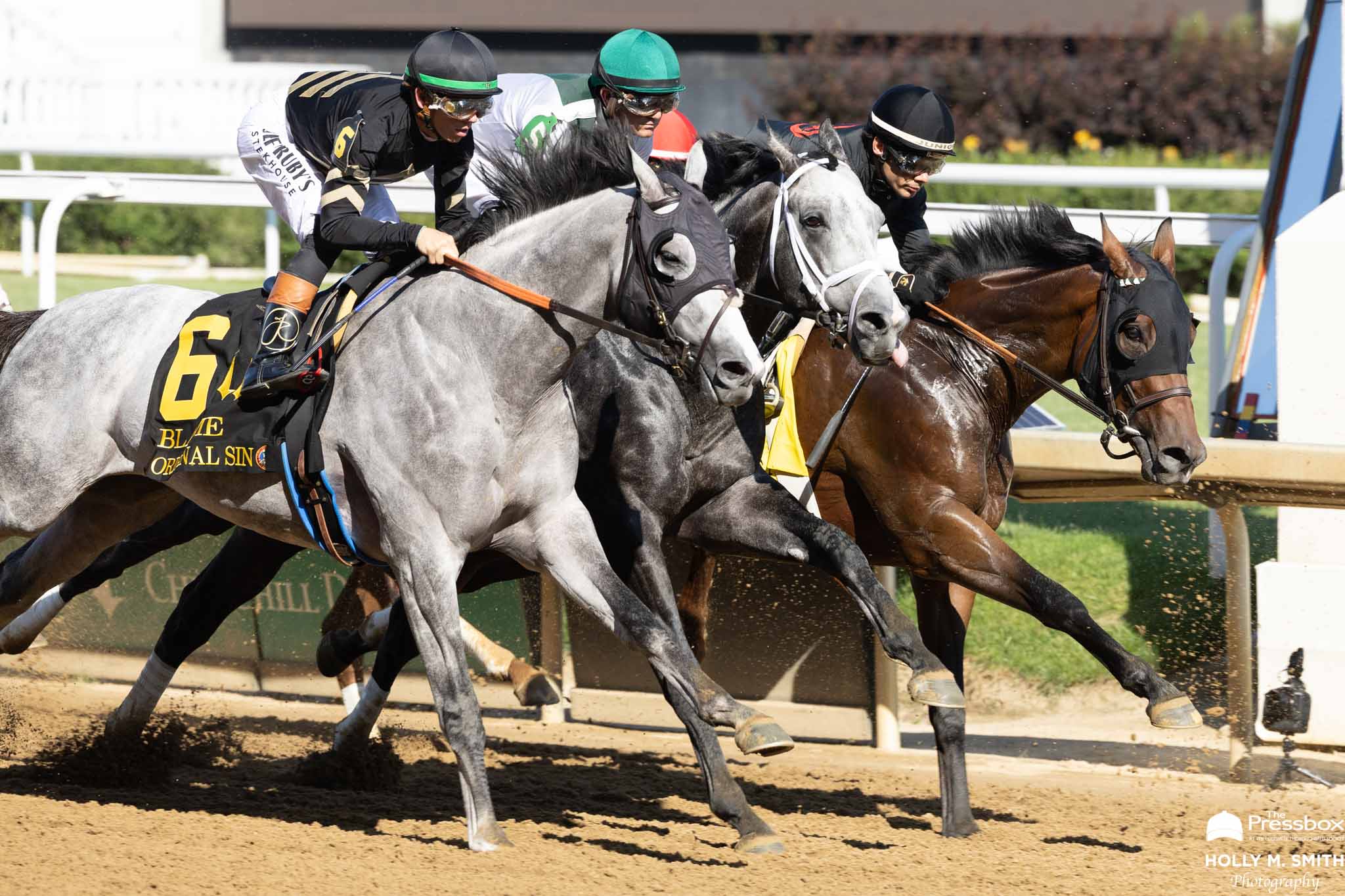
Original Sin’s GIII Blame Stakes victory at Churchill Downs did more than add a black-type line to his page. It gave Calumet Farm and the market a hard example of how a pedigree that looked thin on paper can still produce a horse with graded-stakes quality, stamina, and late-blooming upside. The colt, a Curlin homebred, made a successful black-type debut and immediately shifted from curiosity to credible racing force.
That matters because his story is not built on obvious blue-chip production. It is built on the kind of horse racing loves most: one that forces a reappraisal. A colt who was still finding himself can become far more valuable once he proves he belongs in stakes company, and Original Sin’s Churchill performance is exactly the sort of result that changes how breeders, horsemen, and buyers read a family.
Why this pedigree now matters as a performance story
The key to understanding Original Sin is not simply that he is by Curlin, one of the modern breed-shaping influences, but that his maternal line was not expected to yield a graded winner. The article frames him as a slower burn than Golden Tempo, but one that appears to be thriving with maturity. That is a crucial performance clue: this is not a precocious, flashy type whose value was obvious from the start. He looks more like a colt whose class strengthens with time and conditioning.
That profile lines up with what Curlin has often transmitted: power, scope, and the ability to improve with age. In other words, the sire line gives a reason to believe the horse can keep moving forward, while the female family explains why the market may have missed the best version of him early. For bettors and horsemen, that combination is useful because it suggests a horse whose ceiling may be higher than his record initially implied.
The female line looked fragile, but not empty
The deeper surprise is on the bottom side. Original Sin is out of Beauty and Light, by Unbridled’s Song, and the mare’s own race record was modest, with the article describing her as unplaced in two starts. The next two dams never even made the starting gate. On paper, that reads like a family with almost no racecourse proof to support it.
And yet that is exactly why Original Sin’s win matters. A female line can look inactive, underpowered, or overlooked and still carry hidden value if the right mating unlocks it. Here, the evidence is not in a stacked ledger of stakes producers but in the fact that one colt has surfaced from a line that had given the market little reason to expect this outcome. His performance gives that family immediate practical relevance.
Gaudete and the market’s blind spot
Beauty and Light is out of Gaudete, a Distorted Humor half-sister to Munnings, and that connection is the real pedigree anchor here. Munnings has become a familiar and important name in commercial breeding, so the link reminds readers that valuable genetics can sit in families the marketplace has not fully rewarded. Gaudete produced 10 named foals, and only one became a black-type horse, with nine of the 10 being male. That is the sort of record that can cause a family to be written off quickly.
Original Sin now stands as the surviving branch that gives the line fresh purpose. When one horse from a neglected family makes graded-stakes grade, the whole family tree gains new life. Breeders start to ask whether the apparent weakness was really weakness at all, or simply a matter of timing, sex distribution, and the right stallion match never having arrived until now.
What Calumet’s pricing tells us about breeding value
The market has already shown how easily this line was discounted. Calumet bought Beauty and Light for $260,000 at the Keeneland January Sale of 2019, then sold her for just $13,000 at the Keeneland November Sale of 2024, with the mare going to Saudi interests. That spread is not just a striking commercial detail; it is a reminder of how quickly breeding value can be reassessed when a mare’s own race record and produce record have not yet produced a standout runner.
Original Sin changes that calculus. A mare that looked like a low-yield asset suddenly has a graded-stakes colt on her page, and that alters how the family will be read in future catalogue copy and mating discussions. In the bloodstock world, one horse can restore confidence to an entire branch, and this is a textbook example of that reversal.
What his run says about the breeding market
This is one of the sport’s enduring tensions: the market tends to reward obvious names, but racing keeps proving that useful horses can come from less decorated corners. Original Sin’s win is a reminder that the breeding game is not only about stacking elite names. It is also about how those names interact, how much patience a trainer or owner is willing to show, and whether a horse is allowed to mature into the version of himself the pedigree promised.
That is why this story reaches beyond one colt. It speaks to stallion demand, broodmare planning, and the way sales buyers interpret risk. A family once viewed as light on production now carries a graded-stakes winner, and that is enough to alter the conversation around future matings, catalog pages, and resale potential.
The broader racing significance
Original Sin’s emergence also fits the bigger rhythm of the season. With the build-up to Saratoga and the Belmont Stakes in the background, pedigree stories like this offer a different lens on the sport than the usual race-by-race headline cycle. They remind the industry that the horses carrying today’s major races are also shaping tomorrow’s breeding board.
That is why a seemingly quiet digest piece can carry real weight. Original Sin is not just a stakes winner from Churchill Downs. He is a case study in how a dismissed female line can produce a horse whose performance profile forces a rewrite, and once that happens, the pedigree stops being a footnote and starts becoming part of the racing argument.
This article was produced by Prism’s automated news system from verified source data, official records, and press releases, then run through automated quality and moderation checks before publishing. The system is built and supervised by the people who set the standards it runs under. Read our full AI policy.
Know something we missed? Have a correction or additional information?
Submit a Tip