Chief Wallabee rises fast from late starter to Belmont Stakes contender
Chief Wallabee went from first-out maiden winner to Belmont threat in five starts, and Bill Mott’s careful build has become the real handicap.
From late starter to legitimate Classic horse
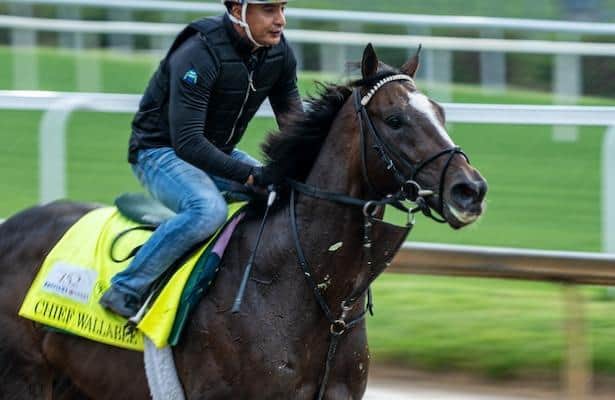
Chief Wallabee is not the kind of Belmont Stakes contender who arrives with a long paper trail. He got to the races only on Jan. 10, 2026, won a seven-furlong maiden special weight at Gulfstream Park, and was suddenly no longer just a colt with promise but a horse forcing his way into the Classic picture. Bill Mott had once been thinking in much smaller terms, maybe a mile allowance or even a sprint later in the year, but the colt kept answering every test and kept moving forward.
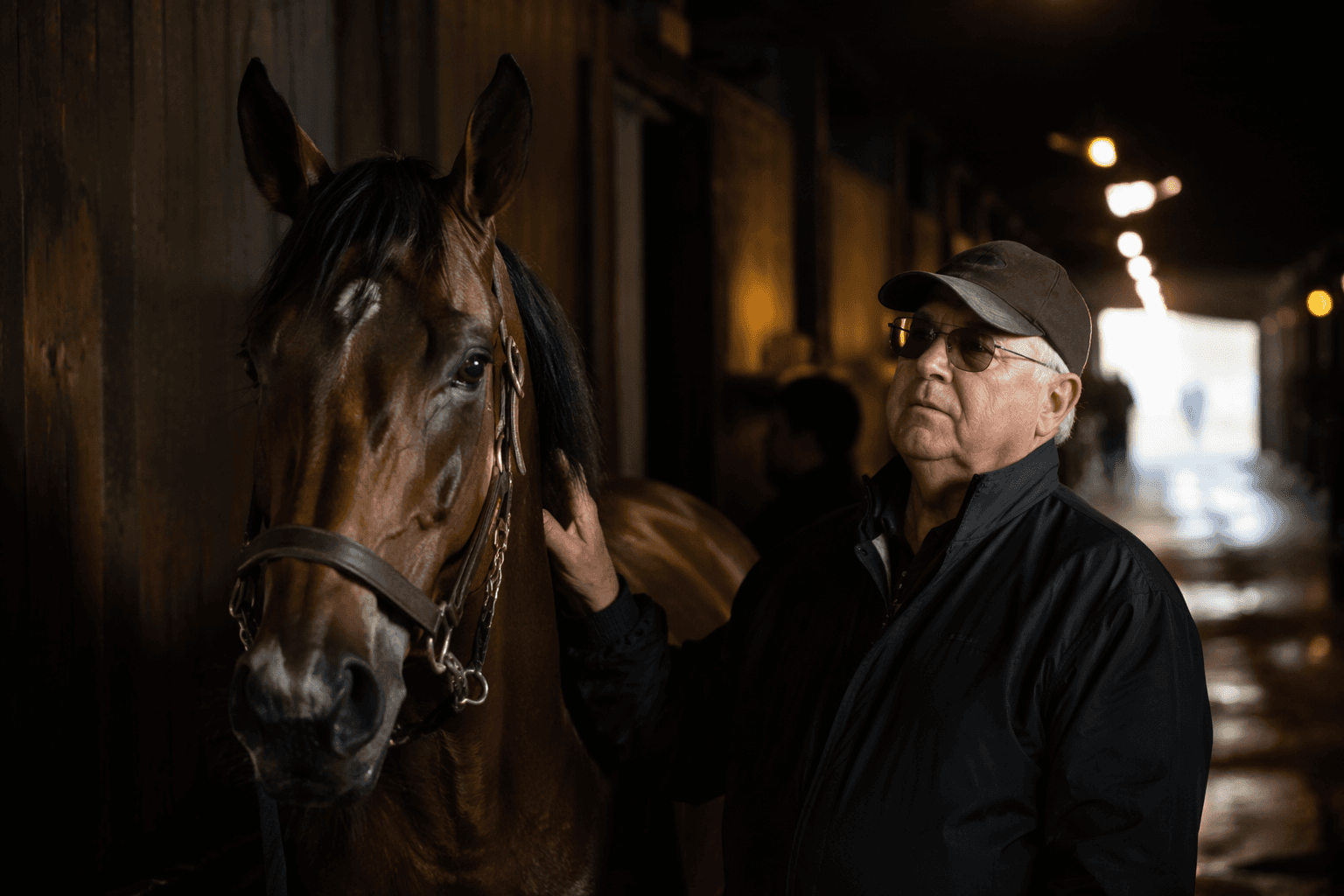
That is what makes his case so interesting at Saratoga Race Course. A horse with just five career starts can look underbuilt at 1 1/2 miles, but he can also look untapped. Chief Wallabee, foaled Feb. 6, 2023, by Constitution out of A La Lucie by Medaglia d’Oro, owned by Michael and Katherine G. Ball and trained by Mott, entered the Belmont with a 4-1-1-1 record and $466,600 in earnings. Those are not the numbers of a finished product. They are the numbers of a colt still climbing.
The second start changed the conversation
The turn from useful runner to serious Classic horse came quickly. In only his second career start, Chief Wallabee missed by a neck to Commandment in the Fountain of Youth Stakes, the 80th running of the race at 1 1/16 miles at Gulfstream Park. That near-miss mattered because it told horsemen and bettors that the maiden win was no fluke. He was not simply advancing through conditions. He was already running like a horse with stakes intent.
Commandment’s Fountain of Youth victory earned 50 Kentucky Derby qualifying points, which only sharpened the significance of Chief Wallabee’s performance. A horse who can press a route stakes winner that tightly in just his second start is not supposed to develop that fast, yet Chief Wallabee did exactly that. The entire conversation around him changed in a matter of days, and it changed because the horse himself kept removing the ceiling.
The Florida Derby and Kentucky Derby showed his base
What followed gave the Belmont case more substance. Chief Wallabee was third in the Florida Derby, then ran fourth in the Kentucky Derby at Churchill Downs on May 2, 2026, in the $5 million Grade 1 run at 1 1/4 miles. He did not merely show up in Louisville and fade. Equibase and Thoroughbred Daily News both describe traffic trouble in the stretch, with the colt squeezed, bumped, and forced to work for room before finishing fourth, three lengths behind the winner in a 2:02.27 race.
That matters because the Kentucky Derby is the kind of test that reveals whether a horse can absorb pressure and still keep going. Chief Wallabee’s result looked like a plain fourth on paper, but the trip says more than the placing. He had already handled a major prep-route pattern, already shown he could stay on at the top level, and already done it without the cushion of a long campaign.
Why the Belmont setup fit the story
By the time the Belmont Stakes field was set at nine runners, Chief Wallabee was not a novelty. He was one of the more intriguing horses in the race because the usual rules of experience did not fully apply to him. The argument for him was not that he was battle-hardened in the traditional sense. It was that he was still improving, and a deep, improving horse can be more dangerous than a fully exposed rival in a race like this.
That is also where the danger sits. A horse with only a handful of starts has less foundation than the typical Belmont horse, and 1 1/2 miles asks for the kind of stamina reserve that only the best young stayers possess. Chief Wallabee’s compressed timeline is either a hidden advantage or a warning sign, depending on how much further he can stretch his recent progress. He has already shown enough class to belong. The real question is whether that rapid rise leaves any room for another forward move, or whether the Belmont trip finally asks for more base than he has had time to build.
Mott’s patient handling became part of the handicap
Bill Mott’s role is central here because the horse’s rise has been shaped by restraint as much as ambition. He did not rush Chief Wallabee into the deep end after the first hint of talent. Instead, the colt was allowed to progress from a maiden win to the Fountain of Youth, then to the Florida Derby, then to the Kentucky Derby, with each race adding another layer to the case. After the Derby, he shipped to Saratoga Springs and worked three times on the Oklahoma Training Track, a sign that the barn saw no reason to second-guess the move upward.
Junior Alvarado was named to ride Chief Wallabee, and the colt was assigned post 9 at 3-1 on the morning line according to Thoroughbred Daily News and Spectrum News. Those details matter because they place the horse in the middle of the Belmont puzzle, not on the fringe of it. He was not being asked to sneak up on the race from obscurity. He was being asked to confirm that the rise from maiden winner to Classic runner was real.
What a Belmont win would have meant for Mott
There was also a larger trainer storyline attached to Chief Wallabee. A Belmont Stakes win would have given Mott consecutive victories in the race, which would have made him the first trainer to do that since D. Wayne Lukas three decades earlier. That kind of historical pressure does not determine the outcome, but it does frame how serious Mott’s run with Chief Wallabee had become. This was not just a patient development project paying off in a graded stake. It was a chance to turn a short, sharp rise into a defining Classic moment.
Chief Wallabee’s appeal at Belmont came from the same trait that made him unusual everywhere else: he kept getting better faster than anyone expected. That is the essence of his legitimacy story. He did not take the usual route into the Classic picture. He forced the door open in five starts, and the Belmont had to decide whether that kind of ascent is the mark of a horse peaking at the right time or one whose ceiling is still higher than the field can see.
This article was produced by Prism’s automated news system from verified source data, official records, and press releases, then run through automated quality and moderation checks before publishing. The system is built and supervised by the people who set the standards it runs under. Read our full AI policy.
Know something we missed? Have a correction or additional information?
Submit a Tip