Claret Beret’s Grade 1 Apple Blossom win crowns Mitch Haynes family breeding journey
Claret Beret’s Apple Blossom win turns Mitch Haynes’s inherited mare line into a Grade 1-producing operation. The payoff reaches the sales ring, the Distaff trail and Kentucky pride.
From inheritance to intent
Claret Beret’s Grade 1 Apple Blossom Handicap victory is the kind of result that changes a breeding story from sentimental to serious. What began as a handful of mares and foals left to Mitch Haynes after his father Alvin died in 2014 has now produced a mare who can beat a champion, collect a Grade 1 trophy and force the market to take the family program far more seriously.
That matters because the best breeding stories in racing are never just about ownership, they are about proof. Haynes did not inherit a finished operation; he inherited possibility, then spent years figuring out what to do with it. Over time he bought a mare of his own at Keeneland, kept digging into the family lines his father had known decades earlier, and found that the operation was more connected to its past than anyone realized.
The turning point came through the horses that stayed home when the family tried to move on. One yearling failed to meet reserve, so the colt remained in the picture, and Sticksstatelydude became a useful piece of evidence rather than a sale-day footnote. He won his maiden at Saratoga in August 2015, later finished fourth in the Grade 1 Breeders’ Futurity, and was then sidelined by injury before the 2015 Breeders’ Cup World Championships. That sequence did not produce a superstar, but it did change Haynes’s outlook by showing that the family could breed horses that belonged in the conversation.
The mare line that kept coming back
Bessie M deepened that conviction. Haynes bought her for $42,000 at the 2015 Keeneland November Sale, when she was already a stakes-winning daughter of Medallist with more than $218,000 in career earnings and carrying her first foal by Munnings. That was not a speculative afterthought; it was a deliberate move toward building a broodmare base with usable depth and pedigree strength.
What made the family’s story so compelling was the realization that the operation had unknowingly bought three generations of one mare line. The mare that produced Claret Beret was part of that chain, and the discovery tied the family’s present to its past in a way that racing people understand immediately. In a sport built on bloodlines, that kind of recursive pedigree is more than a neat story, it is the basis for long-term value.
Claret Beret proves the point on the track
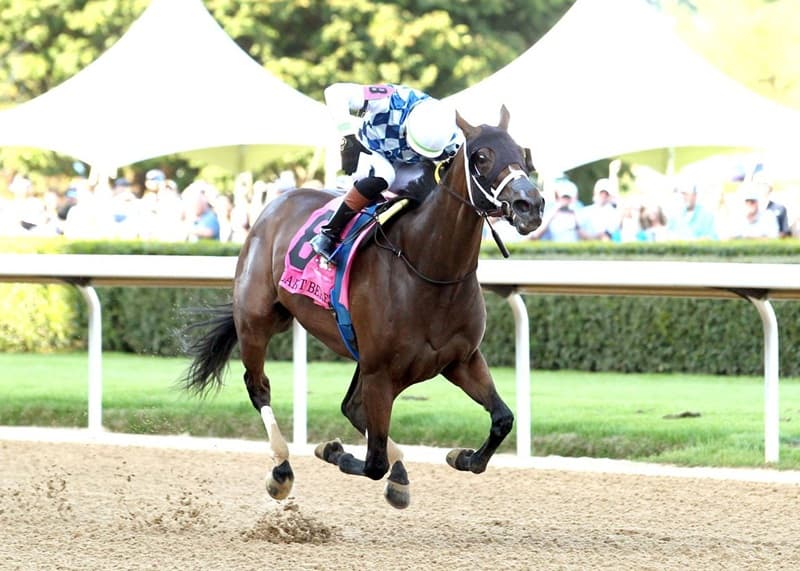
The proof came at Oaklawn Park, where Claret Beret won the Grade 1, $1.25 million Apple Blossom Handicap on April 11, 2026. The race was run at 1 1/16 miles and carried Breeders’ Cup Challenge Series “Win and You’re In” status for the $2 million Breeders’ Cup Distaff at Keeneland on October 31, 2026. Claret Beret finished 4 1/2 lengths clear of Nitrogen, last year’s champion 3-year-old filly, in 1:42.21 over a fast track.
The numbers sharpen the significance of the win. Claret Beret paid $19.60 to win, pushed her career earnings to $1,115,834 and ran a lifetime-best 105 Beyer Speed Figure. For jockey Micah Husbands, it was his first Grade 1 victory in the United States since he began riding here in 2024, a reminder that major races often create new names as they confirm established ones.
Trainer Saffie Joseph Jr. said after the race that the mare likely preferred two turns all along, and the Apple Blossom helped prove that theory in the most persuasive way possible. The race unfolded with fractions of :23.70, :46.87 and 1:10.86, then Claret Beret kept finding more when the pressure rose. Against a horse like Nitrogen, that kind of finish does more than register an upset, it reorders the way the form book reads.
What the win changes now
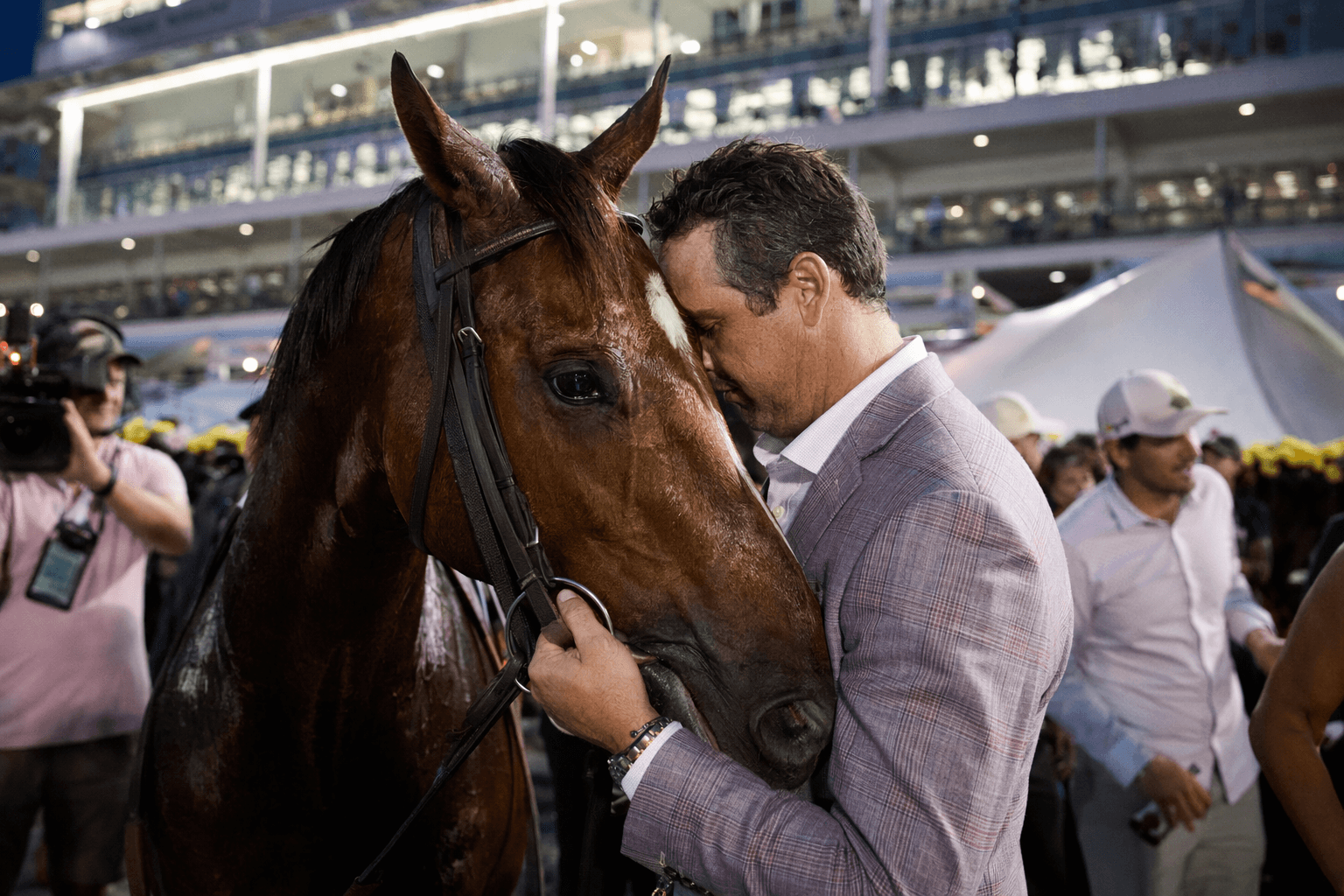
For Haynes, the commercial meaning is immediate. Claret Beret was bred in Kentucky by Mitch Haynes and sold at the 2022 Keeneland September Sale for $375,000 before becoming a Grade 1 winner for Miller Racing LLC. A horse that can make that leap does not just validate a mating, it raises the profile of every mare around her and strengthens the case for the family’s broader program.
That is where the Breeders’ Cup angle becomes especially important. The Apple Blossom guaranteed a spot in the Distaff, and a return to Keeneland would put Claret Beret back on one of the sport’s biggest stages with added narrative power. Whether she runs there or not, the win already places her among the mares whose future value will be judged as much by what they can produce as by what they have already won.
A family business, not a family souvenir
The broader significance reaches beyond one mare. Alvin Haynes founded the family trucking business in 1963, and the family’s Central Kentucky footprint later expanded into tobacco, cattle farming and commercial real estate. That background matters because it shows the breeding operation is part of a larger, durable business culture, not a romantic sideline built around one lucky horse.
That is why Claret Beret’s success feels bigger than a single Grade 1. It turns a family name into a breeding résumé, converts inherited mares into marketable assets, and proves that patience can still beat haste in a sport obsessed with quick returns. Haynes may have started with a handful of horses and a lot of uncertainty, but the Apple Blossom winner shows he has built something sturdier than a revival. He has built a program that can now produce real results.
This article was produced by Prism’s automated news system from verified source data, official records, and press releases, then run through automated quality and moderation checks before publishing. The system is built and supervised by the people who set the standards it runs under. Read our full AI policy.
Did this article answer your question?