Conghua emerges as Hong Kong racing's vital second training base
Conghua is no satellite. It is Hong Kong racing's pressure valve, adding space, welfare tools and a second base that could shape the sport's next era.
A second base built for a crowded system
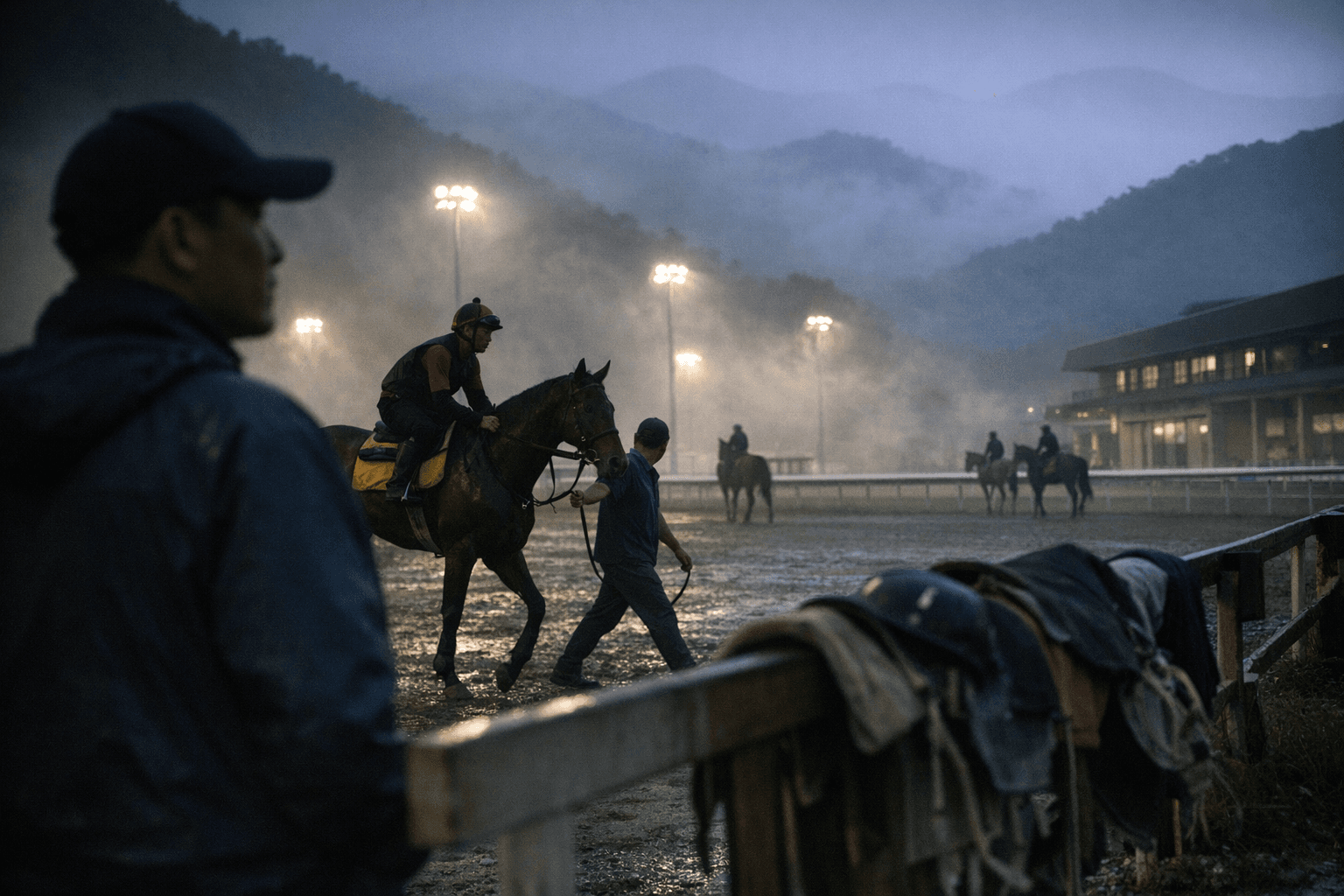
Conghua has become the answer to a problem Hong Kong racing could not solve inside the city limits. The Hong Kong Jockey Club now runs a dual-site model, with horses stabled and trained at both Sha Tin Racecourse in Hong Kong and Conghua Racecourse in Guangzhou’s Conghua district, creating a pressure valve for a racing population that had long been squeezed by geography and space.
For nearly 20 years, the club searched for additional land in Hong Kong before Conghua was developed. Since the late 1970s, Hong Kong’s horses had been stabled and trained exclusively at Sha Tin, so the arrival of a second base was not a luxury project. It was a structural fix for a system that needed more room to manage horses, workloads and long-term competitiveness.
From Asian Games venue to racing infrastructure
Conghua’s backstory shows how deliberately this project was assembled. The site was originally the equestrian venue for the 2010 Guangzhou Asian Games, then officially opened as a Hong Kong Jockey Club facility on August 28, 2018. That opening marked a new era not just for Hong Kong racing, but also for Hong Kong-Guangdong co-operation.
The political and operational framework mattered as much as the buildings. Hong Kong and Mainland authorities signed four collaboration agreements in December 2017 to support the Conghua Equine Disease Free Zone, and the HKSAR Government described the newly established racecourse as an important support base for Hong Kong racehorses. That is the key to understanding Conghua: it was built to extend the reach of Hong Kong racing, while preserving health safeguards and cross-border operating stability.
Why the layout changes the training equation
The facility was designed from the ground up, and horsemen notice the difference immediately. Caspar Fownes, who was involved in the original design process, has described the stabling in almost domestic terms, saying it feels fresh and high-ceilinged, like moving from a flat to a house. That matters because Conghua was not retrofitted into an existing racecourse; it was planned as a purpose-built environment that could give horses more space and a calmer daily rhythm.
David Hayes has made the same point from a performance angle, arguing that Conghua gives horses a mental change and a more relaxed environment. He also notes that the complex offers better training tools than Sha Tin because it was built from scratch. In a sport where condition can be lost through stress as easily as through injury, that combination of physical space and mental reset is a competitive advantage.
The equipment that turns welfare into performance
Conghua’s value is easy to see in the details. The training complex includes an uphill gallop, water walkers, aqua treadmills, spelling paddocks and sand rather than tarmac on the horses’ daily paths. These are not decorative touches. They are tools for managing impact, recovery and variation in a horse’s routine.
The centerpiece is the 1,100-metre uphill gallop, which rises at a consistent 1.54 percent and is the first of its kind in the Mainland and Hong Kong. That gives trainers a rare option for building fitness without relying solely on the familiar Sha Tin environment. The equine swimming pool, at 2.6 metres deep, adds another layer of low-impact conditioning, while chilled salt-water spas support recovery after hard work.
Conghua also includes 20 spelling paddocks, giving horses a place to relax and rehabilitate away from the intensity of the track. In a racing jurisdiction where seasons can be demanding and travel is tightly managed, those paddocks are part of the competitive model, not just the welfare story.
The veterinary hospital underpins the system
The most important sign that Conghua was built as serious infrastructure is the veterinary hospital. It covers 4,928 square metres and is fitted with exam rooms, an x-ray unit, anaesthetic and operating suites, intensive-care stalls, a clinical laboratory and a small isolation unit. That gives the base the kind of medical depth that supports both prevention and intervention.
This is where the story becomes bigger than facilities cataloguing. Hong Kong racing depends on form management, and form management depends on keeping horses healthy enough to string together a campaign. A horse that can leave the city, rest in a controlled environment, train in varied conditions and return refreshed is more likely to maintain condition over a long run of races. Conghua gives Hong Kong a way to think about durability, not just peak fitness.
From support base to race-day venue
Conghua is not stopping at training. Its first official race meeting is scheduled for October 31, 2026, and HKJC chief executive Winfried Engelbrecht-Bresges has said the inaugural card is likely to feature five or six races. That shift from support site to racing venue is important because it shows how the club sees the asset evolving over time.
The move also reflects a broader strategic logic. Hong Kong is trying to solve an old problem with modern engineering: how to keep a high-quality racing population healthy, mentally engaged and physically sound in one of the world’s most compact racing markets. Conghua expands capacity without diluting standards, and that could matter just as much for horse welfare as for the depth of the racing program.
What Conghua means for Hong Kong racing’s future
The real significance of Conghua is that the HKJC is treating it as operational necessity, not as an impressive add-on. It enlarges the training footprint, improves recovery options, supports veterinary care and creates flexibility in how horses are rotated through work and rest. In practical terms, that can help Hong Kong keep more horses in better shape for longer, which is the foundation of a stronger racing product.
For horsemen, the lesson is clear. Infrastructure is not separate from performance. At Conghua, the environment, the medical support and the training tools all feed into the same goal: keeping horses sound enough to compete at the level Hong Kong expects. That is why Conghua now sits at the center of the jurisdiction’s future model, and why its importance will only grow as the first race meeting approaches.
This article was produced by Prism’s automated news system from verified source data, official records, and press releases, then run through automated quality and moderation checks before publishing. The system is built and supervised by the people who set the standards it runs under. Read our full AI policy.
Did this article answer your question?