Curlin to stop covering mares after fertility issue discovered
Curlin’s breeding season ended early after a fertility dip, forcing Hill ’n’ Dale to shelve one of the most valuable books in the sport. The shutdown hits mares, budgets, and the commercial market all at once.
Curlin’s season was cut short after Hill ’n’ Dale Farms at Xalapa discovered a fertility issue that stopped one of North America’s most important sires from covering mares for the rest of 2026. He had already bred about 25 to 30 mares earlier in the season, but a second wave of coverages showed a sharp drop in mares checking in foal, a problem that quickly turned from a private barn concern into a market event.
Hill ’n’ Dale said Curlin was evaluated on April 22 by Dr. Dickson Varner, the recently retired Texas A&M theriogenology professor, and that he recommended the stallion stop breeding so semen could regenerate over a lengthy cycle. John Sikura said the farm moved fast to notify shareholders and breeders so they could reset their plans, a telling step when a stallion has been booked to 97 mares and sits on a $225,000 stud fee. The farm’s decision was not just about one horse’s health. It was about protecting customers who had already committed valuable mares to a slot that suddenly disappeared.
The timing matters because breeders do not treat a Curlin booking like a normal calendar item. When a stallion of this stature goes dark, mares have to be reassigned, transport has to be redone, and commercial mating plans that were built around his profile get scrambled. That can push breeders toward other elite sires in the same window, or force them to carry a mare to a later cycle and absorb the cost. In a market where stud fees, conception rates, and foaling dates shape yearling economics, even a temporary shutdown can change how foals are priced and how breeding-stock values are judged.
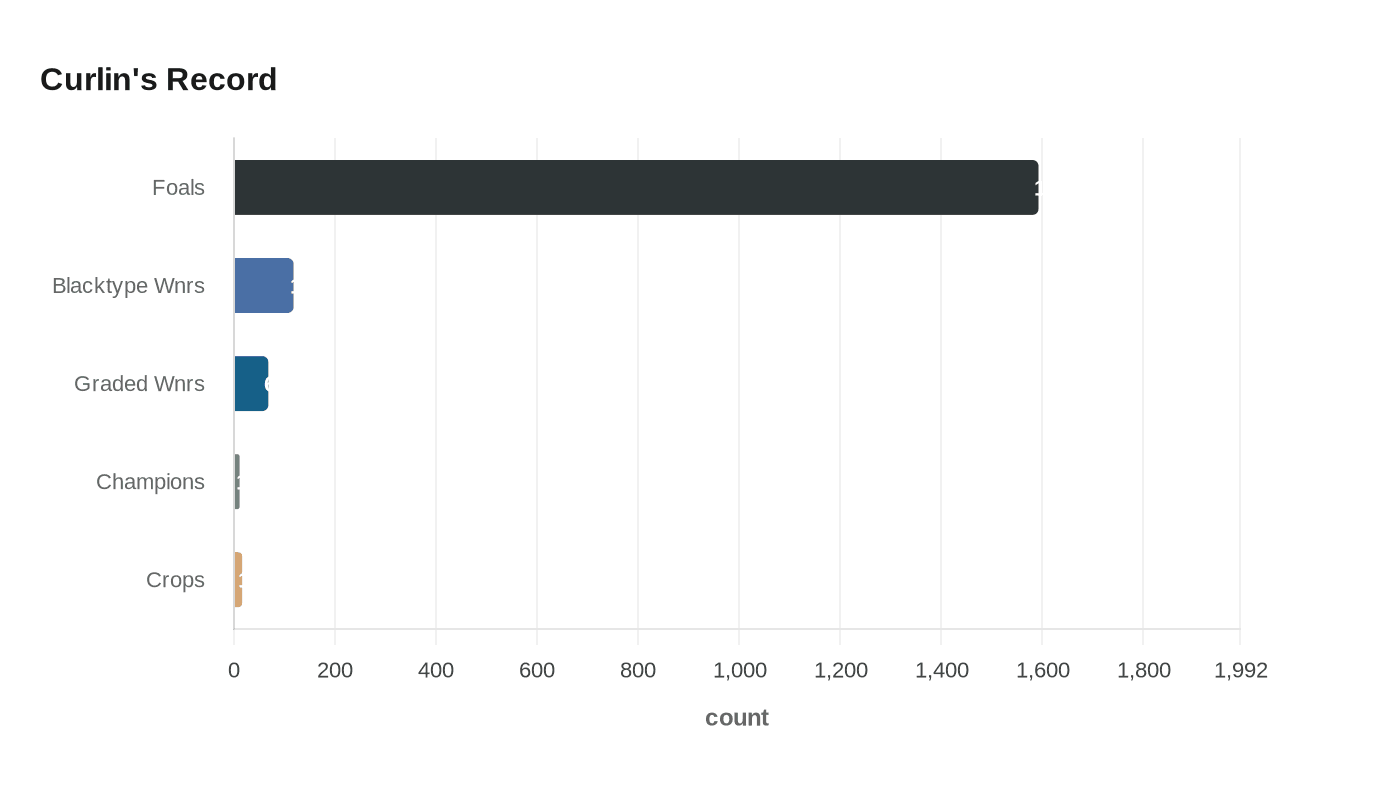
Curlin’s resume explains why the news landed so hard. Equineline listed him with 16 Northern Hemisphere crops, 1,593 foals, 11 champions, 68 graded blacktype winners, 118 blacktype winners, and $175,033,046 in lifetime progeny earnings as of April 13. Hill ’n’ Dale also points out that he is the only sire in history to produce three Breeders’ Cup champions on the same day and to have progeny win four individual Eclipse Awards in one year. Recent marketing around his line has also leaned on high-end sales results, including $5 million and $4 million yearlings in 2024 and 2023, and his 2025 runners such as Journalism, Raging Sea, Ocean Club and Himika.
Sikura said Curlin recently dealt with an ulcer diagnosed by Dr. Nathan Slovis at Hagyard Equine Medical Institute in Lexington and had spiked a fever to 102 degrees before it came down with Banamine. Hill ’n’ Dale hopes he can return to service in 2027, but the immediate impact is already clear: the market lost access to a pillar sire, and everyone who planned around him now has to move.
This article was produced by Prism’s automated news system from verified source data, official records, and press releases, then run through automated quality and moderation checks before publishing. The system is built and supervised by the people who set the standards it runs under. Read our full AI policy.
Did this article answer your question?