From Churchill Downs barn work to Keeneland sales, Corie Anderson's rise
A museum stop at Churchill Downs sent Corie Anderson from restaurant shifts to barn work, sales analysis and a first trainer win. Her climb shows how racing careers are built one hard-earned edge at a time.
From first visit to first foothold
A trip to Churchill Downs did not just introduce Corie Anderson to racing, it changed the direction of her life. She had come to Louisville, Kentucky, to celebrate her brother’s graduation, but once she walked through the Churchill Downs museum and saw horses everywhere, the place stopped feeling like a visit and started feeling like a future.
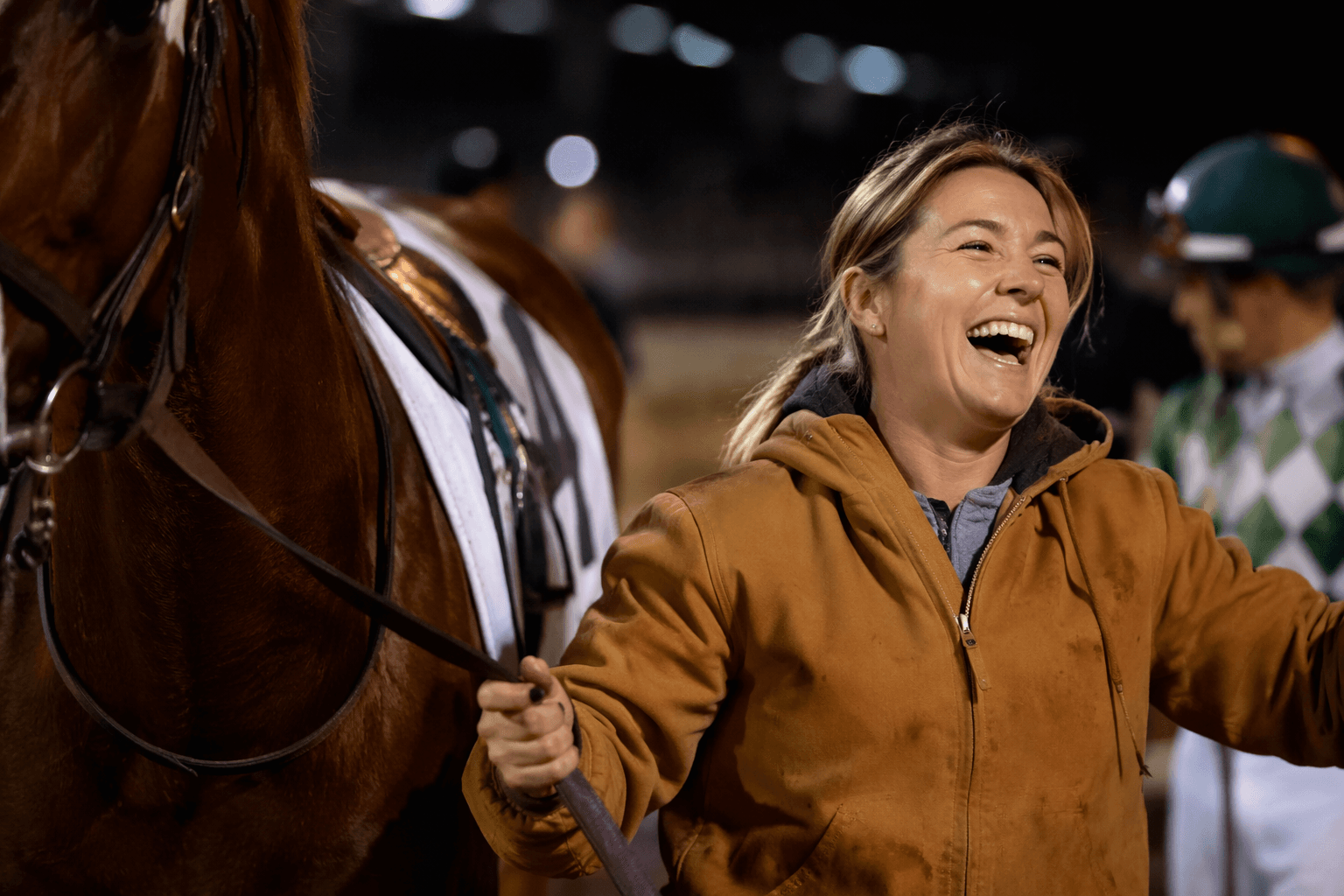
That reaction became the starting point for a career built on repetition, work ethic and a willingness to do the unglamorous jobs first. Anderson was still working in a restaurant when a chance introduction led her to multiple graded stakes-winning trainer Ron Moquett, who told her to come out to Churchill Downs the next morning and help in the barn. She did not arrive with a polished résumé or a shortcut into the industry. She arrived ready to learn, and that readiness became the first real credential.
The barn shift that mattered
The early grind matters in racing because it is where trust is earned. Anderson spent her mornings hot-walking at 4 a.m. and then headed straight to the restaurant for her other job, a schedule that says as much about racing access as any pedigree ever could. The Thoroughbred business rewards people who can keep horses safe, read how they move and absorb the daily rhythm of training before ever asking for a bigger role.
Moquett was a strong mentor for that stage of the climb. An Oklahoma native who has trained since 1997, he has campaigned major horses including Whitmore, Seek Gold, Far Right and Gentlemen’s Bet. Being around a horseman with that kind of record gave Anderson a live model of what a sustainable racing career can look like, from the horse care itself to the long view required to stay in the game.
The key lesson from that chapter is practical: many racing careers begin not with a title, but with access to the barn, a willingness to work dawn hours and the discipline to keep showing up after the first burst of excitement fades. Anderson did exactly that.
Why the sales game changed everything
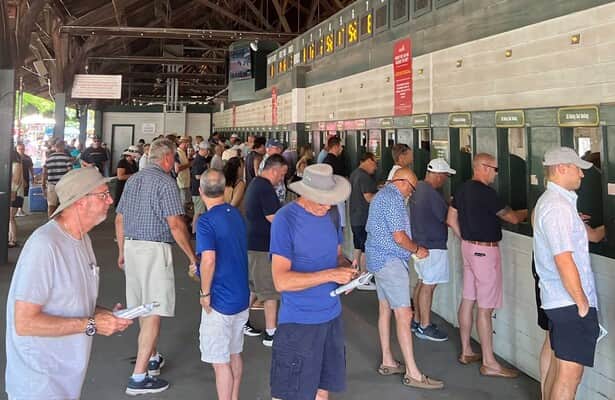
Anderson’s next step showed another side of the industry, one that is less visible to casual fans but central to how racing money moves. She shifted toward the sales side and spent long hours at the Keeneland September Sale studying every horse, comparing conformation and pedigree against price tags and trying to understand why one yearling brought more than another. That is not guesswork, and it is not just instinct. Keeneland maintains archived sales and a searchable past-results tool, which makes sale analysis a data-driven skill built on comparison, memory and pattern recognition.
That background matters because the sales pavilion is one of the places where racing’s future is priced in real time. Anderson learned to evaluate what the market saw, and just as important, what it missed. One of her most revealing early buys came in 2018, when she had only $1,000 to invest and bought a filly by Magician for $1,100 at the Keeneland September Yearling Sale. The purchase helped teach her the pinhooking game, the kind of lesson that separates someone who attends sales from someone who starts to understand them.
The fact that the filly had a half-sister, Charmaine’s Mia, who later developed into a stakes performer, sharpened the point. Anderson was learning to spot value before the broader market fully recognized it, and that is a rare skill in any bloodstock market. In a business where margins are thin and judgment is everything, that kind of early eye can matter as much as a training tally.
From buying smart to building a résumé
Anderson’s story has moved beyond curiosity and into measurable results, which is what gives it real weight in a hard industry. Equibase listed her career record as 15 starts, 1 win, 2 seconds, 2 thirds and $60,601 in earnings as of June 2, 2026. For 2026 alone, she had 4 starts, 1 win, 1 second and $40,102 in earnings.
Those numbers are still the beginning of a training résumé, but they show forward motion. Her first trainer win at Churchill Downs came on May 10, 2026, in Race 1 with Sr Seventyone, a maiden claiming race for 2-year-old fillies. That victory matters beyond one result because it confirms that the person who once hot-walked horses before dawn is now getting them ready to win at one of the sport’s most recognizable tracks.
BloodHorse’s profile places that first win about ten years after her first Kentucky visit, which turns the story into a real timeline rather than a vague success arc. The distance between museum floor and winner’s circle was not short, and that is precisely why the story stands out. It shows that credibility in racing is not handed out by geography or enthusiasm. It is built through years of early mornings, observation and incremental proof.
The next test came at the sales ring
Anderson’s latest move shows she has not separated training from buying. She recently purchased an Olympiad colt now named Psalm One Eighteen at the Fasig-Tipton Midlantic May 2-Year-Olds in Training Sale, the 2026 edition of which was scheduled for May 18-19 at the Maryland State Fairgrounds in Timonium, Maryland. The catalog carried 593 entries before supplements were announced, a reminder of how crowded and competitive the juvenile market remains.
That setting fits Anderson’s profile perfectly. She is not just a horsewoman who learned one corner of the business. She is someone whose path runs through barn labor, sales evaluation and training strategy, with each piece reinforcing the next. In a market where buyers are constantly weighing speed, scope, pedigree and resale value, her ability to work both the hands-on and analytical sides gives her a broader toolkit than many newcomers bring to the sport.
Why Churchill Downs still matters
Churchill Downs remains the cultural anchor of the story. Churchill Downs Incorporated says the Kentucky Derby Museum there offers more than 20,000 artifacts and Churchill Downs tours, which helps explain why the track is more than a racing venue. It is an entry point, a place where first-time visitors can move from seeing horses as spectacle to seeing them as a possible life.
That is the deeper significance of Anderson’s rise. Her path shows how racing careers are actually built in the modern Thoroughbred business: through an introduction, a barn shift, a sales education, one smart purchase, and the patience to keep converting exposure into expertise. In an industry famous for high barriers and low margins for error, Corie Anderson has turned curiosity into credibility the hard way, and that makes her trajectory worth watching.
This article was produced by Prism’s automated news system from verified source data, official records, and press releases, then run through automated quality and moderation checks before publishing. The system is built and supervised by the people who set the standards it runs under. Read our full AI policy.
Know something we missed? Have a correction or additional information?
Submit a Tip