Growth Equity's pedigree points to more upside after Peter Pan win
Growth Equity’s Peter Pan win did more than open stakes doors. His Nyquist female line, rising distance profile, and Belmont stakes perks point to a colt with more upside.
Pedigree clues that make the Peter Pan matter
Growth Equity’s two-length win in the Peter Pan Stakes at Belmont at the Big A was not just a first stakes victory. It also handed Chad Brown a colt whose bloodlines, race shape, and commercial path all seem to be moving in the same direction: upward. The immediate reward was practical, because the Peter Pan carried Belmont Stakes benefits, but the deeper takeaway is that this is a horse whose family tree suggests he may improve as the races get longer and the company gets tougher.
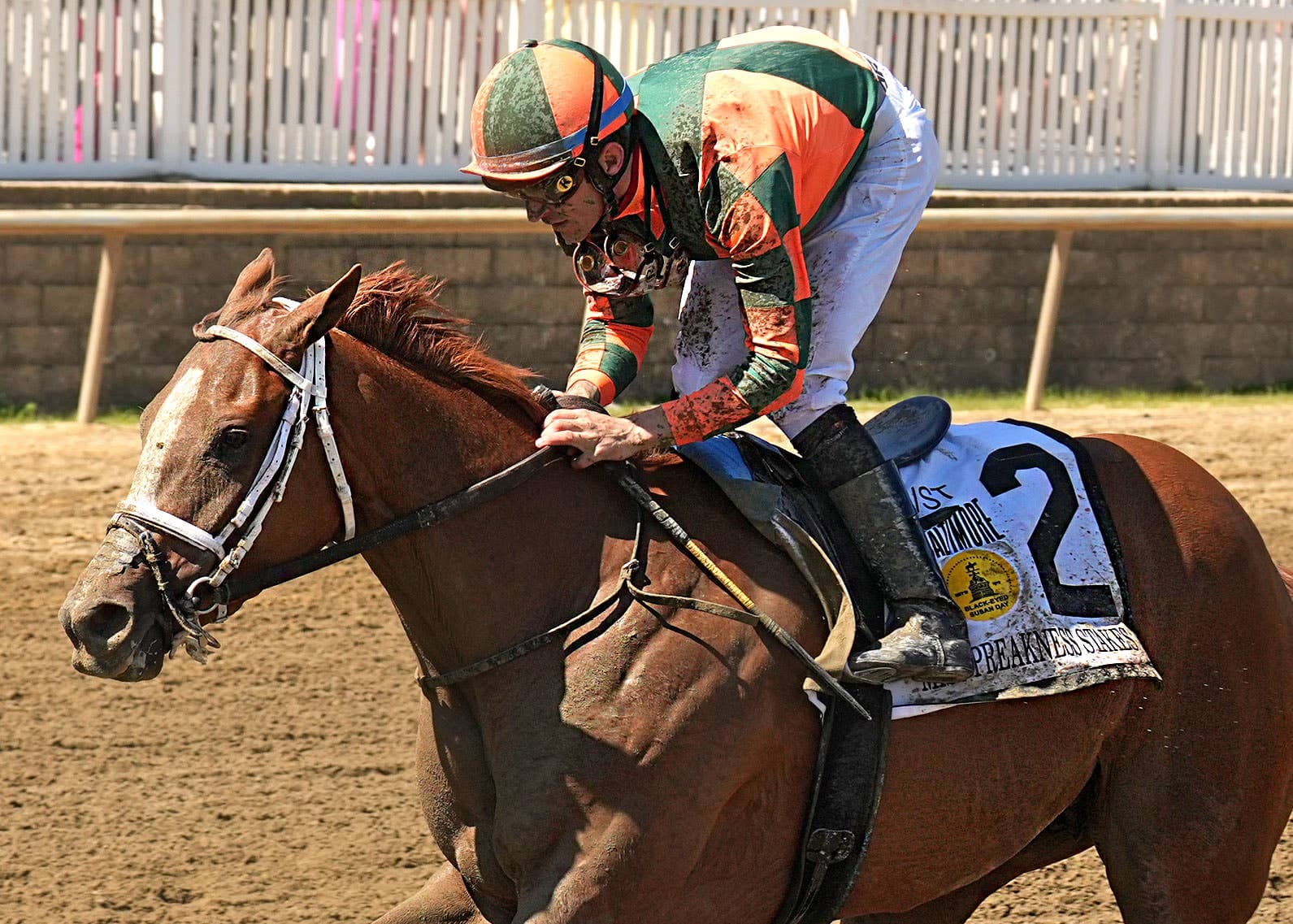
The race itself told part of the story. Run on May 9, 2026, at Ozone Park, New York, the Peter Pan covered 1 1/8 miles for a $200,000 purse, and Growth Equity finished in 1:50.25 under Flavien Prat for Klaravich Stables. That performance was enough to make the colt a stakes winner for the first time, but it also moved him into a more important conversation. NYRA said the top three finishers received waived entry and starting fees for the 2026 Belmont Stakes, excluding the supplemental fee, and Equibase recorded that Growth Equity earned free entry and starting fees for the Belmont. In a year when every Classic-adjacent route race is being watched for its value to the Derby and Belmont pipeline, that matters.
Why this pedigree is getting attention now
The central bloodstock clue is the overlap between Growth Equity’s sire line and female line. He is by Nyquist out of My Dear Venezuela, by Wildcat Heir, and the broader family runs back to Seeking Gabrielle, Nyquist’s dam. That connection is what makes the colt more interesting than a one-off graded stakes winner. It suggests a family that can transmit usable speed without preventing a horse from carrying it over a route.
That matters because Growth Equity did not arrive at the Peter Pan as an established stakes horse. He came in off three maiden starts, with two seconds at sprint distances before breaking through at one mile. Then he stretched again to 1 1/8 miles and won a graded stakes by two lengths. That progression is exactly the kind of pattern horsemen want to see when they are trying to separate a mature early runner from a horse that is still learning how to use his pedigree.
What the female line says about future value
Bloodstock players pay close attention to families that keep producing horses with enough scope to stay relevant beyond their first good race, and Growth Equity fits that mold. Equibase lists Seeking Gabrielle as a mare who started seven times, won once, and earned $7,935, a modest racing résumé that becomes far more valuable once it is linked to a top sire and a graded stakes winner. My Dear Venezuela, foaled in 2013, is by Wildcat Heir out of Bayou Mist, by Silver Deputy, another reminder that the family blends speed influences that can still work over ground.
That is why the Peter Pan win carries commercial weight beyond the immediate purse money. A colt who wins at 1 1/8 miles, under a top rider, for a powerful stable, and does it in stakes debut is no longer just a prospect. He becomes a candidate for bigger 3-year-old races and, eventually, a possible stallion story if he keeps stacking good performances. In the current market, that kind of upside is often what separates a useful runner from a horse whose value can hold after the track.
Nyquist keeps sharpening the case
Nyquist’s own profile gives the story even more force. BloodHorse noted that his 2023 crop, at 127 foals, had already produced six stakes winners and four graded stakes winners, including Argos, Litmus Test, Iron Honor, Taj Mahal, and Growth Equity. Darley’s sire page said Nyquist had produced four Grade 1 winners and 10 Grade 1 horses in 2025. For breeders and buyers, those are the numbers that turn a pedigree note into a market signal.
Growth Equity is also useful because he shows how a sire’s success is not always about flashy precocity alone. Nyquist was an elite juvenile himself, but Growth Equity’s profile is showing a different angle: a horse who had to be built up through maiden company before turning that early quality into route-stakes production. That combination can be especially appealing if he keeps advancing at longer distances, because it broadens the range of what buyers can imagine him becoming.
What comes next for Chad Brown, Klaravich, and the market
Brown said the Belmont Stakes or the Pegasus Stakes at Monmouth Park were logical next-start options, and that gives the Peter Pan result real meaning right away. The Belmont Stakes would place Growth Equity directly into a far bigger commercial and sporting arena, while Monmouth Park would keep him in a graded-stakes route pattern that fits the way he has been developing. Either path keeps the colt on a trajectory that matters to both bettors and bloodstock buyers.
The barn and ownership context add another layer. Klaravich Stables, formed in 1993 by Seth Klarman and Jeff Ravich, has long been associated with high-end placements and disciplined horse development. Brown’s program has produced Classic-level and Breeders’ Cup-level results, so a colt like Growth Equity is being handled inside a system that knows how to find the right next step without forcing the issue. That is often the difference between a promising horse and one that fully cashes in his pedigree.
How the Peter Pan fits into the longer race story
The Peter Pan itself has a deep benchmark list, and Growth Equity’s win now joins that chain. Equibase’s history page notes Sir Lister’s 1:36.00 as the fastest time since 1976, Freedom Child’s 13 1/4-length runaway in 2013, and A.P. Indy’s highest winning figure of 125 in 1992. Those names remind you that this race has often been a gateway to bigger things, not just a standalone prize.
Growth Equity did not win in record time, but he may have won in a way that says more about his future. A colt who can move from sprint seconds to a one-mile maiden win, then to a 1 1/8-mile graded stakes score, is advertising a very specific kind of utility. The Peter Pan showed that his pedigree is not just background noise. It is a working map, and it suggests there may still be more distance, more class, and more value ahead.
Know something we missed? Have a correction or additional information?
Submit a Tip