Horse‑racing Figures Among Nine Arrested in Alleged Billion‑Dollar Cocaine Smuggling Plot in Victoria, Australia
Trainer Grant Dalziel, his son Peter, and former jockey Brian Park face charges carrying life terms in a federal cocaine smuggling case that shook Australian racing.
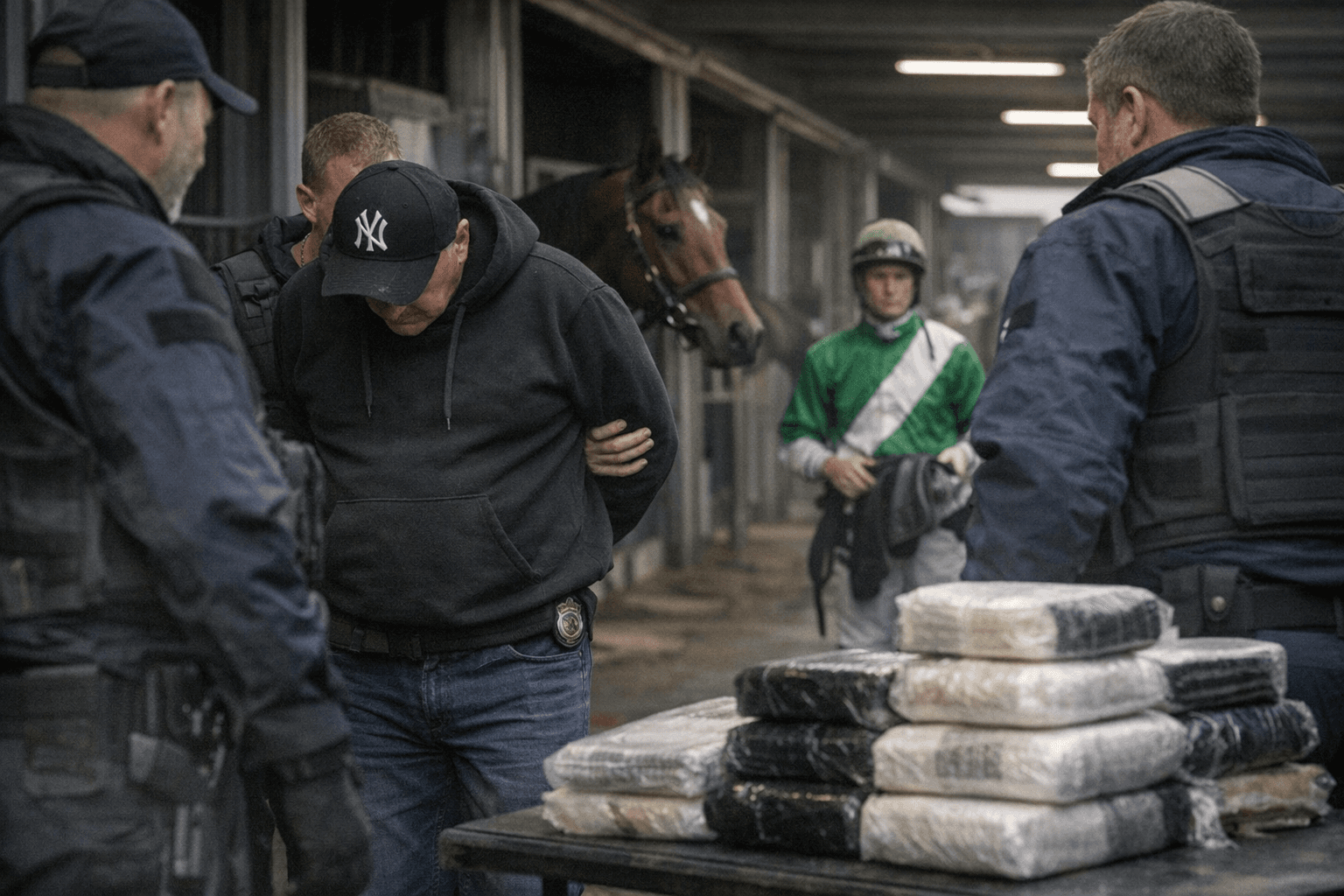
The arrest of Grant Dalziel, a prominent Victorian thoroughbred trainer, alongside eight other men in an alleged cocaine importation conspiracy has forced Australian racing to confront a question the sport would rather not ask: how deeply can organised crime embed itself behind a licensed stable and a recognised name?
Federal police charged nine men following a 10-month investigation that began in May 2025, after four people were rescued from a stricken boat in treacherous conditions off the South Gippsland coast. That incident, and the suspicion it aroused among federal authorities, triggered prolonged surveillance of movements across Victoria. Investigators eventually executed coordinated raids on multiple addresses, seizing boats and equipment before taking eight men into custody in Victoria and a ninth in Sydney.
Grant Dalziel and his son Peter Dalziel were among those detained, as was former jockey Brian Park. The ages of those arrested or bailed range from 31 to 72, a spread that points to a layered operation with participants at different levels. Five remained in custody at the time of the arrests, while others were released on bail. All are scheduled to appear at Melbourne Magistrates' Court on conspiracy and importation charges that carry a maximum sentence of life imprisonment upon conviction.
The alleged scale of the operation is what sets this case apart. Prosecutors claim the syndicate operated using a mother ship and a network of smaller daughter vessels that made rendezvous in Bass Strait, well offshore from the Victorian coast. At least one vessel sank during the operation, an event that triggered the rescue mission that ultimately gave federal investigators the thread they needed. Authorities allege the group attempted smuggling runs of up to 3.5 tonnes of cocaine per shipment, a quantity that, priced at Australian wholesale rates, would represent hundreds of millions of dollars in a single delivery.
Former AFP Detective Superintendent David Craig described the network as "very sophisticated" and cautioned that the alleged involvement of "trusted high profile figures from the racing industry" reveals how organised crime can embed itself within ostensibly legitimate businesses and reputations. If the allegations are borne out at trial, the sport's licensing and governance structures will be scrutinised for how such an arrangement went undetected.
The regulatory fallout is already taking shape. Any current licenses held by the accused face prompt review by stewards and racing authorities; convictions in cases of this magnitude typically result in long-term or permanent bans. Stable operations and farm properties connected to those charged could be subject to asset-seizure proceedings, and owners or trainers with professional ties to the arrested figures may find themselves drawn into secondary licensing reviews.
Investigators have signalled that the operation remains active and further enforcement action is possible. For a sport whose wagering ecosystem depends on confidence in the integrity of its participants, having registered trainers and a former jockey face life-imprisonment charges over an alleged drug network is not a reputational challenge that can be managed quietly. How racing's regulatory bodies respond, publicly and swiftly, will determine how much of that confidence survives.
This article was produced by Prism’s automated news system from verified source data, official records, and press releases, then run through automated quality and moderation checks before publishing. The system is built and supervised by the people who set the standards it runs under. Read our full AI policy.
Did this article answer your question?