Kentucky Derby card handle dips, but Derby week sets record again
Derby Day handle slipped 2.6% from last year’s record, but Churchill Downs still set a new Derby week high with $487 million in wagering.
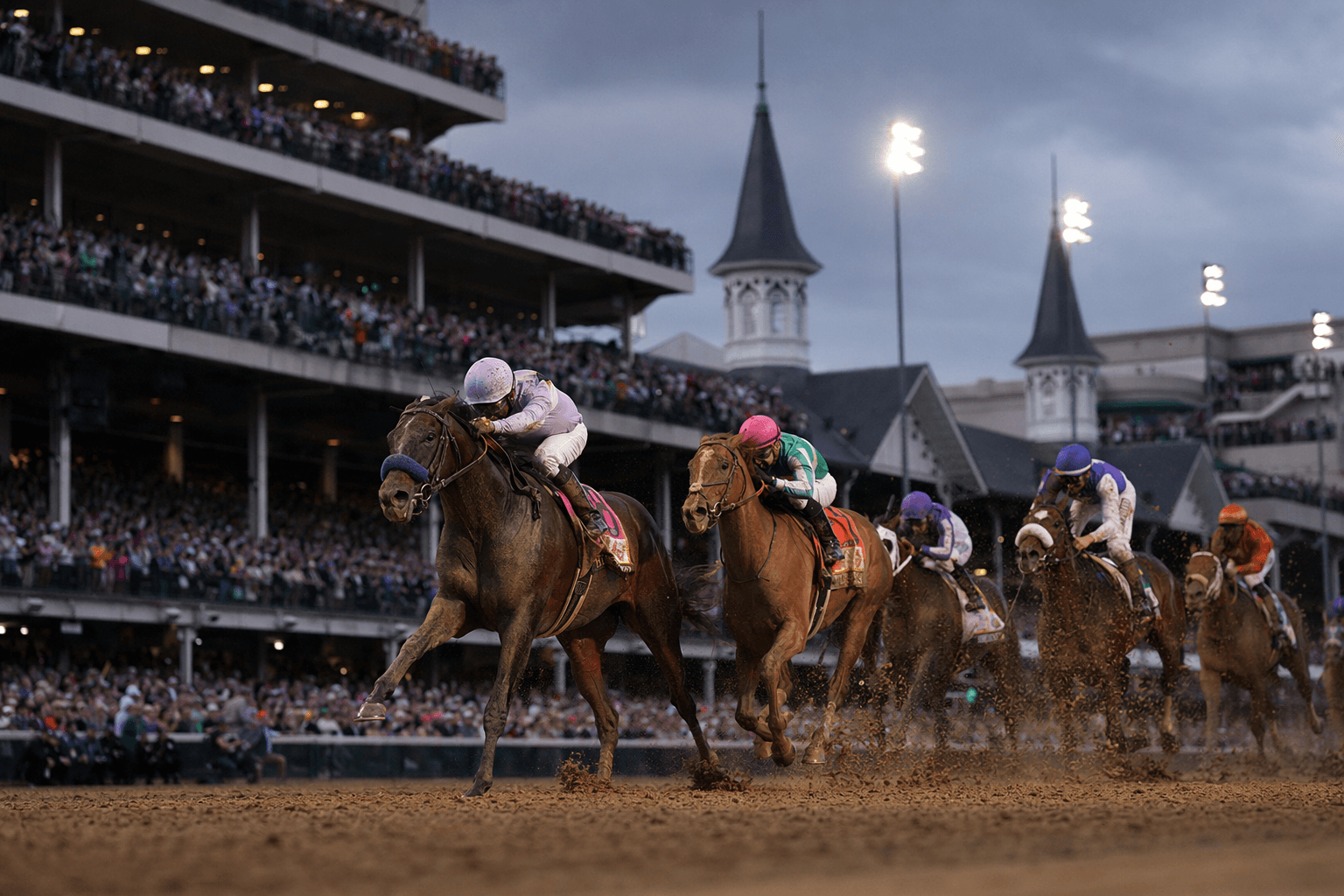
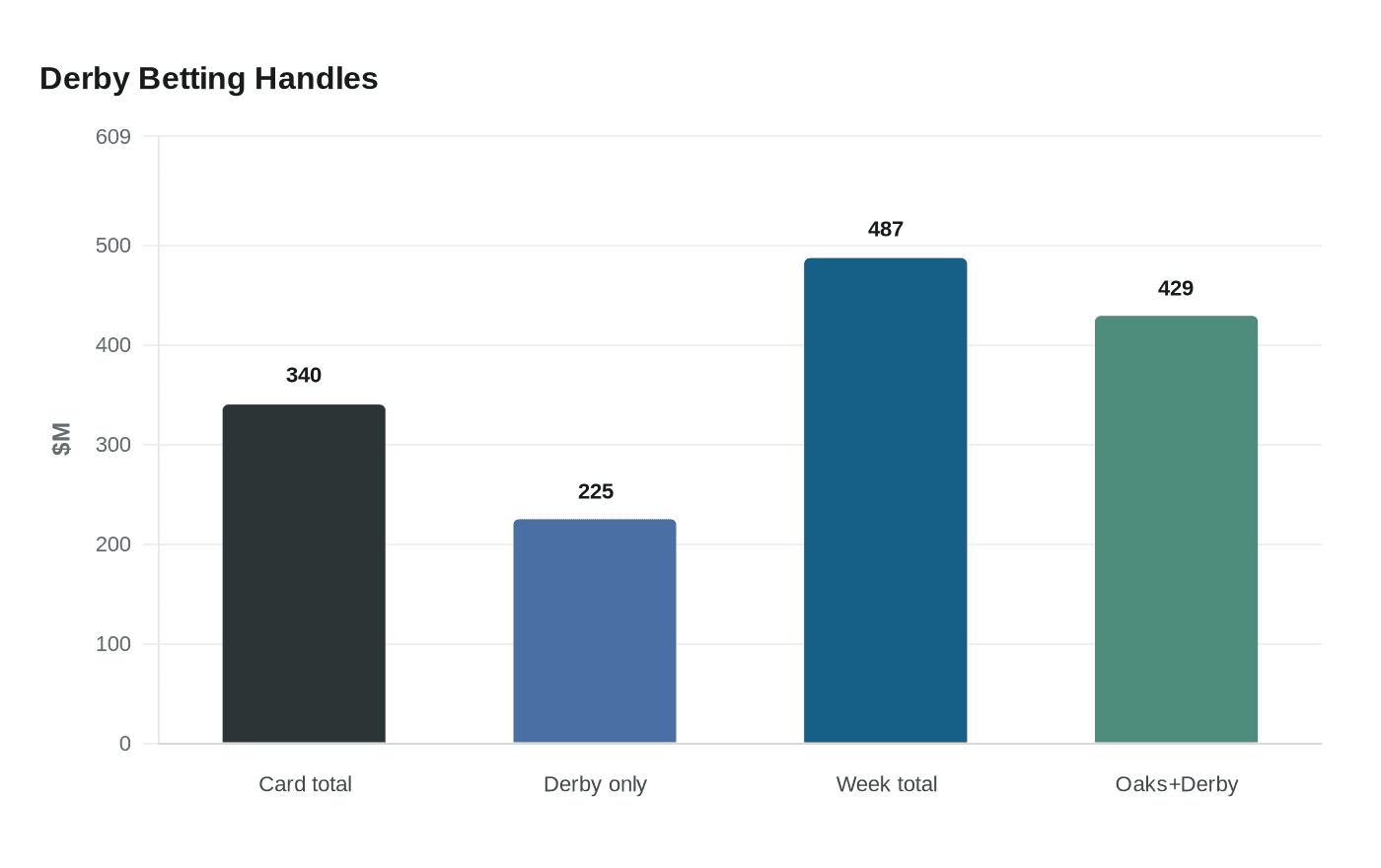
Churchill Downs got the headline it wanted for Derby week and the warning light it did not. All-sources betting on the May 2 Kentucky Derby card fell to $340 million, down 2.6% from last year’s record, and wagering on the Derby itself slipped to $225 million from $234 million. Even so, the broader week set another mark at $487 million, a 3% jump, while the combined Oaks-and-Derby handle climbed to $429 million.
The soft spot in the day’s numbers came with late scratches and refunds after wagering had already started, including The Puma on the morning of the race and Great White while loading. Those disruptions kept the raw card figure from matching the peak set a year ago, but they did not stop Churchill from drawing 150,415 fans, up from 147,406 in 2025. The crowd, along with the wagering totals, showed that Derby Day remains a massive event even when the day itself does not quite outdo the previous record.
The week-long picture was stronger still. Churchill said Derby week ran from April 25 through May 2, with only April 27 dark, and the added Sunday card before the Derby was the first at the track since 2010. The company also credited renovations to The Mansion and the Finish Line Suites as part of the 2026 lift. For Churchill’s own ADW platform, TwinSpires, the week was a record as well, with $129 million in Churchill wagering for Derby week, up 6% from the prior high, and $89 million in Derby Day program wagering on Churchill races, up 1%.
Against the backdrop of 2024 and 2025, the result looks less like a collapse than a normalization after two straight record years. Derby-day all-sources handle had already risen from $320.5 million in 2024 to $349 million in 2025, while Derby week climbed from $446.6 million to $473.9 million before reaching $487 million this year. Churchill Downs Inc. had told investors in February that it expected Derby week to produce $15 million to $20 million in incremental adjusted EBITDA, and the company continues to treat the event as a core earnings driver.
The race itself added to the week’s significance. Golden Tempo won the 152nd Kentucky Derby, and Cherie DeVaux became the first woman to train a Kentucky Derby winner. That kind of breakthrough, paired with record week-long wagering and another sell-heavy turnout, is why Churchill keeps investing in premium seats and hospitality: even when Derby Day handle dips a bit, the sport’s biggest stage still pays like a major entertainment property.
This article was produced by Prism’s automated news system from verified source data, official records, and press releases, then run through automated quality and moderation checks before publishing. The system is built and supervised by the people who set the standards it runs under. Read our full AI policy.
Did this article answer your question?