Led by Dr. Stephanie Bell, Hagyard Expands Equine Ophthalmology in 2026
Hagyard expanded its equine ophthalmology services, led by Dr. Stephanie Bell, to increase surgical capacity and cut wait times for racehorses and sport horses nationwide.
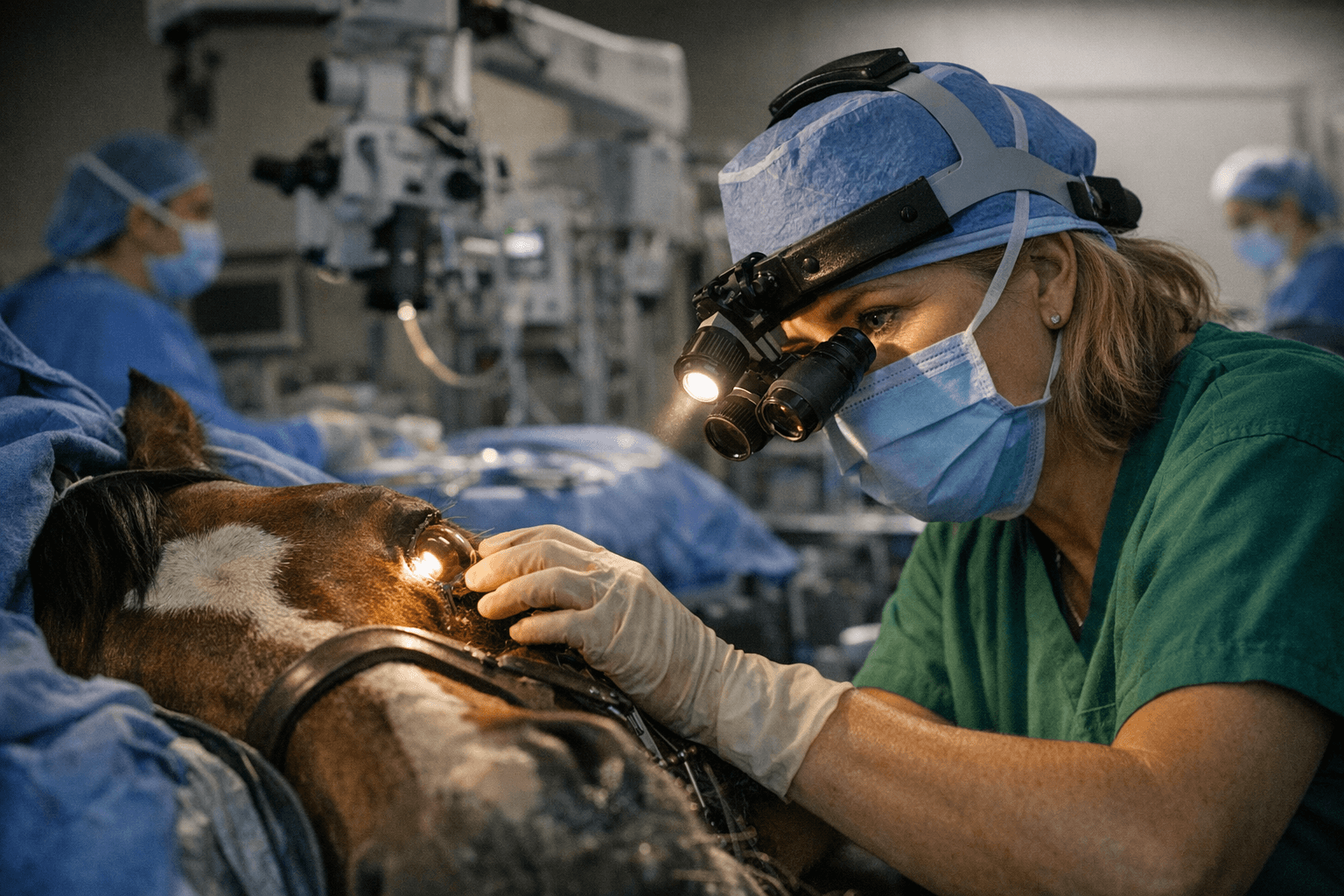
Hagyard Equine Medical Institute announced a formal expansion of its equine ophthalmology services, with Dr. Stephanie Bell, DVM, Diplomate ACVO, leading the initiative to boost surgical capacity and outreach for diagnostic and advanced eye care. The move addresses a national shortage of veterinarians focused on equine ocular care and aims to expedite access for referring veterinarians and horse owners, particularly in rural regions and at teaching hospitals that have been overwhelmed.
The expansion, announced January 26, 2026, will increase availability of diagnostics including slit-lamp biomicroscopy, tonometry, ultrasound, and electroretinography. Hagyard also outlined plans to broaden advanced imaging and procedures: corneal surgery, cataract surgery, cyclosporine implants, corneal collagen cross-linking, and grafting. Those services target conditions that can sideline racehorses and sport horses, such as corneal ulcers and vision-compromising cataracts, by reducing travel and wait times for specialty care.
Industry context informed the decision. Hagyard cited an estimated supply imbalance of roughly 3,785 equine veterinarians serving about 7.2 million horses, and highlighted that fewer than 10 full-time, board-certified ophthalmologists in the United States treat horses exclusively. For the racing industry, that scarcity has translated into delayed specialist intervention, longer rehabilitation windows, and logistical burdens for trainers like transporting horses long distances for ophthalmic surgery or diagnostics.
Practically, the expansion is designed to strengthen referral support and increase local access, which can affect racing stables that rely on quick diagnosis to return horses to training and competition. Faster tonometry and ultrasound access, coupled with on-site corneal procedures, should shorten recovery timelines for affected horses and reduce reliance on emergency transfers to university hospitals, freeing up capacity at those teaching centers.
Business implications reach beyond animal welfare. For owners and trainers, reduced wait times and closer specialist availability can lower downtime costs and improve campaign planning for stakes campaigns and regional meets. For Hagyard, investing in specialized ophthalmology positions the practice as a regional hub for a scarce specialty and could attract referral traffic from racetracks, sales companies, and performance horse barns looking to avoid prolonged absences for key horses.
Culturally, the expansion signals growing prioritization of equine quality-of-life and the professionalization of veterinary specialties within racing and sport horse communities. By increasing access to advanced ocular care, Hagyard is responding to pressure points in a system strained by horse numbers, geographic dispersion, and limited specialist supply.
What readers should watch next is how Hagyard translates the expansion into measurable outcomes: clinic locations, surgical volume increases, reduced referral wait times, and follow-up partnerships with racetracks and regional practices. For trainers, jockeys, and owners, better access to ophthalmology care means more horses can keep their eyes on the prize with less time off the board.
This article was produced by Prism’s automated news system from verified source data, official records, and press releases, then run through automated quality and moderation checks before publishing. The system is built and supervised by the people who set the standards it runs under. Read our full AI policy.
Did this article answer your question?