Newcastle track bias shapes Saturday betting on Northumberland Vase card
Newcastle's recent run is tilting races toward forward positions, and the 14:40 Northumberland Vase could punish any runner forced to come from too far back.
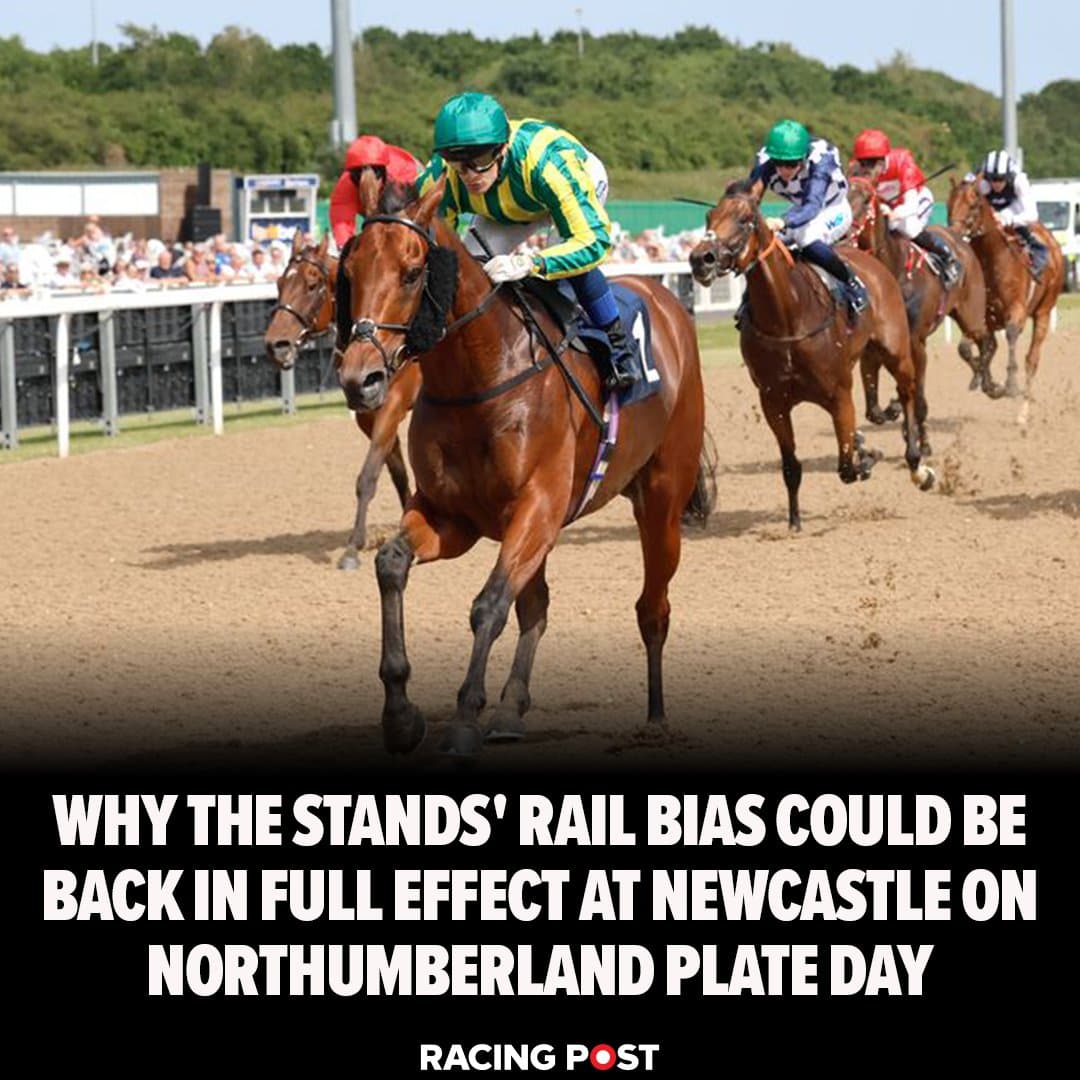
Over the last two days at Newcastle, nothing has won from farther back than midfield. That kind of live track development can swing betting on a card built around the Jenningsbet Festival Northumberland Vase Handicap at 14:40 on Saturday. The 20-runner Class 2 staying handicap over 2m½f sits inside the Northumberland Plate meeting, where position, draw and when a horse is asked to move can be worth more than raw ability.
Why Newcastle is so sensitive to bias
Newcastle’s all-weather surface is Tapeta, installed when the track switched off turf in winter 2015/16 after an £11m redevelopment. The course has two distinct circuits, a round course and a floodlit straight mile, and that layout creates different demands depending on where the race is run. The home turn rises steadily, and being near the rail can be an advantage in the straight, so a horse that saves ground and travels prominently often gets first run on those trying to close from behind.
Biases here can be strong without repeating in the same way every day. The draw can matter, but not in a fixed way, and the recent results reinforce that warning.
What the recent riding tells you
That pattern is a major clue for Saturday because it suggests the surface and the run of the race have been favouring horses that can hold a position or sit close enough to strike before the field strings out.
For bettors, that usually changes how you read a staying handicap. A horse with a finishing kick is not automatically a negative, but it becomes far more vulnerable if it is likely to be trapped wide, buried in traffic or asked to make up too much ground on a track where the leaders are not coming back. In practical terms, the market should be checked against each runner’s likely pace map, not just its form figures.
Draw and trip matter in different ways
Newcastle’s draw profile is not one-size-fits-all. High draws have often held an edge in straight-course races, and over some sprint distances the track has shown a clear preference for one side of the field. Over 5f it can pay to be drawn very high or very low, while over 6f runners are usually happier drawn high.
The round course asks a different question. Horses drawn wide can lose ground on the bends, and that cost is magnified if they are forced to race away from the rail and keep circling the field. That is where the steady uphill rise from the home turn becomes important, because it can expose any horse that has already spent energy covering extra ground before the real drive begins.
Newcastle rewards horses whose draw matches their run style. A front-runner with a workable inside slot can save lengths. A closer drawn wide can be left needing both luck and a collapse in pace.
The Northumberland Plate meeting is the race’s real backdrop
The Northumberland Plate meeting is Newcastle’s headline flat fixture, a three-day event held in June, and the Vase card sits in its shadow. Saturday’s 2m½f contest is a Class 2 consolation for horses eliminated at the 48-hour declaration stage from that season’s Northumberland Plate, which gives the race a very specific make-up: good staying horses, a big field, and plenty of runners with unfinished business from the main event.
That creates a race shape that can be especially sensitive to bias. A 20-runner handicap over this trip is rarely cleanly run for everyone, and when the ground is riding in favour of position, the pressure builds quickly on any horse that drops too far back. The official going is standard to slow, which only adds to the case for riders wanting to keep their mounts in touch rather than waiting for a late rescue mission.
What the favourite numbers say about Newcastle
Racing Post’s five-season data show that handicap favourites at Newcastle on the all-weather have won 530 of 1,681 races, a 32% strike rate. In non-handicaps, favourites have done better, winning 223 of 535, or 42%.
Saturday’s Northumberland Vase is a handicap, and handicaps are exactly where Newcastle has been most resistant to easy market assumptions. A favourite in this setting is not automatically a poor bet, but the track’s history says the market leader often has to be in the right spot as well as the right class. If the pace is honest and the prominent racers control the rail, a short-priced horse that needs gaps or ground to be made up may be carrying more risk than the odds suggest.
How to frame Saturday’s betting
Focus first on runners that can secure position early, especially those drawn to avoid extra ground and capable of handling Newcastle’s uphill finish. Give extra credit to horses with tactical speed, because the recent two-day evidence suggests the race may be won before the field turns for home.
That does not mean dismissing closers entirely, but it does mean they need a stronger case than usual, either because the pace looks set to collapse or because they have a draw and running style that let them track the rail cheaply.
This article was produced by Prism’s automated news system from verified source data, official records, and press releases, then run through automated quality and moderation checks before publishing. The system is built and supervised by the people who set the standards it runs under. Read our full AI policy.
Know something we missed? Have a correction or additional information?
Submit a Tip