Racing regulators say CAW must be managed, not demonized
NYRA’s one-minute cutoff is the clearest sign yet that horse racing is choosing guardrails over a crusade. The real fight now is whether bettors get enough transparency to trust the pool.
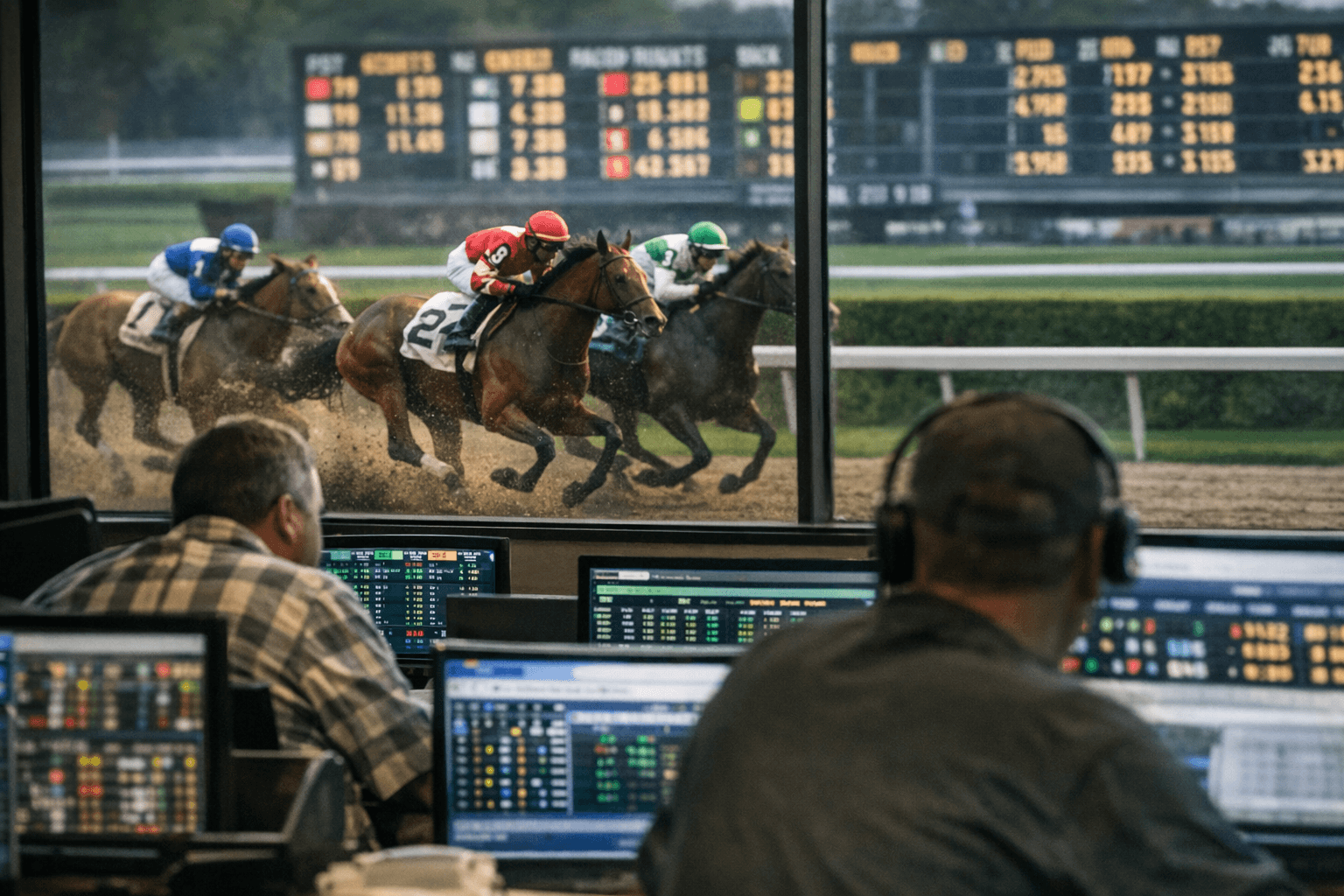
CAW is no longer being treated like a rogue force racing can wish away. At the ARCI conference in April, regulators and track officials said the better answer was to manage computer-assisted wagering, even as everyday horseplayers keep getting burned by late odds swings that can turn a good price into a bad bet in the final flash.
Scott Chaney of the California Horse Racing Board put the debate in plain language, saying CAW is not a problem to be solved so much as a reality that has to be addressed with a long-term strategy. Keeneland’s Jim Goodman echoed that view and said the sport needs to learn to coexist with CAW players, while also looking for data that shows whether NYRA’s policies are actually helping. The panel’s message was not that the issue is fixed. It was that racing has moved from denial to damage control.
NYRA has become the test case. On January 30, it announced that beginning February 5, CAW activity would have to stop one minute to post in all wagering pools not already covered by high-speed restrictions. NYRA defines CAW as wagering that exceeds six bets per second. Its 2021 win-pool rule, which cut CAW off at two minutes to post, was the first timing restriction on CAW activity by a U.S. racing organization, and NYRA said that policy successfully eliminated dramatic late odds fluctuations. Late Pick 5 and Pick 6 wagers remain retail-only.
That matters because CAW is not a niche sideshow. Panelists at the ARCI conference said CAW players make up 25% to 30% of handle. BloodHorse reported CAW wagering had grown 109% since 2003 while wagering from all other players dropped 64%, and that CAW bettors accounted for about a third of all pari-mutuel wagering on Thoroughbred racing in 2022. When that much money is moving, the pool itself becomes part of the spectacle.
The larger question is whether racing will protect the casual bettor or just ask them to get used to the volatility. In December, NYRA president and CEO David O’Rourke said the swings had “gotten a little out of hand.” Pat Cummings, speaking for the National Thoroughbred Alliance, said NYRA was considering a public “volatility index” to show customers how much pools move compared with a typical race. That kind of transparency would be more useful than another lecture about how the game works.
The industry’s split is still obvious. Few tracks have followed NYRA’s lead, even though the issue hits trust, handle and the bottom line all at once. NYRA says its racing economy supports 19,000 jobs and more than $3 billion in annual statewide impact, which is exactly why this can’t be handled with slogans. If CAW is now a permanent part of the game, horseplayers should be getting clear rules, better timing, and a product that looks fair when the bell rings and when the money hits late.
This article was produced by Prism’s automated news system from verified source data, official records, and press releases, then run through automated quality and moderation checks before publishing. The system is built and supervised by the people who set the standards it runs under. Read our full AI policy.
Did this article answer your question?