Resolute Racing eyes Derby and Arc with Giant Sequoia, Goliath
Giant Sequoia’s Curragh win and France Galop’s Arc rule change have put Resolute Racing on the road to Epsom and Paris, with Goliath now in the frame too.

Resolute Racing has pushed beyond owner ambition and into race-caliber consequence. Giant Sequoia’s Curragh breakthrough gives John Stewart a live Derby trail, while Goliath’s profile, paired with France Galop’s gelding rule change, opens a credible Arc lane for a stable built to matter on the international calendar.
A stable built for the long game
Resolute Racing did not arrive as a one-horse flash. Stewart founded the operation in 2023 with the purchase of the former Shadayid Stud in Kentucky, then expanded the footprint past 1,000 acres in 2024, a land grab that reads less like a vanity project and more like a bloodstock platform. That matters because horses aimed at the Derby and the Arc are not bought or bred for single-race headlines; they are developed through seasons, surfaces and distances.
The current moment shows how that model can start to pay off. Giant Sequoia and Goliath are not just winners in the ledger. They are the kind of horses that allow an owner to move from domestic participation to genuine influence on the European classic map, where a single campaign can shape breeding value, sales momentum and the next round of media attention.
Giant Sequoia puts the Derby path on the board
Giant Sequoia is by Frankel out of Pink Dogwood, and his Curragh victory on June 27, 2026, gave Resolute its first homebred winner on the track. He took the Barronstown Stud Irish EBF (C & G) Maiden over 7 furlongs on good-to-firm ground, with Ryan Moore riding him to a 2 1/4-length win over Oklahoma. That was not merely a tidy maiden success. It was the sort of performance that immediately changes how a horse is campaigned.
Aidan O’Brien’s post-race read was direct enough to fuel the next step. He called Giant Sequoia a “lovely big horse” and said the colt would have no problem stretching from 7 furlongs to a mile. That is the key to the Derby conversation, because the move from a 7-furlong maiden to a mile-oriented profile is where genuine classic speculation begins. Coverage after the win quickly pushed him into early Derby-favorite territory, with one line of pricing putting him at 14-1 for next year’s race at Epsom.
For Resolute, that kind of shift is huge. A colt that can advertise both size and progression gives the operation a horse with classic range rather than a narrow sprint-or-miler profile. In practical terms, the Derby now sits in play because Giant Sequoia has already shown enough quality, scope and trainer confidence to justify a route toward one of Europe’s most demanding middle-distance prizes.
Goliath gives the Arc case real weight
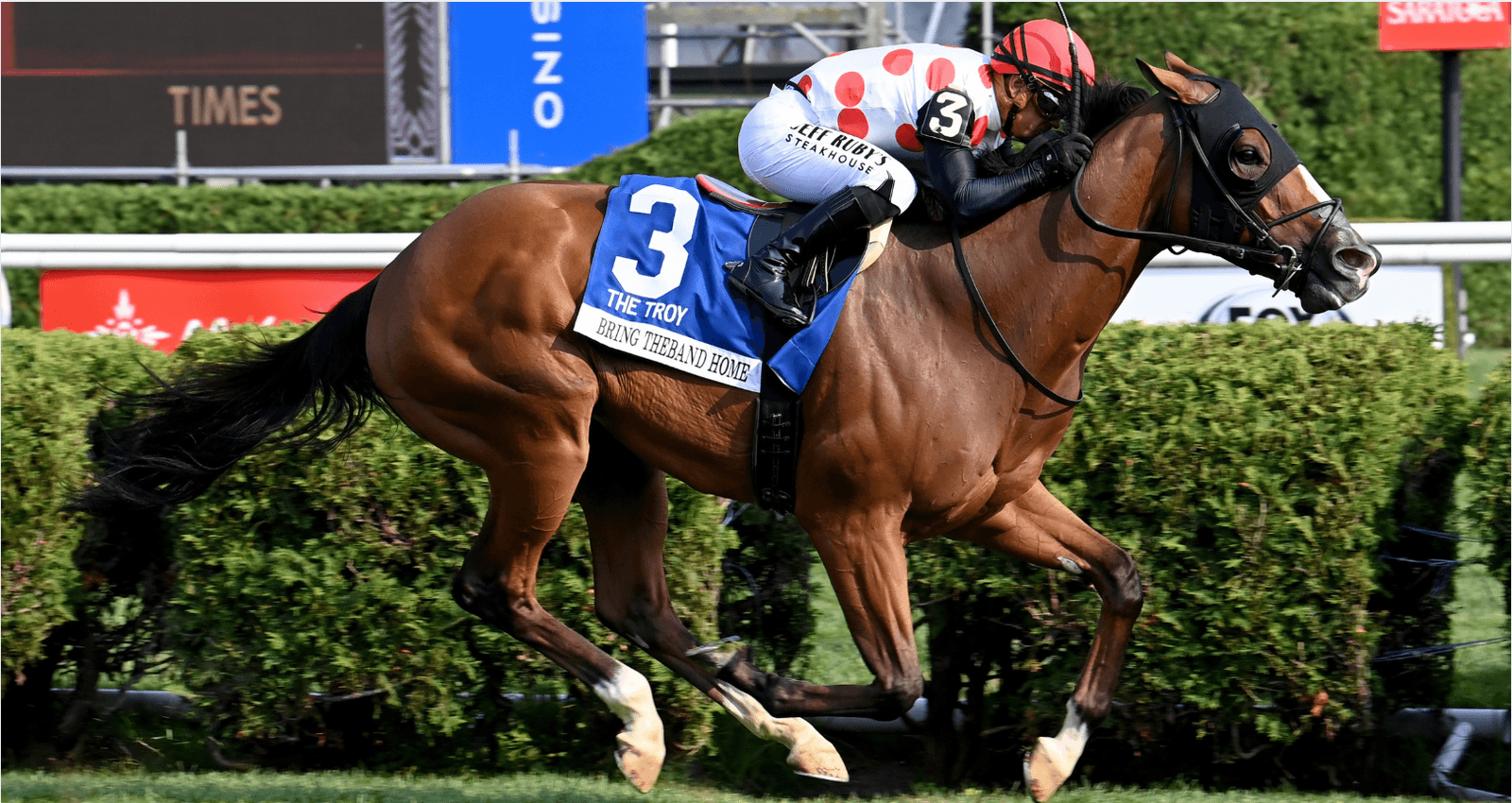
If Giant Sequoia is the emerging classic project, Goliath is the established international standard-bearer. He won the Grosser Preis von Baden on September 7, 2025, a Group 1 worth 300,000 euros and run before 17,200 spectators in Baden-Baden. That is not the profile of a fringe stayer. It is the record of a horse already operating at the highest level on the European circuit.
Goliath’s importance is even greater because of what he is: a gelding. That fact had long complicated any Arc ambitions, since the Prix de l’Arc de Triomphe had not been open to geldings. France Galop voted in June 2026 to allow geldings into the race starting in 2027, and that single change alters Goliath’s future in a very real way. What was once a fantasy route is now an actual planning question.
That is why the Arc discussion around Resolute carries more than symbolic value. The rule change does not just help one horse, it reopens a championship lane for a horse that has already proven himself in a Group 1 at one of Europe’s most recognized midsummer stages. If Goliath remains in form, Resolute now has a horse whose calendar can point toward Paris in a way that was not possible before.
Why these two horses matter to the wider sport
The larger story is not simply that Stewart is spending. Plenty of owners spend. The more interesting development is that Resolute’s money is beginning to translate into horses that can move across the sport’s highest-value divisions. Giant Sequoia gives the operation an Epsom storyline, Goliath gives it a possible Arc storyline, and together they place the stable on both sides of the classic-staying divide that defines elite European racing.
That matters for the market around them. Breeders pay attention to horses that look like Derby material. Sales rings respond when a homebred starts looking like a classic prospect. Campaigning decisions change when a horse is pointed at Epsom or Paris instead of a local target. Even race fans feel the ripple effect, because these are the names that can recur across the season and connect the major meetings in Ireland, Britain, France and Germany.
Resolute’s rise also fits the modern shape of racing ownership, where a serious operation is measured not just by one trophy but by whether it can influence the season’s architecture. A 1,000-acre-plus bloodstock base in Kentucky, a Frankel colt stepping toward the mile-and-a-half conversation, and a proven gelding now eligible for the Arc together create something rare: a stable with distinct routes to two of Europe’s most prestigious prizes.
What to watch next
The immediate test for Giant Sequoia is whether the Curragh promise holds as the distances stretch. The Derby path will demand much more than maiden talent, but his pedigree, size and O’Brien’s confidence make the progression credible. For Goliath, the key question is form maintenance, because the Arc window does not matter unless the horse arrives still operating at Group 1 level.
If both lines hold, Resolute Racing will not just be part of the international season. It will help define which races command the sport’s attention, and that is the kind of shift that changes a stable’s reputation long after the headlines fade.
This article was produced by Prism’s automated news system from verified source data, official records, and press releases, then run through automated quality and moderation checks before publishing. The system is built and supervised by the people who set the standards it runs under. Read our full AI policy.
Did this article answer your question?