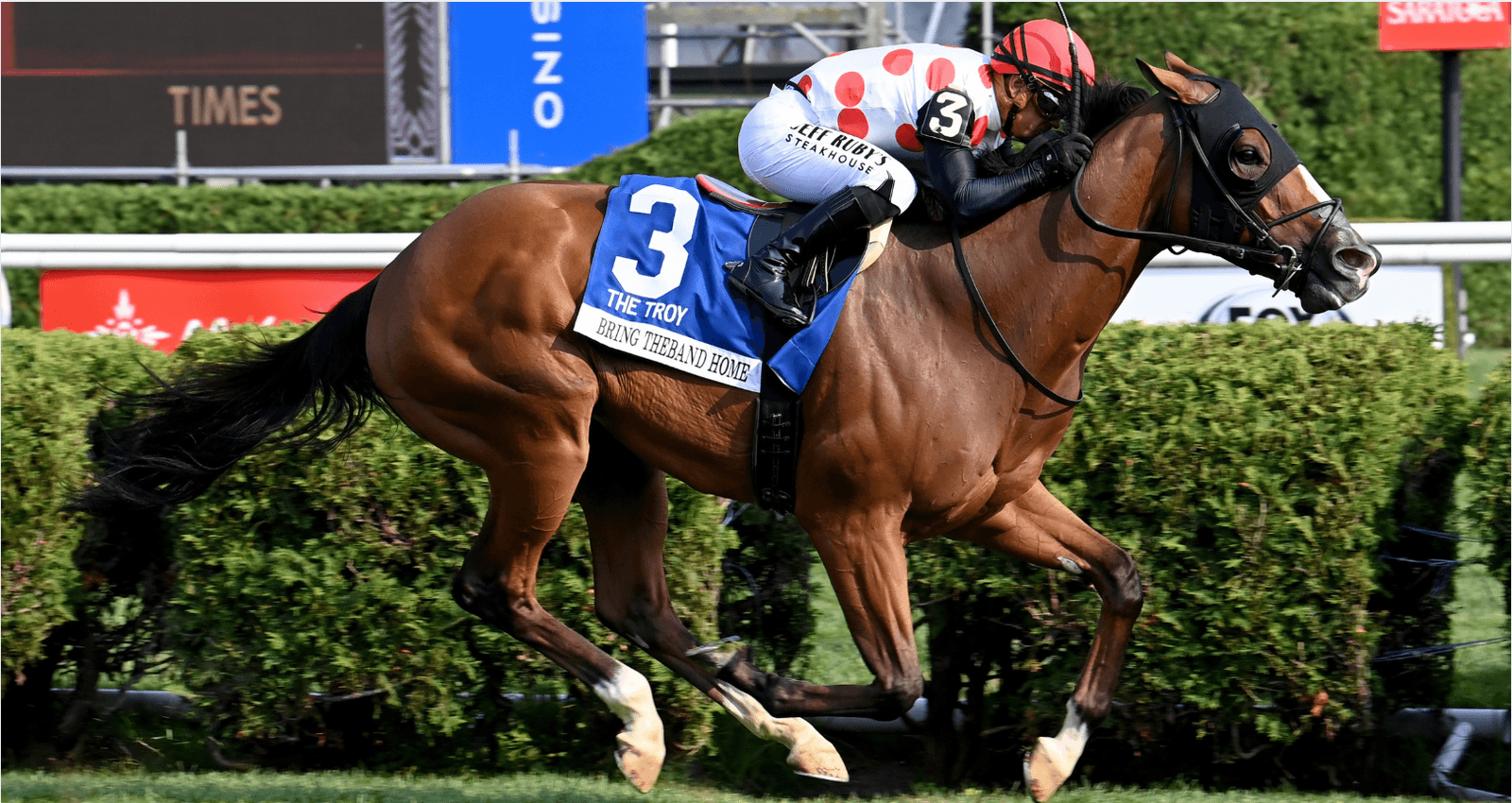
Rose’s Desert family line carries The Hell We Did into the Preakness
Rose’s Desert has become the Peacock family’s living asset, and The Hell We Did gives that homebred line a Preakness shot with real commercial weight.

A mare that keeps paying the bills
Rose’s Desert is not being framed as a sentimental success story. She is the kind of broodmare that changes the economics of a small operation, because every useful foal she leaves behind extends the value of the whole program. The Peacock family at Shawhan Place near Paris, Kentucky has built around that reality, and The Hell We Did is the latest proof that one mare can carry a breeding business across years and generations.
That matters even more now because The Hell We Did is headed into the 151st Preakness Stakes at Laurel Park on May 16, 2026. He is not arriving as a polished, heavily raced star. He is arriving as a homebred son of Authentic, a colt with upside, a family story, and just enough recent performance to make the classic picture interesting.
Why this family line matters in the ledger, not just the pedigree page
Broodmare value is often talked about in romantic terms, but the real measure is production. Rose’s Desert has already given the Peacock family more than one horse worth talking about, and that is the difference between a mare who looks nice on paper and a mare who can anchor a stable. Senor Buscador put the family on a bigger stage, and The Hell We Did has now kept the line relevant at the Triple Crown level.
That is the kind of repeated output breeders chase and rarely find. A mare that produces one nice runner can be luck. A mare that keeps producing useful horses, including black-type caliber runners, becomes a foundation. For a smaller outfit, that kind of foundation is the closest thing to long-term security because it creates value in the barn, in the sale ring, and on racetracks where the family name can keep resurfacing.
The Hell We Did is getting his chance the hard way
The Preakness spot did not come from empty hype. The Hell We Did earned attention with a runner-up finish in the April 11 Lexington (G3) at Keeneland, which was his first graded-stakes attempt. That alone tells you something about the colt’s trajectory: he is still relatively light on experience, but he has already shown he belongs in a better class of race than the one he started in.
Todd Fincher made the distance question part of the story before the Lexington. He said the colt had only been running six-furlong races before stretching out, which makes that 1 1/16-mile test a real examination of stamina, pace management, and class. Fincher’s background matters too, since he also trained Senor Buscador, so this is not a random horseman taking a flyer. He has already handled a major horse from this same family and knows what a useful one looks like.
Arrival at Laurel Park changes the story from breeding tale to classic preview
The Hell We Did arrived at Laurel Park on April 28, 2026 for the 151st Preakness Stakes, and that arrival is what turns this from a breeder profile into a live race storyline. Preakness officials identified him as a homebred son of 2020 Preakness runner-up and Horse of the Year Authentic, which gives the colt immediate classic credibility even before the gate opens. Now the question is whether the Lexington effort was a stepping stone or the ceiling.
That is where the race gets interesting. A colt coming out of sprint races, then finishing second in his first graded try, is the kind of profile that can either move forward sharply or hit the wall when the pressure rises. In a race like the Preakness, that kind of profile is often more dangerous than the obvious standout, because a horse with less exposed form can improve at the exact moment the field expects him to be out of his depth.
The name, the family, and the long memory behind it
The Hell We Did is not just a clever barn name. It came from Joe Peacock Sr.’s reaction when he heard what the family had named Senor Buscador: “The hell we did!” That line does more than draw a smile. It ties the colt to the family’s own history, making him part of the Peacock story rather than just another entry in a program.
A 2023 report said The Hell We Did was the last horse Joe Peacock Sr. and his son bred together, which gives the colt a deeper emotional charge inside the operation. Rose’s Desert also produced Rose A, a filly by Hard Spun, and she was bred to Into Mischief in 2023, a sign that the family has continued to build its future around her. That is the real economics of a good broodmare: she does not just create one moment, she creates options, and options are value.
Why Rose’s Desert is the kind of mare smaller breeders can build around
This is the part of the story that reaches beyond one Preakness starter. In a market where flashy yearlings and big stallion names get the headlines, Rose’s Desert shows how durable a well-chosen broodmare can be. She gives a breeding operation continuity, and continuity is what lets a family stay in the game long enough to land on a classic stage without needing to buy its way there every season.
That is why Rose’s Desert feels bigger than a pedigree note. She has already produced a horse with international standing in Senor Buscador, another runner in Rose A, and now a Preakness starter in The Hell We Did. For Shawhan Place and the Peacock family, that is not just pride. It is the kind of return that can hold an operation together, year after year, foal crop after foal crop, until the next one comes along and keeps the line moving forward.
This article was produced by Prism’s automated news system from verified source data, official records, and press releases, then run through automated quality and moderation checks before publishing. The system is built and supervised by the people who set the standards it runs under. Read our full AI policy.
Did this article answer your question?