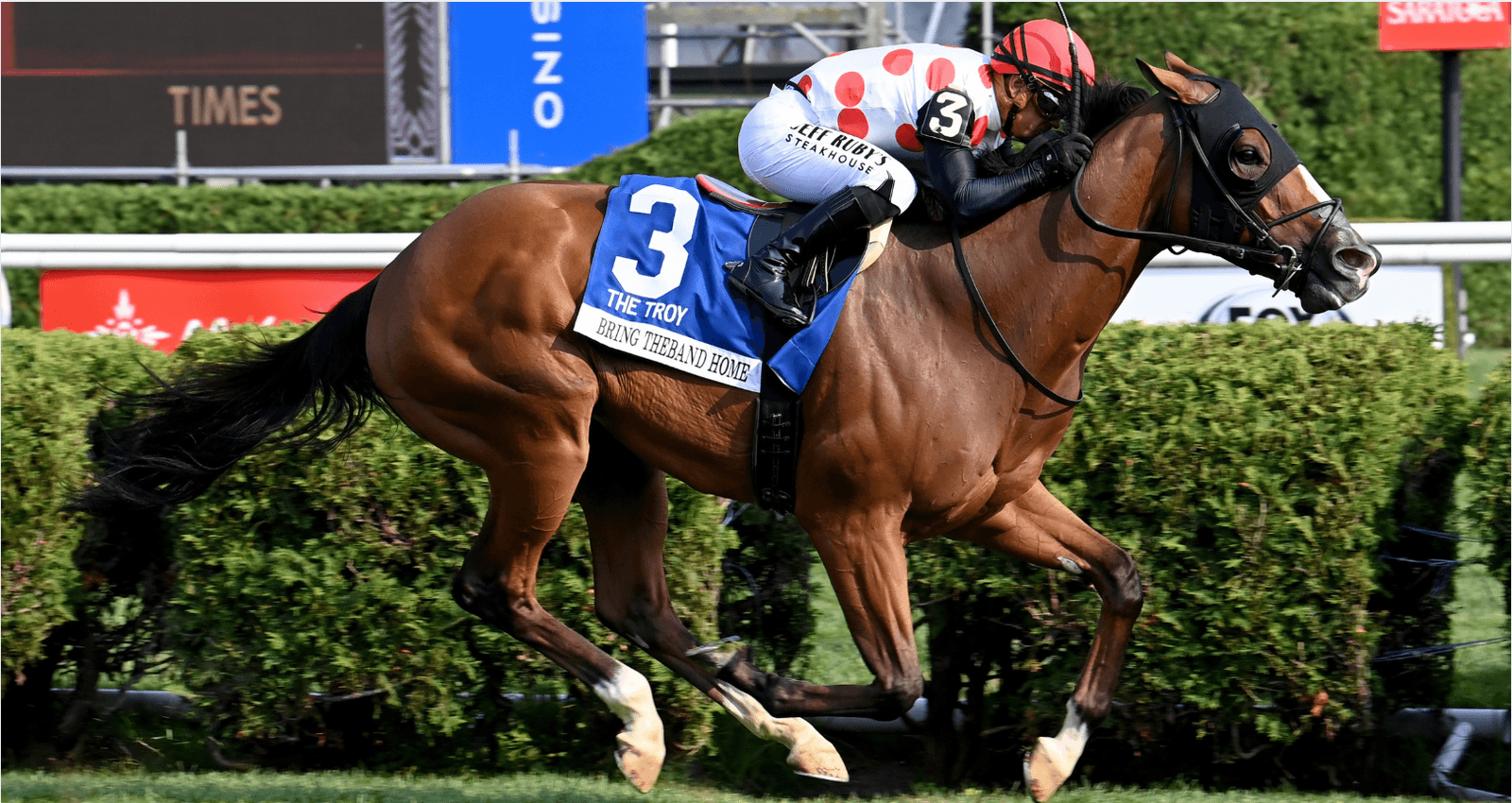
Seventies Music Noses Out Instamania in Thrilling Rainbow Stakes Finish
Seven days after breaking his maiden, Seventies Music closed from near-last to steal the $150,000 Rainbow Stakes by a nose at Oaklawn, handing trainer Randy Morse his 366th win at the track.
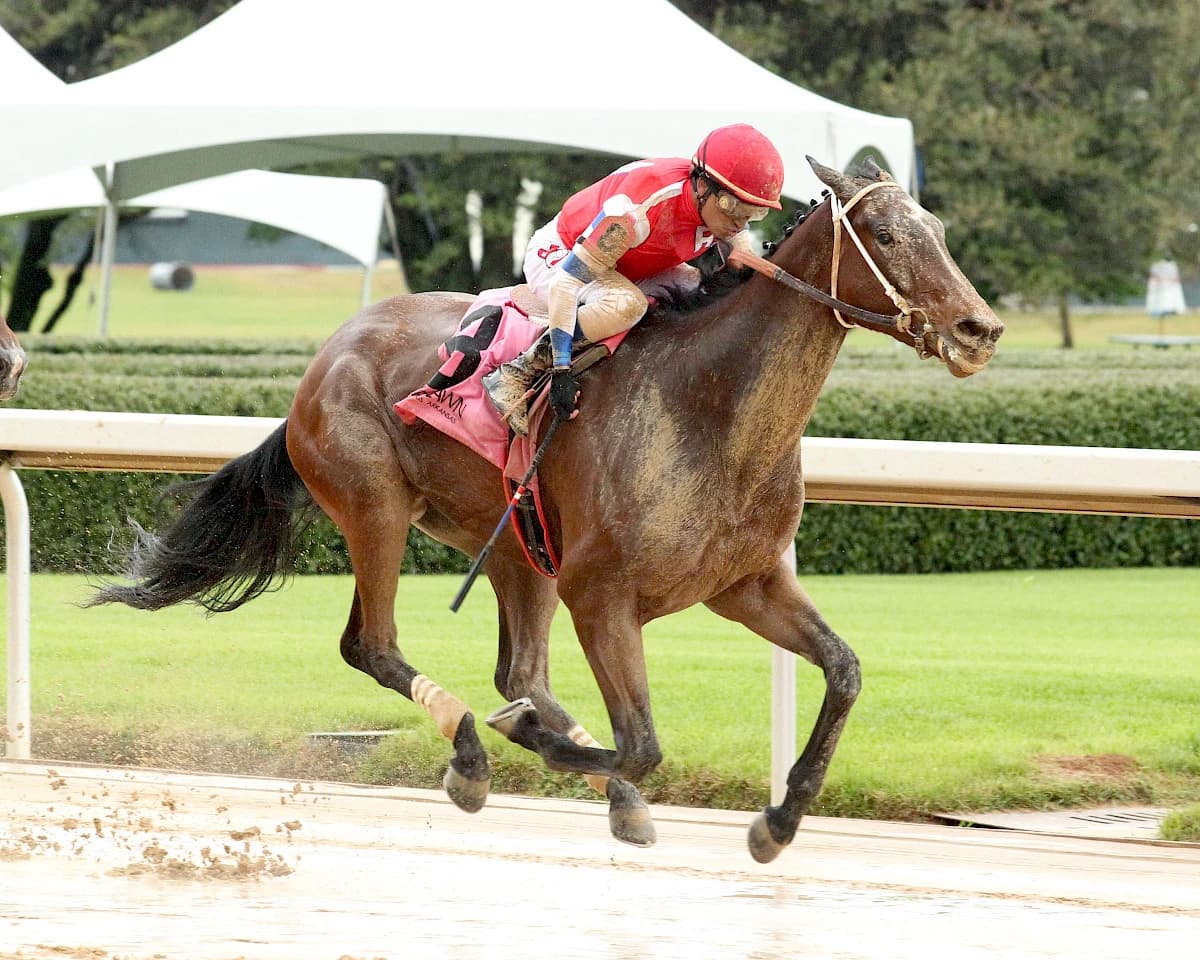
Rafael Bejarano had a problem leaving the gate Saturday. Seventies Music, a big-bodied Street Strategy gelding who barely fits in the starting gate by his jockey's own account, broke next-to-last in the $150,000 Rainbow Stakes at Oaklawn Park and settled nearly 5½ lengths off the pace as the field rushed into a sloppy, sealed six furlongs. That deficit, against a field of eight accredited Arkansas-bred 3-year-olds, would have buried most horses. It set this one up perfectly.
The half-mile went in :46.06 with Instamania and Strollsmischief moving together into the stretch, the 2-1 program favorite Strollsmischief pressing the pace while Instamania, the 5-2 second choice, moved to a clear advantage in the final furlong. From the outside perspective, the race looked over. Seventies Music did not get rolling until midstretch, and then he did it along the inside, not in the middle of the track. Bejarano threaded the rail gap and Seventies Music ran past Instamania in the final strides, winning by a nose in 1:11.78.
"He's not too quick from the gate," Bejarano said. "He always does that because he's so big. He barely fits in the gate." The closing angle was deliberate: a sealed sloppy track at Oaklawn historically compresses pace fractions and rewards inside speed, yet Bejarano found ground along the rail precisely because the early leaders had drifted out under pressure. The :46.06 half-mile was honest enough to leave Instamania vulnerable at the wire but not so fast that the closers were stranded wide.
The nose margin tells a specific story about both horses. Instamania, owned by Lewis Mathews Jr. and Jennifer Carter and by the Instagrand sire, had the positional edge and the inside path through the turn; he simply ran out of real estate against a horse with a bigger motor in the final fifty yards. Strollsmischief, bred and owned by Daniel and David Rogers and the only runner in the field with an Into Mischief cross through his dam, finished a further four lengths back in third, confirming that the pace pressure cost the favorite dearly in the lane.
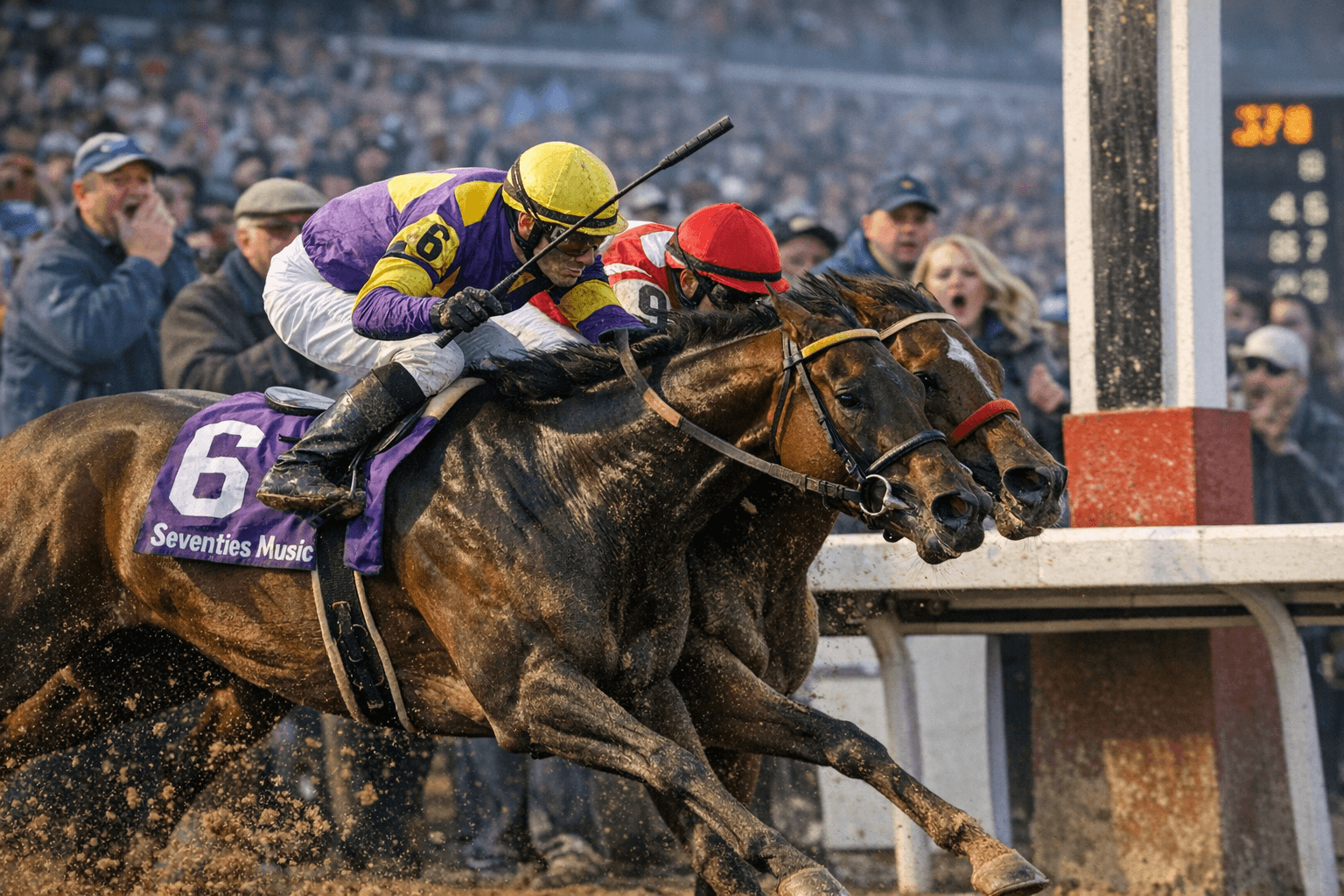
For Randy Morse, the win carried layers of meaning beyond the $94,500 first-place check. The victory gave Morse his 366th career Oaklawn win, and the horse is the product of a breeding philosophy Morse has cultivated for years: Seventies Music is a son of Street Strategy, the Oaklawn 2016 Fifth Season Stakes winner that Morse also trained. Street Strategy's sire record now includes four stakes winners from 132 foals, with Seventies Music his first 2026 stakes winner. Morse wheeled Seventies Music back in seven days after a five-length maiden victory on the Arkansas Derby undercard, a compressed schedule Morse acknowledged was not the original plan. "It's going to be the only time in his life that he gets to run against straight 3-year-old Arkansas-breds," Morse said. "I didn't think it would take him three starts to break his maiden. He caught slop two times in a row, which I don't think helped him. Now, here we go again."
The Rainbow Stakes is, alongside the Rainbow Miss run the prior day, the most meaningful stop on the Arkansas-bred stakes calendar at Oaklawn's spring meet. Purses for both races have increased substantially in recent years as the quality of the in-state breeding pool has improved, and winning either race as a homebred trainer-owner-breeder carries the kind of compounded significance that outside connections rarely replicate. Morse also ran Cattle Baron in the same field, which finished seventh; Sir Henry Oliver was scratched.
With the 53rd Rainbow now on his record, Seventies Music has a logical path forward at Oaklawn's closing weeks. The $200,000 Bathhouse Row for 3-year-olds at 1 1/8 miles on April 18 represents the next natural stepping stone, a test that would stretch Seventies Music from a six-furlong sprint to two turns and determine whether his late kick translates to a longer test. A closer who needs time to find his stride is actually well-suited to more ground; the question is whether the sloppy-track seal that helped compress the pace Saturday will give way to a faster surface that demands a different tactical read from Bejarano.
This article was produced by Prism’s automated news system from verified source data, official records, and press releases, then run through automated quality and moderation checks before publishing. The system is built and supervised by the people who set the standards it runs under. Read our full AI policy.
Did this article answer your question?