Waterlogged Leopardstown After Storm Chandra Puts Dublin Racing Festival In Doubt
Leopardstown was left waterlogged after Storm Chandra, threatening the Dublin Racing Festival as officials race to assess the going and protect horses, riders, and the betting market.
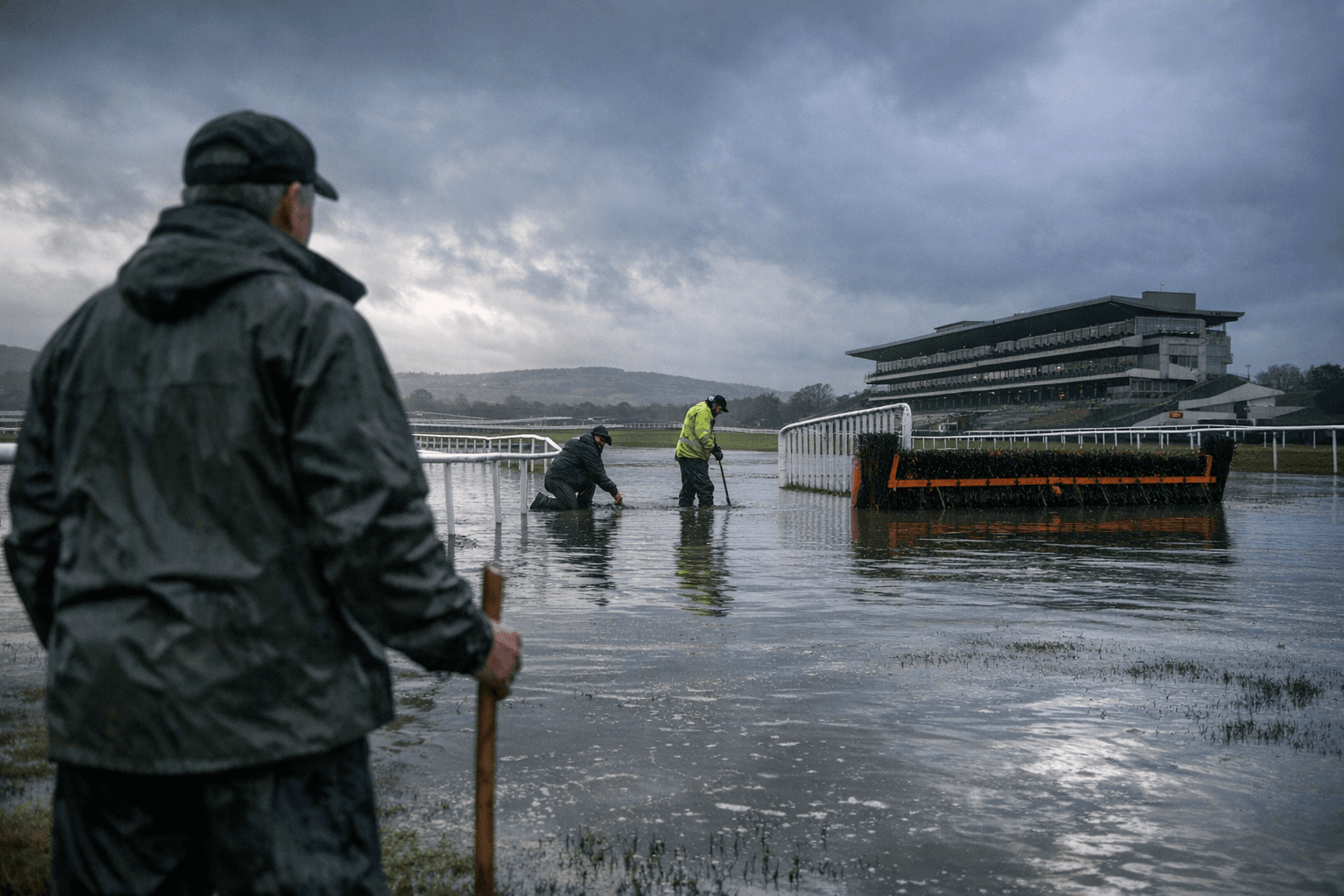
Leopardstown Racecourse has been left waterlogged following Storm Chandra, putting the Dublin Racing Festival scheduled for Jan. 31-Feb. 1 under serious scrutiny. Heavy, persistent rain has saturated the track, forcing regulators and racecourse management into contingency mode as they weigh safety, commercial stakes, and the expectations of connections and punters.
Weather logs show about 58mm of rain fell in the previous 24 hours, on top of roughly 165mm across the prior 12 days. The Irish Horse Racing Regulatory Board posted that parts of the course - particularly the chase course - are waterlogged, while the hurdles course is described as soft-to-heavy. Officials said the heaviest rain has passed and forecasts point to mainly dry conditions from Thursday, but the scale of the festival and the number of high-profile entries mean the situation will be monitored closely.
Racing goes and course condition are central to the decision-making. The current summary lists the chase course as yielding to soft and the hurdles as soft-to-heavy, a combination that changes race dynamics and safety margins, especially for big-field chases where heavy ground can lead to tired finishes and higher fall risk. Trainers and jockeys will watch the going closely: horses that handle heavy ground could move up the market, while soft specialists may be held in if inspectors deem conditions unsuitable.
The immediate sporting impact is uncertainty for race planners and connections. Declarations, barrier draws, and jockey bookings typically solidify in the days before a major meeting; prolonged waterlogging raises the prospect of late scratchings or a condensed fixture list. For professional riders and trainers, the risk calculus includes horse welfare and future targets across the winter and spring campaigns. For owners and punters, postponed or abandoned races would ripple through betting markets, with Tote and bookmaker liabilities concentrated on the festival's high-profile handicaps and Grade 1 features.
Beyond the tapes, the Dublin Racing Festival is an economic engine for the local hospitality and media sectors. Hotels, restaurants, broadcasters, and sponsorship partners all face the uncertainty of reduced attendance or altered scheduling. The meeting’s commercial value also hinges on television coverage and ante-post markets, both sensitive to last-minute changes in the card.
Racecourse officials emphasized drainage capacity and track staff work, with stewards set to inspect the surface as conditions evolve. For now, the standing line is watchful optimism: forecasts suggest improving weather and organisers hope drainage will allow racing to proceed. Fans, owners, and bettors should monitor official Leopardstown and IHRB channels for declarations and going updates as the festival approaches. The coming 48 hours will determine whether Storm Chandra's legacy is a brief headache or a major disruption to one of Ireland’s premier winter meetings.
This article was produced by Prism’s automated news system from verified source data, official records, and press releases, then run through automated quality and moderation checks before publishing. The system is built and supervised by the people who set the standards it runs under. Read our full AI policy.
Did this article answer your question?