AI search reshapes pickleball gear visibility in Asia
AI answers are becoming pickleball’s new front door in Asia, lifting Selkirk, JOOLA and Paddletek while older giants like Wilson and Babolat fade.
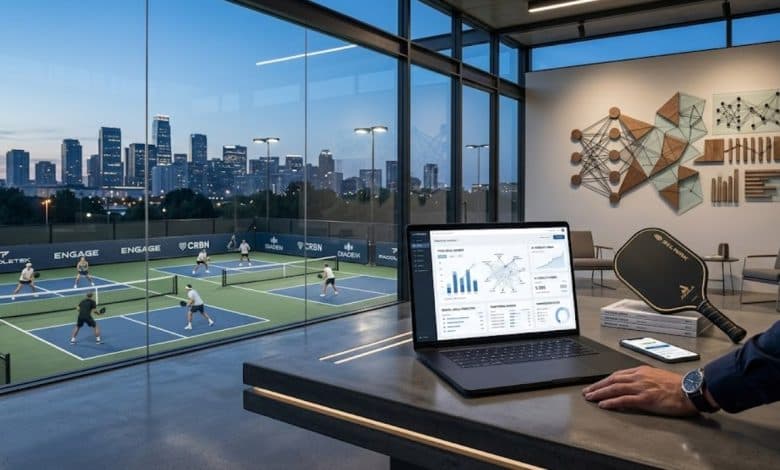
The next battle in Asian pickleball is not being fought only at the kitchen line. It is happening inside AI answers, where a player asking what paddle to buy, which club to join, or which brand to trust is increasingly shown the same small cluster of names first. That shift gives Selkirk Sport, JOOLA and Paddletek a powerful edge, while established crossover brands like Wilson and Babolat risk being pushed out of the first impression that now shapes buying decisions.
AI search is becoming the new front door
The clearest sign of the change is how consumers are finding gear. 5W’s Pickleball AI Visibility Index ranked 25 brands using more than 60 prompts across five AI engines, including ChatGPT, Claude, Perplexity and Google AI Overviews. The prompts were the kind real buyers ask every day, such as best beginner paddle and what paddle pros use, which makes the findings feel less like a marketing curiosity and more like a map of how the sport is being discovered.
5W’s bigger point matters just as much as the rankings. It describes pickleball as the first major American sport being defined inside AI answers before it has much legacy brand memory. That is a remarkable line in the sand for a sport that still feels young in the public imagination. In a category this early, the brands that are easiest for models to trust, summarize and reuse can become the brands that fans trust first.
Which brands AI keeps surfacing
The top of the pack is already taking shape. Fresh research from 5W says Selkirk Sport, JOOLA and Paddletek are the names most frequently recommended by AI platforms when consumers ask about pickleball gear. The broader index says the top five paddle brands, Selkirk, JOOLA, Paddletek, Engage and Onix, account for roughly 52 percent of North American equipment market share, with Selkirk alone at about 11 percent. That is not just a visibility story, it is a market-power story, because exposure and purchase intent are starting to move together.
What stands out is how uneven the hierarchy looks. Tennis crossover giants such as Babolat, Head and Wilson did not rank in the AI citation top ten, despite their scale and name recognition in adjacent racket sports. Meanwhile, smaller names such as Six Zero, Vatic Pro and ProKennex are punching above their weight, likely because they have invested in editorial content, athlete partnerships and detailed product information that AI systems can interpret and reuse.
That pattern should matter to every gear seller in Asia. In the old retail model, shelf space and distribution could carry a brand. In the AI model, the brands that win are the ones that explain themselves clearly, consistently and in enough detail that a machine can confidently recommend them. 5W’s broader AI research says brands in the top ten by citation share see nearly 50 percent higher conversion rates from unpaid traffic than lower-ranked brands, which turns visibility into a direct sales advantage.
Why Asia should care now
Asian pickleball is arriving at exactly the moment when discovery is being reprogrammed. The sport itself still has a relatively short history compared with tennis or badminton. USA Pickleball says it was founded in 1965 on Bainbridge Island, Washington, and its official rulebook was first published in 1984. Against that background, there is still time for the brand hierarchy to harden, which is precisely why AI visibility is so consequential now.
The growth numbers help explain the urgency. The Sports & Fitness Industry Association says U.S. pickleball participation rose from about 4.2 million players in 2020 to more than 24 million in 2025, and 2025 marked the fourth consecutive year the sport was the fastest-growing in the United States. SFIA and Pickleheads also said in November 2024 that significant investment was still needed to meet court and facility demand, a reminder that the sport’s expansion is still outpacing infrastructure in many markets.
Asia is no longer standing outside that buildout. In October 2023, the Asia Federation of Pickleball was among the continental federations that announced a single global continental alliance, a sign that the region is being folded into a more coordinated international structure. Then in September 2025, Pickleball England, the Association of Pickleball Players, the Canadian National Pickleball League, the European Pickleball Federation, India’s Global Sports, Australia’s National Pickleball League and Vietnam’s Pickleball D-Joy announced a new global alliance aimed at pushing professional pickleball growth worldwide. Add in the International Pickleball Federation, created in 2023 as a worldwide governing body, and the sport’s governance picture is moving quickly from fragmented to connected.
India shows how fast the ground is shifting. A 2024 report cited in coverage said more than 50,000 people had played pickleball there in the previous 18 months, with more than 500 courts nationwide and 40 to 50 new courts being added each month. That is the kind of growth that creates a strong need for trusted gear recommendations, credible club listings and clear tournament information, exactly the kinds of answers AI systems are being asked to produce.
What clubs, tournaments and sellers need to do next
For clubs, tournament organizers and equipment sellers across Asia, the lesson is not abstract. AI systems reward clarity, consistency and specificity, so every digital touchpoint has to work harder than a simple social post or a stripped-down product page. If a player in Manila, Mumbai or Ho Chi Minh City asks what paddle to buy, the answer will increasingly depend on whether the brand, club or event has built enough structured information for the model to trust.
The playbook is straightforward, and it is now business critical:
- Publish detailed paddle specs, beginner guides and pro-use explainers that spell out weight, shape, grit, control and power in plain language.
- Keep club pages and tournament pages current with locations, schedules, entry methods and fees so AI can surface accurate information instead of stale listings.
- Pair product pages with athlete partnerships, coach endorsements and match results, because those signals help brands look credible to both people and machines.
- Build local-language content for Asia-facing audiences, since the search questions are being asked in many markets at once, not just in one global English feed.
The sport’s biggest commercial advantage may now belong to the brands and organizations that treat AI search like the new pro shop. In a category where more than half of top paddle market share is already concentrated in five brands, and where more than a third of consumers now begin product research with AI rather than Google, the next phase of pickleball growth will belong to whoever earns the first answer.
This article was produced by Prism’s automated news system from verified source data, official records, and press releases, then run through automated quality and moderation checks before publishing. The system is built and supervised by the people who set the standards it runs under. Read our full AI policy.
Know something we missed? Have a correction or additional information?
Submit a Tip