Asia para pickleball builds unified classification system across nations
Asia’s para pickleball ladder is taking shape fast, with shared classification rules, Bangkok championships and Kuala Lumpur 2028 defining the regional pipeline.
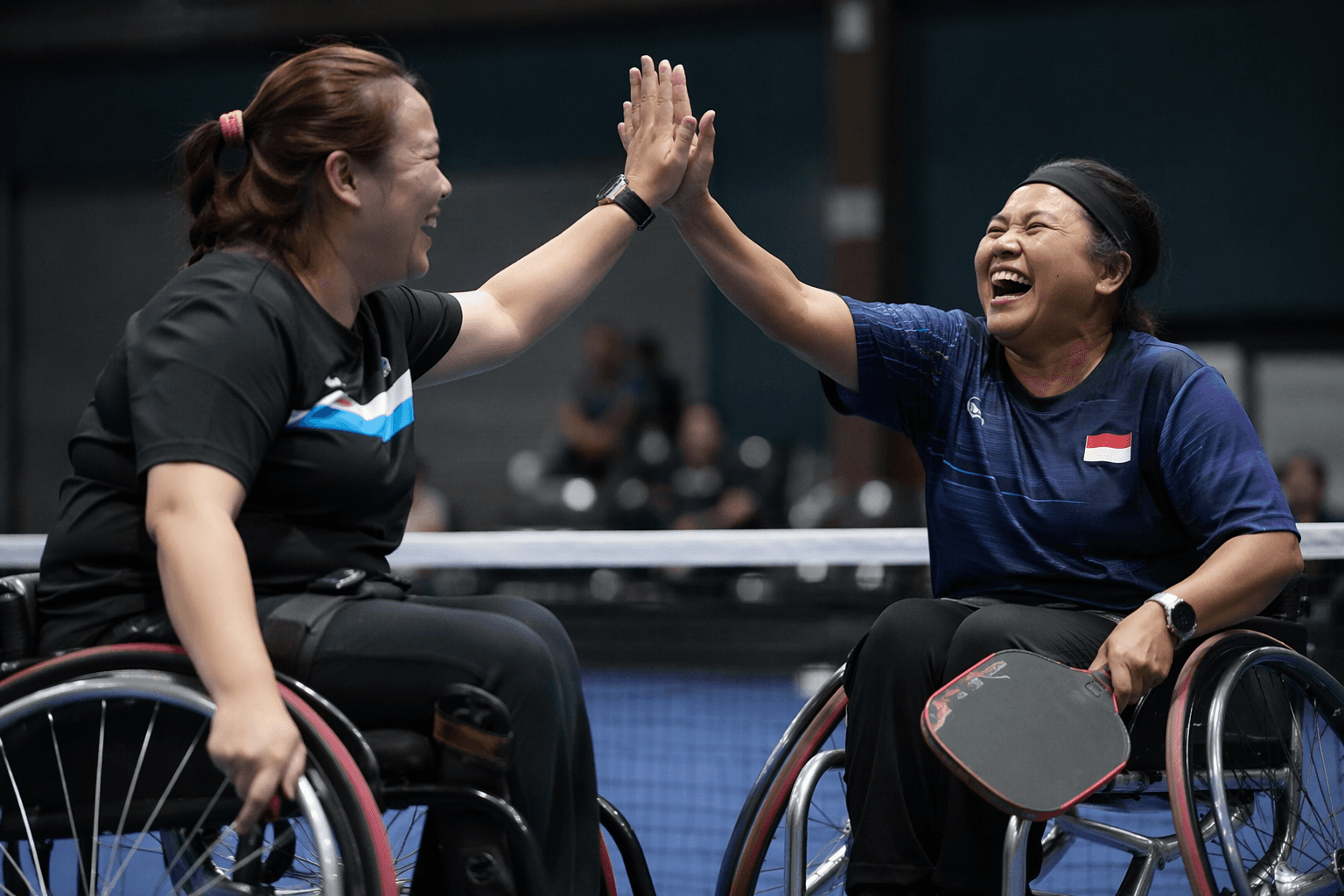
Asia’s para pickleball push is no longer just about adding another event to the calendar. The real change is structural: a common classification system is starting to tell national bodies who belongs in which division, how events should be built, and why Bangkok and Kuala Lumpur are becoming the sport’s anchor points.
Classification is the real infrastructure
The International Paralympic Committee’s core rule for Para sport is straightforward: classification exists to minimize the impact of impairment on competition outcomes, and athletes should be grouped by how an impairment affects sport-specific tasks, not by diagnosis alone. IPPA uses that same logic in para pickleball, starting with confirmation of an eligible impairment, moving through sport-specific Minimum Impairment Criteria, and ending with a classification panel assigning the athlete to a class.
That matters because it creates a shared language across countries that do not all have the same disability systems, coaching depth or tournament history. IPPA’s eligible impairment list includes limb deficiency, impaired muscle power, impaired passive range of movement, hypertonia, ataxia, athetosis, vision impairment, short stature, intellectual impairment and leg-length difference. In practice, that keeps the sport from turning into a patchwork of local exceptions, where one nation’s eligibility rules might not match another’s.
The class map is what turns inclusion into competition
IPPA’s division structure is detailed enough to support real medals, real rankings and real coaching pathways. The sport is broken into dwarf categories PP40 to PP41, standing lower-limb categories PP42 to PP44 and PP-SLA, wheelchair categories PP51 to PP57, and MR and cerebral palsy categories PP20 and PP1 to PP8.
That kind of separation is the difference between participation and a credible competitive ladder. A short-stature player does not have to be bundled into the same field as a wheelchair athlete or a standing player with a lower-limb impairment, and that is what makes fair matchups possible. When the class structure is clear, medals mean something, rankings mean something, and coaches can build repeatable development plans instead of guessing which athletes can be paired together.
IPPA has also tied education to the competition model. Its workshop program is a free four-hour initiative for MR, CP, dwarfism, wheelchair and standing categories, with training, drills and inclusive game play built in. That is the kind of detail that shows the pathway is not being designed only for elite players. It is being built for coaches, local organizers and first-time athletes who need a common entry point before they can reach a championship bracket.
Bangkok is becoming the regional proving ground
IPPA presents its Asian Para Pickleball Championships as a premier event in Bangkok, Thailand, which gives the region a clear stage where classification, fields and event operations can be tested together. The organization’s leadership page names Frank Hooning as president and Nunnapas Pispeng as secretary general, with Raghu Kumar R and Son Huynh Cong listed as Asia representatives and Seoyoon Jane Hong as women’s director. Those names matter because this is not a loose exhibition circuit. It is a governed structure with people responsible for making the system travel across borders.
Bangkok’s value is practical, not symbolic. A regional hub can standardize the same class labels, the same evaluation process and the same event expectations from one country to the next. That is how a player in one nation can show up in another and still find recognizable competition, instead of a new set of rules every time.
Thailand shows what a domestic pipeline looks like
Thailand’s first national Para pickleball wheelchair tournament ran during the Thailand Pickleball Championship 2026 Presented by BRAGG from May 1 to 3, 2026 at Benjakitti Sports Center in Bangkok. The broader event drew more than 300 athletes nationwide, launched an official ranking system for Thai pickleball players, and featured men’s doubles, women’s doubles and mixed doubles in Competitive and Inspiration divisions.
The wheelchair bracket was framed as the first of its kind in Thailand, and the Thai Para Pickleball Club, the Bangkok Metropolitan Administration and other local partners helped support it. Organizers said the tournament pushed Thailand’s pickleball standard closer to international levels, which is exactly the point of a domestic para pathway: one-off participation is not enough if the sport wants repeatable talent production.
That Thai example exposes the practical bottleneck across Asia. Players can only move through the system if a country has access to classification panels, trained officials and enough events to make each class meaningful. Without those pieces, eligible athletes can still be left on the outside looking in, especially in markets where para pickleball is newer and the infrastructure is still being assembled.
Asia’s scale is already there, the task is to organize it
The Asia Federation of Pickleball says it has 18 member countries and an estimated 70,000 players in those countries. At the same time, the broader Asian pickleball calendar is already filling up with pro-tour stops in Singapore, Ho Chi Minh City, Kuala Lumpur, Hong Kong and Shenzhen. That is a serious footprint, and it makes one thing clear: para pickleball cannot remain an afterthought if the region wants a coherent competitive ecosystem.
What Asia needs next is not more improvisation. It needs more aligned national rankings, more coach education, more classification access and more events that use the same language from country to country. Once those pieces are in place, the pathway becomes legible: workshops create coaches, classifiers place athletes, domestic events create rankings, Bangkok validates the system and regional championships give players a target worth chasing.
Kuala Lumpur completes the ladder
IPPA says its inaugural World Championships will be staged in Kuala Lumpur from June 10 to 15, 2028, with invitations extended to players from Asia and other continents. That gives the region a finish line and a benchmark. Bangkok is where the system is being tested, Thailand is showing how a domestic ladder can work, and Kuala Lumpur is the championship platform that can turn a regional structure into something durable.
If Asia keeps building on classification, event design and education at the same pace, para pickleball will stop looking like scattered participation and start looking like a real competitive pathway.
This article was produced by Prism’s automated news system from verified source data, official records, and press releases, then run through automated quality and moderation checks before publishing. The system is built and supervised by the people who set the standards it runs under. Read our full AI policy.
Did this article answer your question?