Asia Pickleball Junior Open 2026 builds pathway for rising talent
Asia’s junior pickleball ladder is getting real: Mahidol University will stage a three-day open with Dallas invitations and 84 already entered.
Why this event matters
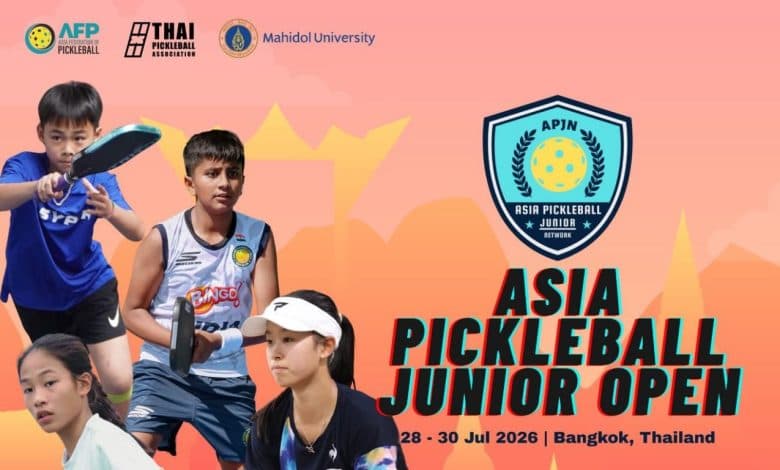
The Asia Pickleball Junior Open 2026 is not being built like a novelty stop. It is being built like a feeder system, and that is the part worth watching. With 84 players already registered for the July 28-30 event at Mahidol University in Salaya, Thailand, the tournament is starting to look less like a youth exhibition and more like a regional benchmark for who is actually developing the next generation.
That matters because Asia’s pickleball future will not be decided by one-off medals alone. It will be decided by which federations can identify juniors early, keep them competing across age bands, and give them a believable route from local promise to international contention. This open is designed to do exactly that.
The setup tells you this is a pathway, not a sideshow
Registration opened on April 10, 2026, and the field has already grown from the 78 sign-ups first reported to 84 registered players. That growth is not just a nice number for a tournament listing. It signals that juniors and their programs are responding to a competition with real stakes, a clear age framework, and a reward structure that goes beyond a weekend of matches.
Eligibility is set by age on July 31, 2026, with a minimum age of 10. Players are also allowed to play up one age category, so a 12U athlete can enter 14U if the level is right. That flexibility matters because it gives strong younger players a chance to accelerate without forcing everyone into the same lane. It is a smarter model than simply packing kids into rigid brackets and calling it development.
The entry fee is USD 40 per event, per participant. The third and fourth event registrations are free after the first two paid entries, which is a practical structure if the goal is to get players into more matches, not fewer. In a junior event, volume matters. More matches mean more learning, more pressure reps, and a better read on who can actually handle the jump in class.
How the three-day schedule is built
The draw is laid out in a way that keeps the competitive ladder easy to follow. On July 28, boys’ and girls’ singles in the 12U and 16U divisions open the event. July 29 is dedicated to doubles across 12U, 14U, 16U, and 18U. The tournament closes on July 30 with boys’ and girls’ singles in 14U and 18U.
That sequencing is deliberate. Singles first tests individual shot-making and temperament, doubles then asks players to adapt to communication, spacing, and discipline, and the final singles day gives the older age groups a last shot at standing out. For a junior event, this is a decent blueprint for development because it mirrors the broader reality of the sport: good players have to win points alone and solve problems with a partner.
The choice of Mahidol University in Salaya also fits the event’s identity. A university venue sends the right signal. It says this is not just about who is good right now, but about where the sport is headed next, especially for juniors who could eventually move into higher education, national programs, and elite competition.
What the rewards say about Asia’s ambition
The sharpest detail in this tournament is the prize pathway. Top-performing medalists will have the opportunity to be invited to the Pickleball World Championships in Dallas, Texas. That changes the meaning of a junior title in Thailand. It is no longer just a trophy on a shelf; it is a possible step into the global conversation.
That is where the Asia Federation of Pickleball deserves credit. The federation’s junior program frames the Asia Pickleball Junior Open as part of a structured pathway from grassroots play to competitive international development. That language matters because Asian pickleball has often been rich in enthusiasm but uneven in systems. A junior circuit only becomes meaningful when players, parents, and coaches can see the next rung on the ladder.
The APJN leadership underscores that this is being treated as an actual program, not a one-off event. The junior structure names Truong Quang Vu as director, JP Huynh Phu Qui as deputy director, and Tran Thi Kim Loi as program developer. In a young sport, the presence of named people with clear roles is not administrative trivia. It is the difference between a calendar and a pathway.
The bigger benchmark: what happened in 2025
The 2026 event is easier to understand when set beside what AFP already proved in 2025. The junior open in Quang Nam Province, Vietnam, drew 246 junior athletes from 10 countries and produced 874 matches across 16 categories. That is not the footprint of a niche regional clinic. That is a serious tournament ecosystem.
It also gives the 2026 edition context that many youth events never earn. AFP said after the 2025 tournament that it planned to strengthen junior development in 2026 by identifying and empowering junior coaches, launching AFP-endorsed junior camps and training series, and introducing an AFP Junior Ranking System. Those are the kinds of investments that separate a growing sport from a mature one. Talent is only half the equation. Coaching, ranking, and repeat competition are what turn raw ability into depth.
That is the real story here for Asia. The next wave of elite players will not emerge because federations hope they do. They will emerge because a region builds enough structure for juniors to keep climbing.

How Asia stacks up against the global model
USA Pickleball’s junior and youth framework offers a useful comparison. Its junior and youth pathway is designed for players under 18 and is intended to lead into advanced tournaments and even collegiate opportunities. It also uses age-bracketed competition and Golden Ticket tournaments, where gold medal winners can earn priority access to the USA Pickleball National Championships.
That model shows what a mature pathway looks like: youth play connected to higher-stakes events, and higher-stakes events tied to future opportunities. Asia is not there yet, but the Asia Pickleball Junior Open 2026 looks like a serious move in that direction. The key difference is whether the region can keep building beyond one marquee junior open and into a year-round system of coaching, rankings, and national-team selection.
Right now, that is the real test for federations across Asia. The countries that treat juniors as the front end of a long-term pipeline will keep producing players who can travel, adapt, and compete under pressure. The ones that do not will keep discovering talent late and watching it stall out early.
The Junior Open in Thailand is valuable because it puts that divide in plain sight. It is not just a tournament on the calendar. It is a measure of which systems are ready to build Asia’s next generation, and which ones are still catching up.
This article was produced by Prism’s automated news system from verified source data, official records, and press releases, then run through automated quality and moderation checks before publishing. The system is built and supervised by the people who set the standards it runs under. Read our full AI policy.
Know something we missed? Have a correction or additional information?
Submit a Tip