Asian Pickleball Association builds one-country, one-vote continental governance model
The APA is turning Asian pickleball into a fight over votes, not just medals. Its 1,000-member threshold and one-country, one-vote model will reshape who leads Asia.
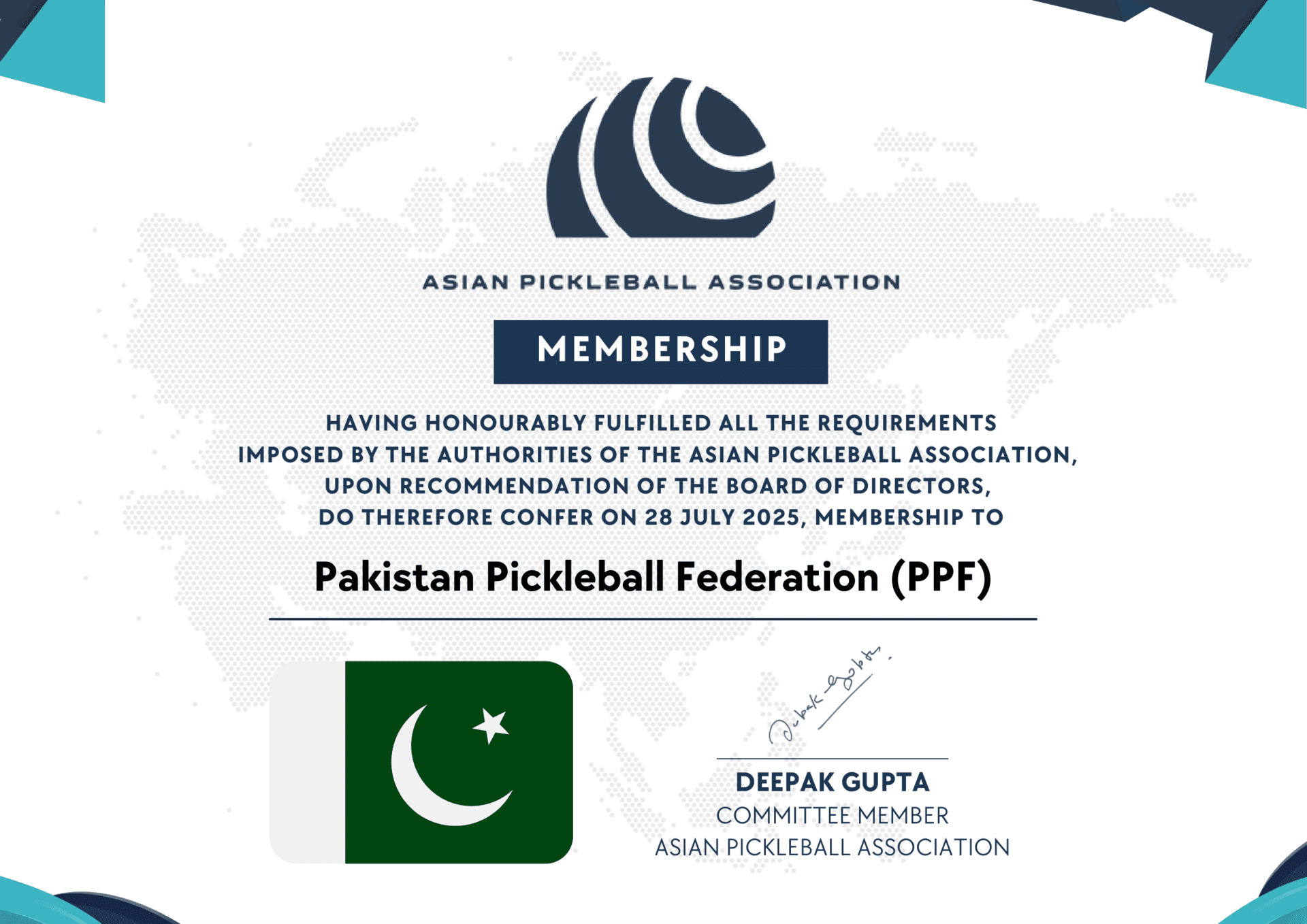
Pickleball in Asia is shifting from a fast-growing pastime into a power map. The Asian Pickleball Association says it is building a one-country, one-vote continental structure across more than 50 countries and territories, with membership tiers that move national bodies from non-voting status toward voting rights. That setup could decide which countries become talent hubs, tournament hosts and eventual rule-setters as the sport hardens into a regional system.
The governance bet behind the boom
The APA is not presenting itself as a loose club network. Its board framework is built around a phased path to one-country, one-vote governance, with committees that may cover membership, officiating, marketing, IOC liaison, tournaments and grants. The published board roster stretches across India, the Philippines, Japan, Hong Kong, Malaysia, Chinese Taipei, Iran, Pakistan, Singapore, Laos and Thailand, and it caps at-large directors from any one country at three.
That matters because Asia does not develop pickleball in a single wave. It is being assembled country by country, with different sports cultures, different languages and different levels of administrative maturity. A continental model like this decides who gets to speak for the sport when a host city wants an international event, when officials need a common rulebook, or when a national federation wants its athletes placed into a wider ranking ladder.
What it takes to get a vote
The APA’s membership rules make the political logic explicit. Class A voting membership requires evidence of at least 1,000 active, dues-paying members, plus the ability to choose a national team and send it to international events. Lower membership classes are non-voting, and applicants must submit bylaws, directors and officers information, board approval documents and English-language governing materials before they can move forward.
That is the real filter in Asian pickleball. Countries that can organize quickly gain a seat at the table, while countries that remain fragmented stay in the audience. In practice, the threshold rewards federations that can register players, collect dues, name officers and operate cleanly enough to satisfy a continental body that wants legitimacy, not just enthusiasm.
Why India and Japan matter
India is the clearest proof of how quickly a national federation can change the regional balance. On May 1, 2025, the Government of India’s Ministry of Youth Affairs and Sports agreed to recognize the Indian Pickleball Association as a National Sports Federation. That kind of recognition turns a domestic association into something much more useful at the continental level: a body that can credibly field teams, negotiate events and speak for the country without a rival claim hovering in the background.
Japan shows a different kind of consolidation. On March 13, 2026, the Japan Pickleball Association and the Pickleball Japan Federation signed a merger agreement that took effect on April 14, 2026, under the unified external name Pickleball Japan. For a continental federation, that is exactly the kind of national streamlining that makes a one-country, one-vote model workable. Unified countries can move faster on rankings, hosting bids and standards; fractured ones spend their energy resolving their own internal disputes.
Where Vietnam, Malaysia and the Philippines fit
Vietnam already has a visible foothold in the competition calendar. The Asia Federation of Pickleball says it hosted the inaugural Asia Pickleball University Championship 2025 in Da Nang from July 17 to 20, with players from eight countries. That is more than a one-off event. Once a city hosts an international field, it becomes part of the regional logistics network, and logistics networks often become talent magnets, sponsor magnets and repeat-event magnets.
The Philippines sits inside the same governance conversation from a different angle. It appears on the APA board roster and also on the Global Pickleball Federation’s Asian member map, which places it among the countries tied to the broader continental structure. If its national body stays unified, it can convert that visibility into votes, event access and a stronger claim on the region’s competitive calendar.
Malaysia illustrates the opposite lesson: being present is not the same as being powerful. A seat in the APA structure helps, but the real leverage comes only when a country can meet the membership standard, document its governance and move from participation into voting status. In a one-country, one-vote system, countries that align early can become agenda-setters; countries that hesitate risk becoming consumers of a system built elsewhere.
The continental prize is recognition
APA’s long-term target is not just a larger membership roll. Its goals page makes the hierarchy plain: recognition from the Olympic Council of Asia, then eventual inclusion in the Asian Games. The Olympic Council of Asia is the body behind the Asian Games and is recognized by the IOC and ANOC, which makes OCA recognition the key political gateway, not a ceremonial badge. The OCA Executive Board approved the sports program for Aichi-Nagoya 2026 on July 15, 2025, and organizers describe that program as a mix of Olympic sports and other sports considered for diffusion across Asia.
That is why APA’s lobbying path matters. Asian Games inclusion will not arrive because the sport is popular on social media or because a few national events are growing quickly. It will come only if national bodies, government authorities and influential sports figures help make pickleball legible to the OCA as a stable, organized and continent-wide sport.
A crowded ecosystem, not a single lane
APA is building its structure inside a crowded institutional field. The Global Pickleball Federation’s member-country page maps APA-linked Asian members across Chinese Taipei, Hong Kong, India, Iran, Japan, Korea, Nepal, Macau, Oman, Pakistan, the Philippines, Singapore and Uzbekistan, showing that the continent’s governance map already extends beyond any one umbrella. The Asia Federation of Pickleball says it has 18 members and estimates 70,000 players in member countries, which signals another layer of regional organization. PPA Tour Asia, meanwhile, brands itself as the region’s premier professional and amateur pickleball tour, adding a commercial circuit on top of the governance race.
That is the real story underneath Asia’s pickleball boom. The countries that unify early, build recognized federations and move quickly into the APA’s voting structure will shape where tournaments land, where talent clusters and who gets to define standards. The countries that resist that consolidation will still have players, but they will have less say in how the sport is organized around them.
This article was produced by Prism’s automated news system from verified source data, official records, and press releases, then run through automated quality and moderation checks before publishing. The system is built and supervised by the people who set the standards it runs under. Read our full AI policy.
Know something we missed? Have a correction or additional information?
Submit a Tip