Chennai hosts Dinked PWR 200, mixed draws raise pickleball stakes
Chennai’s Dinked PWR 200 mattered less for the Rs 1 lakh purse than for what it did to India’s ranking ladder: bigger mixed draws, more points pressure, and a deeper local circuit.
The real headline in Chennai was not the Rs 1,00,000 purse. It was the structure around it, because Dinked turned a city-level pickleball stop into a ranking test that told a bigger story about where Indian pickleball is heading.
Chennai hosted the Indian Pickleball Association-sanctioned PWR 200 over April 18-19, and the format was built to create consequences. Open Men Singles and Open Women Singles were merged into one Open Singles draw, Open Doubles followed the same combined model, and the Intermediate brackets were folded together as well. Split Age Doubles 35+ was also on the card. That setup widened the field, forced players into deeper and less predictable draws, and made every result more valuable in a system where final placement translates into points.
That is the point of a PWR 200. The Indian Pickleball Association classifies it as a city-wide event involving multiple clubs within a single city or metro area, with ranking points awarded by finish. In plain terms, this was not a weekend exhibition. It was one more rung on an official ladder that now matters to players chasing position, recognition and a path into larger events.
Chennai has earned the right to host those stakes. The city already staged Pickleball By The Bay and Music Festival at VGP Golden Beach in Injambakkam in September 2025, an event later described as a PWR 1000 and the biggest in India at the time. Chennai Super Champs also announced a Chennai Open Pickleball Championship in 2025 as a first for the city. Those are not one-off signals. They show a market that is building both showcase events and ranking events, which is how a real circuit starts to take shape.
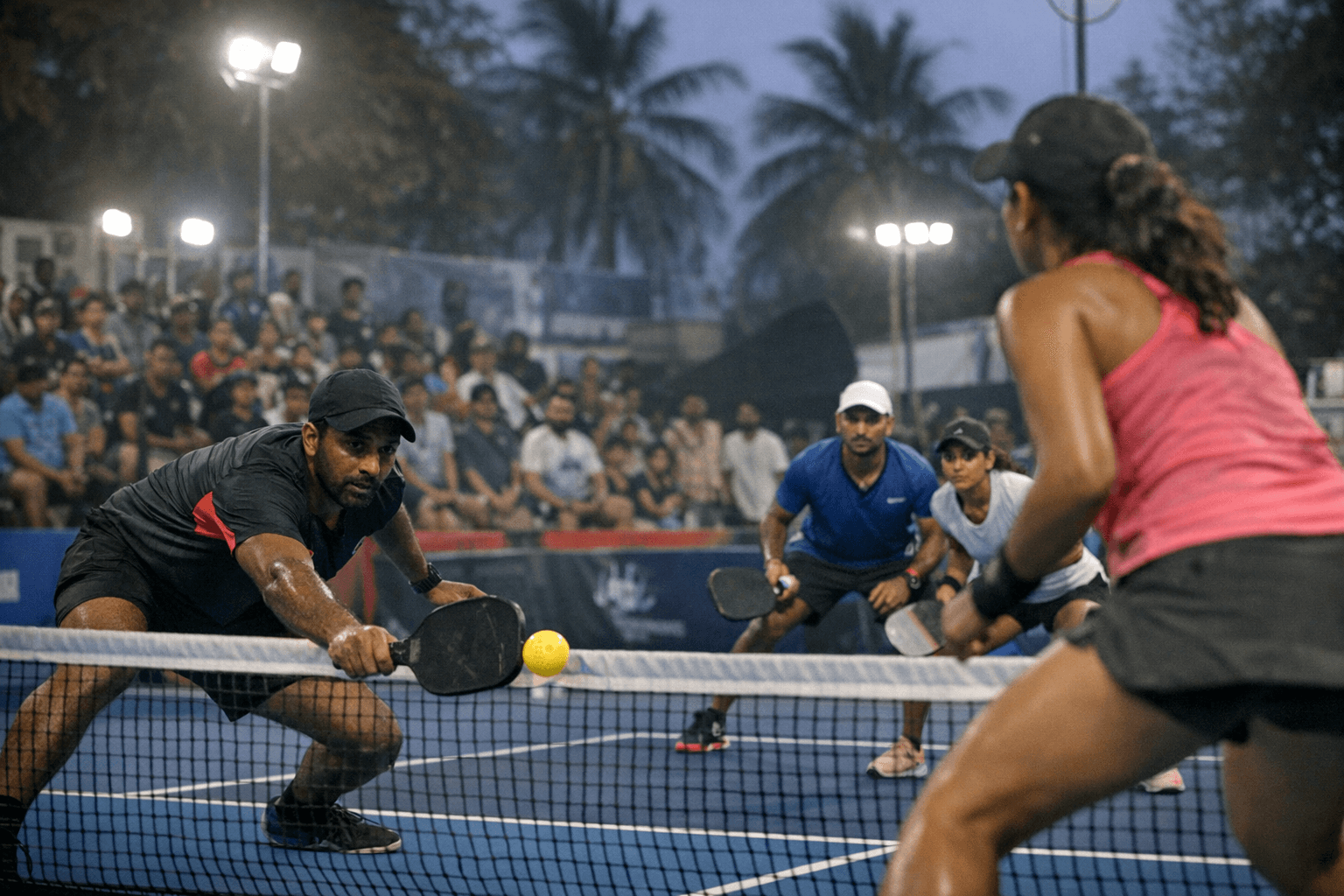
The scale underneath it matters too. In December 2024, Chennai’s first pickleball arena was drawing more than 600 visitors a month, while Tamil Nadu had more than 100 courts, 700 registered players and 2,000 recreational players. By February 2026, the Greater Chennai Corporation had approved a new pickleball court in Thiru Vi Ka Nagar at an estimated cost of Rs 1.52 crore. This is what infrastructure looks like when a sport moves from novelty to planning item.
The comparison with Pune is revealing. A much larger PWR 700 there carried a Rs 15 lakh purse and around 700 participants, which shows how India’s pickleball calendar is stratifying fast, with flagship events at the top and ranking-heavy regional tournaments underneath. Chennai’s Dinked sat in that middle tier, but that tier is where the sport’s competitive pyramid actually gets built.
That depth is already showing in the local player pool. R Harish and Safwan A each won four titles at the 7th Tamil Nadu State Pickleball Championship in Chennai, a reminder that the city is producing players who can turn city events into proving grounds. Dinked was another step in that same direction, and Chennai is no longer just hosting pickleball. It is helping define how the Indian circuit works.
This article was produced by Prism’s automated news system from verified source data, official records, and press releases, then run through automated quality and moderation checks before publishing. The system is built and supervised by the people who set the standards it runs under. Read our full AI policy.
Did this article answer your question?