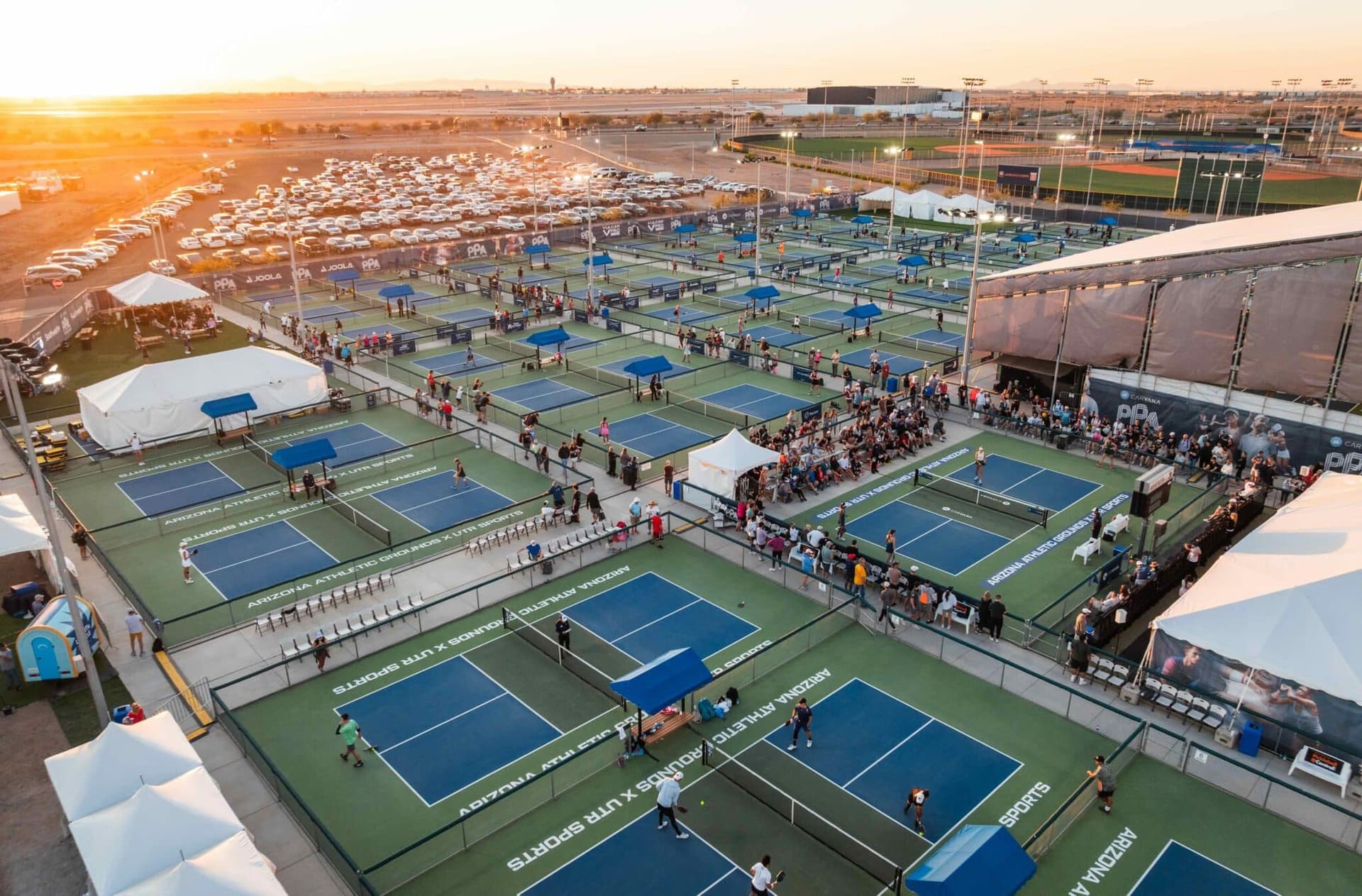
China’s pickleball boom grows as policy support meets grassroots enthusiasm
China is turning pickleball into a mass sport, with grassroots play, official rules and tournament money pointing to a much bigger Asian market.
China’s pickleball boom is leaving the curiosity stage
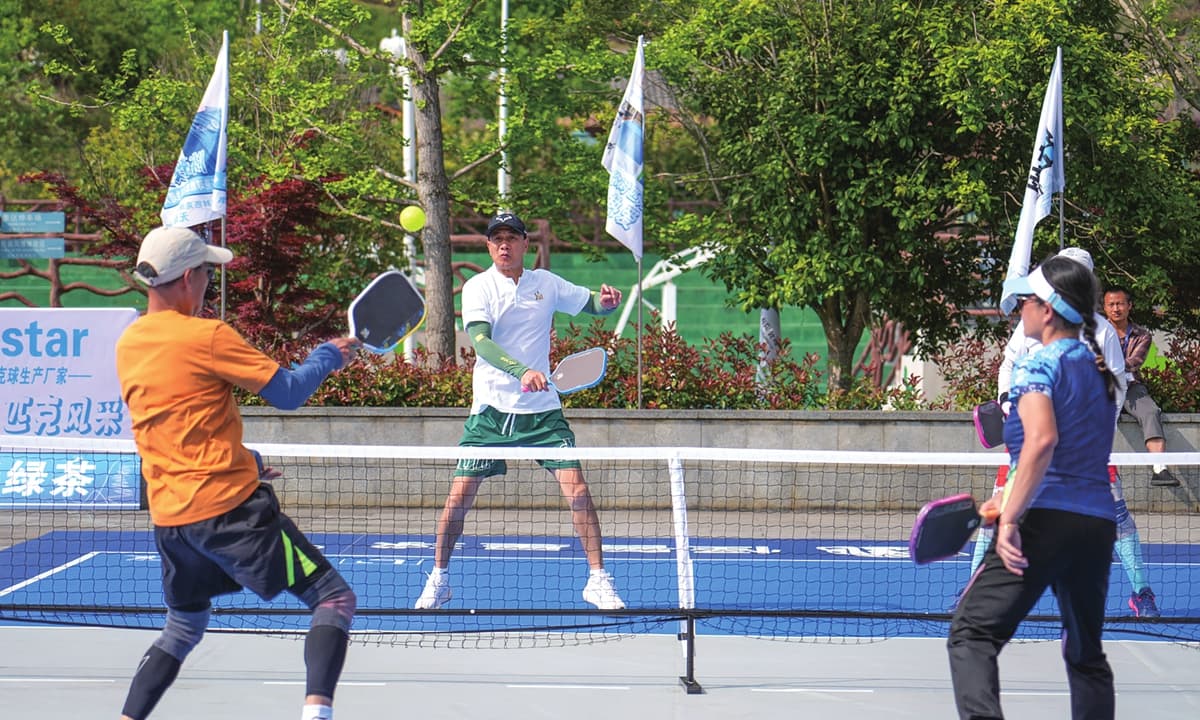
What looked like a niche racket game is starting to behave like a mainstream sports story in China. Weekend players in Chengdu and Guizhou are showing how pickleball’s small courts, light equipment and short learning curve are pulling in newcomers fast, especially in urban recreation circles where time, space and ease of entry matter. A white-collar player in Chengdu captured the appeal simply: the sport feels social, accessible and easier to pick up than badminton.
The social game that fits modern city life
Pickleball’s rise in China is not being driven by elite athletes first. It is being built by ordinary players who want a sport that is less intimidating than many traditional racket options and easier to fit into a busy week. In places like Chengdu and Guizhou, that matters because the sport offers a low-barrier entry point for families, beginners and older players who still want a competitive, active game.
That accessibility is a major reason China matters to the regional pickleball picture. Once a sport becomes easy to try, it stops depending only on hardcore hobbyists and starts competing for casual leisure time, community-center programming and social fitness spend. That is where pickleball is beginning to move in China, and why the country now looks less like a side note and more like one of the sport’s most important new growth markets.
Policy support is giving the sport a real foundation
The grassroots surge would be interesting on its own, but China’s public policy is giving it a much stronger base. The State Council of the People’s Republic of China issued a 2025 policy document encouraging sports consumption and emerging sports events, while broader national sports-development guidelines point toward a domestic sports industry worth more than 7 trillion yuan by 2030. That puts pickleball inside a bigger economic agenda, not outside it.
The General Administration of Sport has also moved to place pickleball inside the official competition structure. The sport is among the required finals events for the second National Fitness Games, scheduled to run from April 2026 through November 2026, with the opening and closing ceremonies and finals set for Shandong Province. That kind of placement matters because it lifts pickleball from a recreational novelty to a sanctioned event with national visibility, local hosting opportunities and an audience far beyond its earliest adopters.
Rules, committees and standardization are speeding up adoption
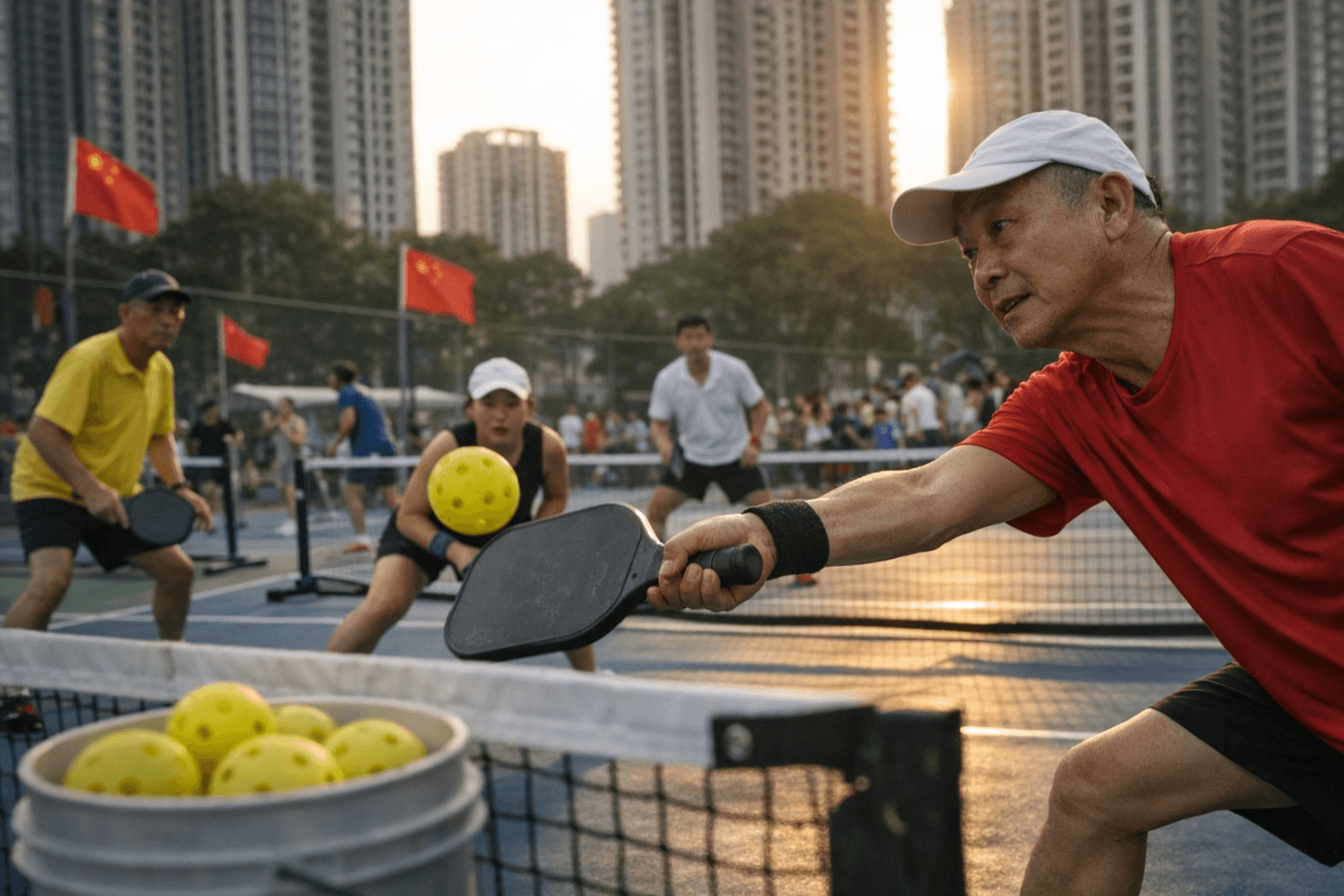
China did not wait for the boom to become obvious before starting to organize it. On November 25, 2023, the Chinese Pickleball Work Committee was officially founded in Guangzhou with 56 representatives present, giving the sport a formal national structure. Then, on June 3, 2024, the General Administration of Sport small-ball management center issued a trial pickleball competition rulebook to standardize development across the country.
That sequence matters because sports do not scale cleanly without rules. The rulebook helps set the boundaries for competition, and the committee provides a mechanism for national coordination. Together, they show that China is not just watching pickleball spread naturally; it is building an administrative lane for the sport to grow inside the country’s broader fitness system.
Guilin showed that pickleball can already move money
The clearest sign that pickleball is becoming more than a pastime came in Guilin in December 2024. The Li-Ning Cup 2024 China Pickleball Tour Finals, the first China Pickleball City Challenge and a national pickleball development seminar brought together 678 athletes, coaches and referees. The tour finals featured 230 players, including 14 from Hong Kong, Macao and Taiwan and seven foreign players, while the first City Challenge drew 46 teams and 448 participants.
The numbers are important, but the business effect may matter even more. Officials said the Guilin events generated more than 32 million yuan in direct consumption. That gives local governments a template they understand immediately: pickleball can fill courts, move visitors through hotels and restaurants, and generate event-led spending. In a country where sports are increasingly measured by participation and consumption, that is the kind of proof point that can accelerate policy support.
Why China could reshape Asia’s competitive map
The scale question is what makes this story bigger than one country’s hobby trend. Industry estimates cited by Global Times put global pickleball participation above 80 million, and Asia is expanding quickly as awareness spreads. China’s entry changes that landscape because the country brings population, sports infrastructure, consumer reach and a fast-growing tournament pipeline all at once.
- more domestic Chinese players entering Asian and international events
- more sponsorship interest as brands chase a larger, easier-to-activate audience
- more coaching and player-development pathways as the sport formalizes
- more competition for existing Asian hubs that helped build the early market
That could reshape the regional pecking order in several ways:
The professional calendar is already responding. PPA Tour Asia has announced China stops including Beijing, Shenzhen and Hong Kong in 2026, and its 2025 tour plans also included a China Slam. That puts China on the pro-tour map, not just the community-play map, and creates a pathway for elite competition to grow alongside grassroots participation.
Courts are starting to show up in everyday city life
The infrastructure story is moving fast enough to be visible on the ground. Beijing’s first outdoor night pickleball venue opened in Chaoyang District in 2025 with five standard courts, a sign that the sport is being built into public leisure life rather than hidden in private clubs. Guangzhou has gone further with a metro pickleball center featuring 10 courts and room for up to 50 players at once.
Those details matter because they show how the sport is finding space in dense urban environments. A court near transit, or a venue designed for after-work play, changes who can participate and when. It turns pickleball into something that fits the rhythm of city life, which is exactly how recreational sports become habits rather than experiments.
China is now treating pickleball as both a fitness activity and a consumption engine. With rules in place, events generating real spending, a national games slot secured and city venues beginning to appear, the sport is no longer just arriving in China. It is starting to scale there, and that shift could alter the balance of pickleball across Asia for years to come.
This article was produced by Prism’s automated news system from verified source data, official records, and press releases, then run through automated quality and moderation checks before publishing. The system is built and supervised by the people who set the standards it runs under. Read our full AI policy.
Did this article answer your question?