From skateboard to pickleball, Tama Shimabukuro becomes Asia’s rising star
Tama Shimabukuro is turning teenage improvisation into tour-level results, and Asia’s next pickleball stop in Kuala Lumpur could turn him from breakout name into must-watch draw.
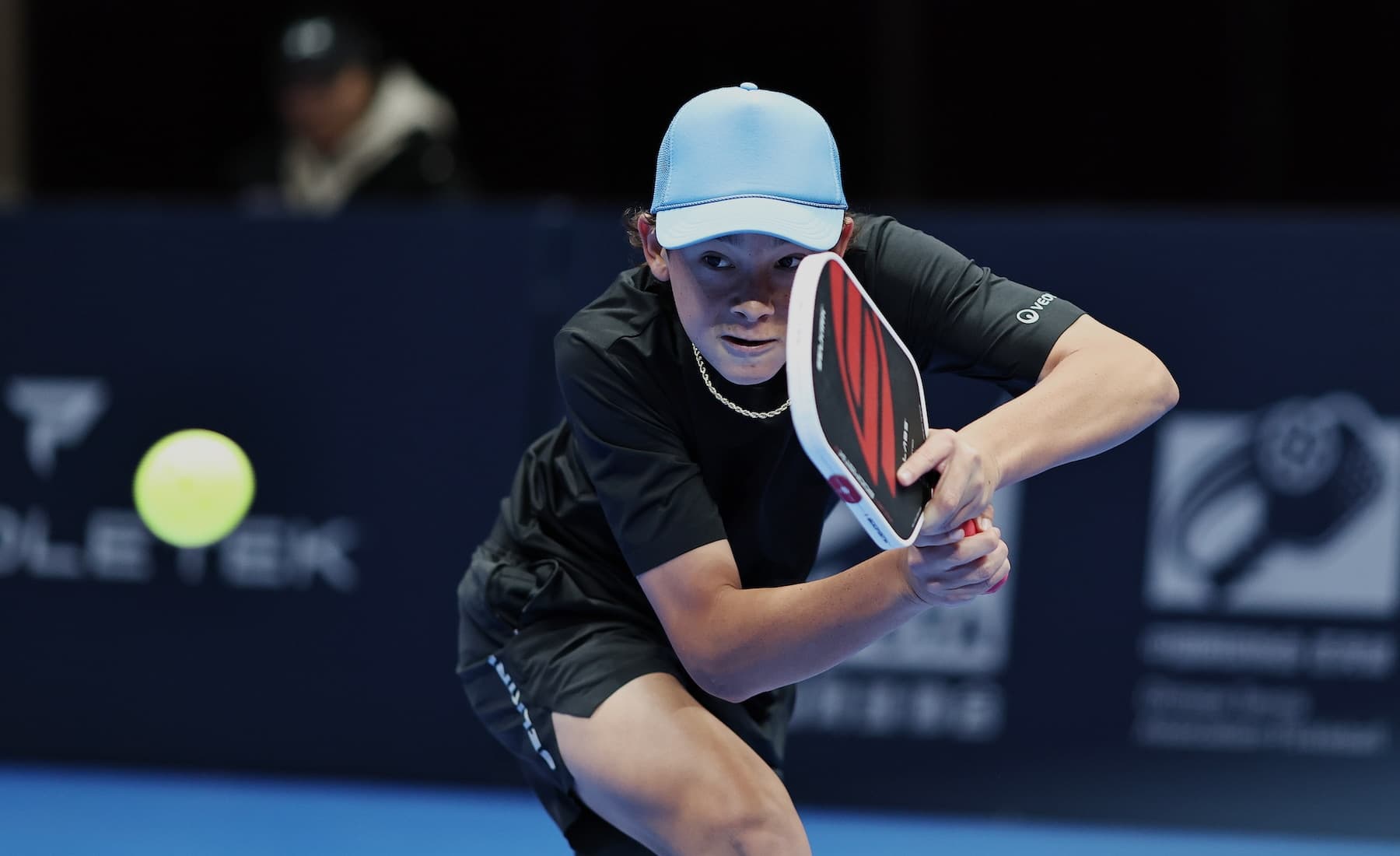
The teenager Asia keeps circling on the draw sheet
A 15-year-old from Honolulu has become one of the most magnetic names in Asian pickleball, and the buzz is no accident. Tama Shimabukuro has gone from novelty prospect to genuine headline draw by pairing a loose, skate-driven style with results that have already landed on some of the sport’s biggest regional stages.
That matters far beyond one player. In a sport still building its identity across Asia, Shimabukuro offers exactly what tournament promoters crave: a young face, a memorable backstory, and wins that make people stop scrolling. His run toward the Panas Kuala Lumpur Open 2026 is not just about one bracket, it is about how pickleball in Asia sells itself now, through youth, personality, and the promise that the next breakout can happen anywhere.
From skateboard to soft hands
Shimabukuro’s appeal starts with the way he plays. PPA Tour says he was born and raised in Honolulu, Hawaii, started playing pickleball only two years ago, and comes from skateboarding and surfing. That background shows up in the way his mother, Tatum Shimabukuro, describes him: he goes with the flow and free-styles it.
That is more than a family soundbite. The balance, creativity, and instinct that come from skate culture and surfing explain why he does not look like a standard junior player trying to survive the pro game. He looks loose under pressure, comfortable improvising, and willing to take the kind of angles and risks that unsettle experienced opponents. In a sport where repetition and control are usually the first things people notice, his style feels fresh enough to stand out immediately.
The origin story is also relatable in the best possible way. His family first noticed a court in California, bought paddles from Target, and started playing. That is the kind of accessible entry point that helps pickleball grow, because it shows the sport can begin as casually as a family outing and still lead to tour-level ambition.
Fukuoka made the teenager impossible to ignore
Shimabukuro’s Asia breakthrough began at the Sansan Fukuoka Open 2025, where he was just 14 and immediately started causing problems for established players. The tournament carried real weight, with PPA Tour Asia listing US$70,000 in pro prize money and 1,000 ranking points. This was not a local exhibition or a feel-good junior cameo. It was a major regional event with meaningful consequences.
He delivered two of them in one day. In men’s singles, he beat Tyler Loong 2-0, 11-5, 11-4. Then he teamed with Xiao Yi Wang-Beckvall in mixed doubles and knocked off Tyler Loong and Pei-Chuan Kao 2-1, 11-6, 6-11, 11-6. Those results turned him from an intriguing name into a player opponents had to prepare for seriously.
That kind of double upset is how a young athlete becomes a tournament story instead of just a development project. The scores were decisive enough to travel, and the names he beat gave them credibility. Tyler Loong is not an anonymous hurdle, and beating him twice in the same stop gave Shimabukuro a legitimacy boost that regional pickleball could not ignore.
The Asia tour kept raising the stakes
After Fukuoka, Shimabukuro’s Asia path continued through Malaysia, Vietnam, and Hangzhou, which is important because it showed Fukuoka was not a one-off flash. The deeper he went into the regional schedule, the more his presence started to feel like part of the tour’s developing identity.
The MB Hanoi Cup 2026 was his strongest regional stop yet. PPA Tour Asia lists it as a PPA Asia 1000 event, and Shimabukuro’s best results there were a men’s singles quarterfinal and fourth place in men’s doubles. That is a meaningful step forward, especially in a field where ranking points and positioning matter as much as the match results themselves.
Hanoi also underlined how fast his rise has been. A player who only started pickleball two years ago was already delivering quarterfinal-level production at a 1,000-point event in early April 2026. For a young athlete, that is the kind of progress that can reshape a tour narrative in a matter of months.

Atlanta confirmed the ceiling is even higher
If Fukuoka announced him to Asia, Atlanta proved he belongs in the wider pro conversation. Reports from the 2026 PPA Atlanta Slam say Shimabukuro entered the men’s singles draw as the 22nd seed and still found his way to the final. Along the way, he beat Federico Staksrud and top seed Hunter Johnson, two results that instantly changed how people talked about his upside.
That kind of run does more than pad a résumé. It tells the sport that his game travels, that the style works against elite opposition, and that his Asia performances were not isolated from the broader pro circuit. For fans and organizers, that is the sweet spot: a player young enough to market as a rising star, but already dangerous enough to justify the attention.
Why Kuala Lumpur feels like the next breakout moment
The Panas Kuala Lumpur Open runs May 13-17, 2026 at 9Pickle, and Shimabukuro is positioned for a triple-crown bid. That alone makes Kuala Lumpur one of the most important stops of his season, because it places him right in the center of the kind of conversation pickleball in Asia wants to have: who can become the sport’s next face, and who can turn a stop on the schedule into a must-watch event.
This is where his story intersects with the sport’s growth engine. Rising fan interest needs recognizable names. Youth participation needs examples that feel reachable. Tournament buzz needs players whose matches people circle before the draw is even finalized. Shimabukuro checks all three boxes because he is young, distinctive, and already producing results against established names.
The larger significance is clear. Asian pickleball does not just need more events, more points, or more venues like 9Pickle. It needs stars who make those events feel bigger than the bracket, and Tama Shimabukuro is becoming exactly that. If the momentum from Fukuoka, Hanoi, and Atlanta carries into Kuala Lumpur, his next chapter will not just be about one teenager’s ascent. It will be about how the sport in Asia learns to build around him.
This article was produced by Prism’s automated news system from verified source data, official records, and press releases, then run through automated quality and moderation checks before publishing. The system is built and supervised by the people who set the standards it runs under. Read our full AI policy.
Did this article answer your question?