India Targets PPA Tour Supremacy, Closes Gap on Asia's Elite
India’s pickleball boom now has a real test: turn huge participation and new medals into PPA Tour power before Vietnam and Malaysia pull away.

India’s case is built on more than hype
India is no longer talking about pickleball like a hobby market. The pitch now is bigger: with hundreds of talented players, a stronger federation, and a growing list of medals, the country believes it can challenge for PPA Tour supremacy in less than two years.
That is an aggressive timeline, especially in a region where Vietnam has long shaped the competitive conversation. But the argument is not empty bravado. India is starting to look like a country that can supply both depth and results, the two ingredients every serious pickleball power eventually needs.
The participation base is already enormous
Times Now reported in June 2025 that India had about 178 million pickleball players, the largest figure in Asia. That same report said 812 million people across Asia had played pickleball at least once a month, which puts India’s scale in context: the sport is not just growing, it is moving into mass-market territory across the continent.
The same survey data also pointed to a more complicated regional map. Vietnam and Malaysia were said to have the highest awareness in Asia, while Malaysia recorded the strongest growth rate over the previous year. In other words, India may lead in raw participation, but awareness and acceleration still belong to rivals that know how to convert attention into competitive systems.
That matters because scale alone does not win pro-tour races. India’s next step is turning a massive player base into a narrower stream of elite talent that can travel, adapt, and win against the best in Asia and beyond.
The federation shift changed the ceiling
The clearest structural change came on May 1, 2025, when India’s Ministry of Youth Affairs and Sports recognized the Indian Pickleball Association as the national sports federation for pickleball. The IPA now describes itself as the National Sports Federation of Pickleball in India, and that recognition gives the sport a more formal base for rankings, tournaments, and player development.
That institutional shift matters because every serious sports pipeline depends on it. Recognition brings more than status; it helps create the conditions for better coaching, more organized competition, and a clearer pathway from local courts to international events. India also hosted the Pickleball Asia Cup 2025 later in the year, a sign that the country is no longer just producing players but also hosting the kind of events that shape regional credibility.
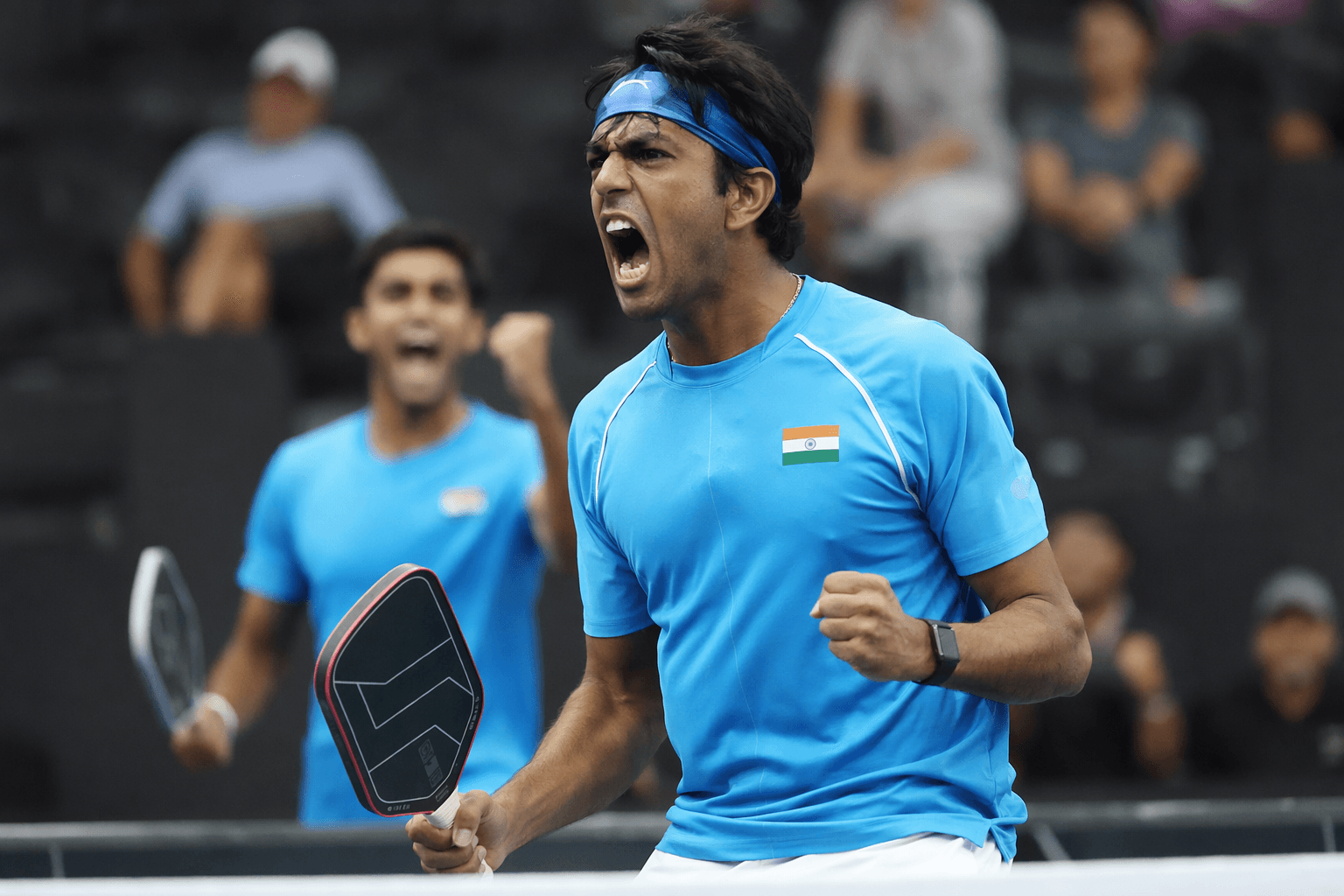
For a market trying to catch Asia’s elite, this is the difference between growth and structure. India now has a governing framework that can support a pro-tour push, which is why the idea of challenging the region’s best no longer sounds like a fantasy built on numbers alone.
PPA Tour Asia is the real scoreboard
The launch of the first PPA Tour Asia season in 2025 gave the region its most visible pro benchmark yet, and the early rankings already reveal the hierarchy India is trying to climb. After the opening event, Vietnam’s Trinh Linh Giang sat at No. 1 in men’s singles, while India’s Vanshik Kapadia emerged among the early Indian names in the frame after earning silver at the opening Malaysia event.
That is the central tension in India’s rise. The country can point to depth, but the first hard marker on the tour still belongs to Vietnam. If India wants to overtake Asia’s elite, it must do more than place players in the conversation; it has to stack ranking points, win big draws, and show up repeatedly in the final rounds.
The economics of the circuit underline the stakes. The PPA Tour Asia Vietnam Cup carried US$150,000 in prize money and 1,500 ranking points, a combination that rewards both performance and consistency. The MB Vietnam Open 2025 in Ho Chi Minh City drew 356 players, and the Vietnam Cup in Da Nang pulled 566 players, which shows the scale of the new pro ecosystem India is entering.
Medals are the proof of concept
India’s strongest argument is that the medals are already coming. Reporting in July 2025 said Indian players won multiple medals at major international events in Malaysia and Vietnam, which is exactly the sort of result that turns participation into legitimacy. The broader pattern suggests that India is not just fielding more players; it is starting to field the right ones.
That momentum continued at the Pickleball World Cup 2025, where Team India reportedly won 25 medals and finished 7th overall, the only Asian country in the top 10. For a sport still building its international map, that is a telling outcome: India is already operating as a bridge between Asia’s developing talent base and the global medal table.
Later in the year, India reportedly won gold at the Asian Pickleball Championship 2025 in Bengaluru, beating South Korea 3-1 in the final. That result matters beyond the trophy case. It shows India can host the big stage, handle pressure in a continental final, and beat another emerging Asian contender in a direct title match.
What India would still need to become the region’s top power
If the claim is going to hold, the pipeline has to keep moving in four directions at once.
- Talent depth: the 178 million-player base has to keep producing players who can transition from participation to elite competition.
- Training infrastructure: federation recognition must translate into organized coaching, stronger event calendars, and more access to high-level match play.
- Sponsorship and professional support: serious players need a path that makes international travel, training, and competition sustainable.
- International exposure: regular appearances on the PPA Tour Asia circuit, especially in point-heavy events like the Vietnam Cup, are essential if Indian players are going to climb fast enough to matter.
This is where Vietnam still holds an advantage. It has already set the early pace on the tour, and Malaysia’s growing awareness suggests another market is building the same kind of competitive depth India is trying to assemble. India can win the participation war and still lose the performance race unless those pieces line up quickly.
The real test is whether the growth becomes a system
India’s pickleball story has moved from novelty to infrastructure to results. Recognition from the Ministry of Youth Affairs and Sports, a 178 million-player base, medals in Malaysia and Vietnam, a 25-medal World Cup run, and an Asian title in Bengaluru all point in the same direction: this is a country building something real.
The next two years will decide whether that becomes regional dominance or just a very large, very active market. If India keeps converting breadth into podiums and starts winning the biggest PPA Tour Asia points, the center of gravity in Asian pickleball will shift fast.
This article was produced by Prism’s automated news system from verified source data, official records, and press releases, then run through automated quality and moderation checks before publishing. The system is built and supervised by the people who set the standards it runs under. Read our full AI policy.
Did this article answer your question?