India’s urban youth trade gully cricket for booming pickleball courts
India’s kids are not quitting cricket so much as losing the space for it. Pickleball is winning because it fits the city, and the city is only getting denser.
The new playground is a booked court
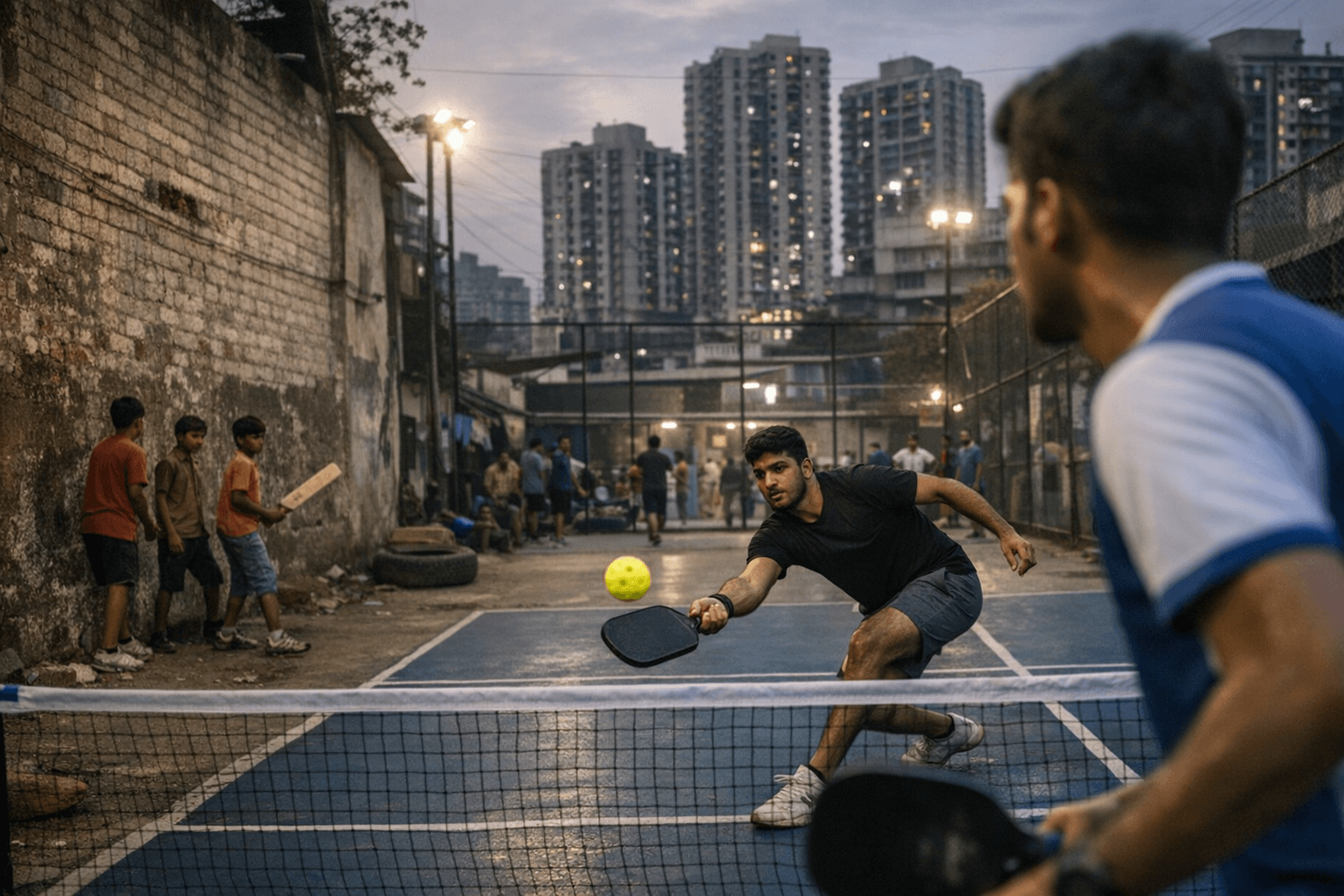
The oldest pickup-game ritual in India is getting squeezed out of the street. Where gully cricket once filled every open patch, more schoolkids are now showing up to pre-booked pickleball courts, and that shift says as much about urban life as it does about sport. Cricket still carries the country’s deepest cultural weight, but pickleball is winning the practical battle: it works in gated schools, residential clubs, rooftops and other spaces that make sense in a dense city.
That is why this story matters beyond a fresh racquet trend. Pickleball is not just taking off because it is new. It is taking off because the urban landscape is changing faster than informal play can keep up, and India’s children are adapting to the spaces they actually have.
Why cities are changing what play looks like
India’s urban growth explains a lot of this shift. By 2036, the country’s towns and cities are projected to house 600 million people, or 40% of the population, up from 31% in 2011. The World Bank also says nearly 70% of the urban infrastructure India will need by 2047 has yet to be built. That is a blunt way of saying the supply of open, free play space is not keeping pace with the demand for it.
For children and adolescents, that shortage is not abstract. UNICEF India and the National Institute of Urban Affairs have documented deep disparities between poor and non-poor children in urban India, which reinforces the reality that safe recreation is unevenly distributed. In the better-off pockets of the city, courts can be booked. In the denser and poorer neighborhoods, even the idea of regular, safe play space is far less reliable.
Pickleball thrives in that gap. It is small enough to be slotted into schoolyards and clubs, organized enough to be scheduled, and accessible enough to become part of after-school life rather than an improvisation on the street.
The numbers behind the boom
India’s pickleball rise accelerated sharply after COVID-19, according to players and local organizers, and the player count backs that up. Registered players under the country’s governing body rose from around 10,000 in 2021 to about 60,000 in 2024. That is not a gentle climb. That is a sport moving from curiosity to infrastructure.
The game’s roots in India go back to 2008, when Sunil Valavalkar brought pickleball to the country and formed the All India Pickleball Association. A few years later, the sport had another proof point when AIPA president Arvind Prabhoo helped bring the Bainbridge Cup to India in 2022. Those moments matter because they show this is not a fad that appeared overnight on social media. There is an institutional base underneath the surge, and that base is now feeding the wider youth boom.
One player’s description captures how fast the sport has colonized urban life: after 2021, he said, “every area, every society has a pickleball court.” That line sounds exaggerated until you look at how quickly the sport has spread across India’s city map.
Why kids are choosing pickleball over gully cricket
Cricket will always be the heavyweight. It is woven into Indian childhood, neighborhood identity and national imagination. But gully cricket depends on a very specific kind of city: one with spare corners, willing neighbors and enough open space to turn a lane into a pitch. Urban India is becoming less forgiving of that improvisation.
Pickleball offers the opposite value proposition. It is easy to schedule, easy to fit into a compact footprint and easy to move into spaces that already have walls, boundaries and managed access. That is why the game is showing up in school campuses and private venues instead of waiting for the street to make room.
There is also a cultural shift embedded in the rules themselves. A teenage player in Tamil Nadu described the game as easier and fun because it is less stringent in rules than other racquet sports. That matters for young players entering sport through recreation rather than elite training. If the barrier to entry is lower, the sport can move faster from one neighborhood to the next.
Chennai shows how demand is reshaping the day
Chennai is one of the clearest examples of the sport’s new rhythm. Venues there were opening so early that one operator said they were asked to open at 6 a.m. That is a real signal of demand. People are not waiting for prime evening slots or weekend novelty. They are reshaping the schedule around the court.
The spread is not limited to the city center either. New venues were also opening across Tamil Nadu, including three courts in Coimbatore and two in Salem. Those numbers are modest on paper, but they show the pattern that matters: pickleball is no longer just a metropolitan talking point. It is moving outward into the kind of city network where sports usually either scale quickly or stall out.
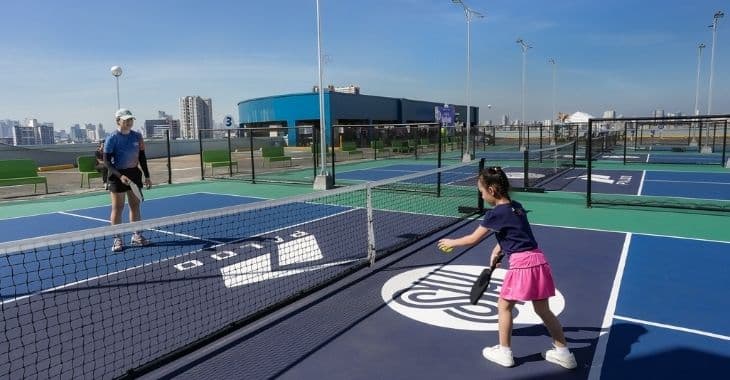
That spread is visible beyond Tamil Nadu as well. In 2025, Delhi examples included courts on rooftops, in schoolyards, in farmhouses and in residential clubs. That mix tells the whole story in one frame. The game is becoming part of the built environment, not an activity that waits for empty land to appear.
What the Delhi model says about the future
Delhi’s version of the trend is especially revealing because it shows how private access is replacing public improvisation. A rooftop court is not the same thing as a neighborhood maidan. A schoolyard with a booked slot is not the same thing as kids gathering after class and making up a match on the fly. The sport is expanding, but the terms of access are narrowing around who can find, book and pay for space.
That is why pickleball in India is bigger than a racquet-sport story. It is a lens on urban childhood itself. The children picking up paddles instead of tennis balls or cricket bats are not necessarily rejecting old sports. They are responding to a city where informal play has become harder to stage and easier to replace with something scheduled, compact and commercially organized.
The key question now is not whether pickleball can grow in India. It already has. The real test is whether this remains an urban premium trend or becomes the first clear sign of a broader youth sports reset, one shaped by density, private courts and the practical limits of modern city life. For now, the evidence points to a sport built for the India that is actually being constructed, not the one that still lives in memory.
This article was produced by Prism’s automated news system from verified source data, official records, and press releases, then run through automated quality and moderation checks before publishing. The system is built and supervised by the people who set the standards it runs under. Read our full AI policy.
Did this article answer your question?