Can U.S.-trained players close the China table tennis gap?
The China gap is less about talent than infrastructure. U.S.-trained players are closing pieces of it, but volume, sparring, and standardized elite habits still separate the systems.
The uncomfortable truth is that the gap is not really about hand speed or touch. It is about the machine behind the player, and China’s machine is still built to produce more elite table tennis than the United States can match on a typical day.
That is why the question is not whether a U.S.-trained player can ever beat a Chinese-developed player in a given match. It is whether an American pipeline can repeatedly create the habits, opponents, and pressure that turn one upset into a real standard. Right now, the answer is still difficult. But it is no longer hopeless, and that matters.
The system is the separator
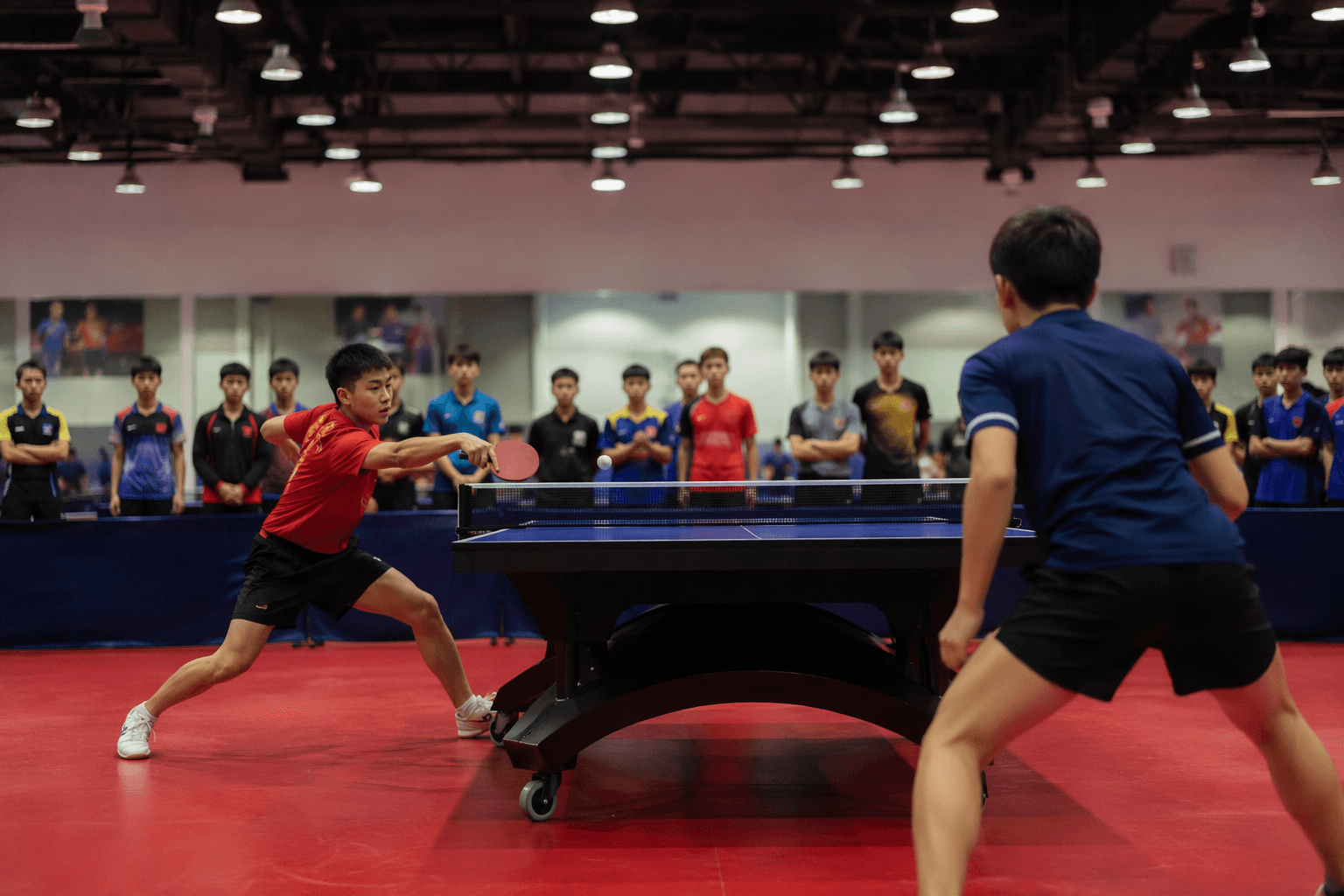
China’s edge starts with structure. Scholarly research describes its table tennis setup as an effective three-level training system, league system, and coach system, which is exactly the kind of language that tells you this is not just a country with good players. It is a country with layers of competition and coaching that keep feeding the next level.
The results are almost absurd by global standards. China has won 230 gold medals across the Olympics, World Championships, and World Cup since its first world title in 1959. It also swept all 12 table tennis gold medals at the 2008, 2012, and 2016 Olympics. Those numbers do not just reflect dominance. They reflect repetition, depth, and a national environment that keeps elite standards normalized from an early age.
That is the part U.S.-trained players are trying to catch. The challenge is not merely finding one gifted prospect. It is building a daily setting where elite level play is ordinary, coaching is dense, and the next hard match is never far away.
Where the U.S. is trying to close the gap
The clearest sign of change is 888 Table Tennis Center in Burlingame, California. USA Table Tennis designated it a National Training Center on April 23, 2024, and says it is one of only two such centers in the country. That matters because the American system has long lacked enough full-time, high-performance hubs that look and feel like the places where top international players are made.
USATT says the center has 40 professional-grade tables, international standard facilities, and a dedicated high-performance program. It is also supposed to serve as the primary hub for elite athlete development programs, national team training camps, and other high-performance initiatives. In plain English, this is the U.S. trying to build the kind of training density that China has spent years taking for granted.
That density is the missing ingredient more often than raw American talent. A player can have good hands, good feel, and good athletic instincts. If the training environment is thin, though, those skills do not get stress-tested often enough against a deep enough field to become automatic under pressure.
What still remains structural
This is where the argument gets more serious. The hard part is not just getting better coaching. It is creating enough sparring depth that top players are pushed every day by other players who also understand elite tempo, serve receive patterns, and transition play.
China’s system benefits from constant internal pressure. Players grow up in environments where high-level table tennis is everywhere, where the league structure supplies meaningful matches, and where coaching methods are standardized enough that talent is not left to wander. A U.S.-trained player may improve quickly in a strong center, but the broader ecosystem still offers fewer chances to face a deep field of similarly prepared opponents.
That is why the gap remains structural even when individual Americans break through. One or two excellent players do not create a production line. They create evidence that the line can exist.
The proof that progress is real
Kanak Jha is the clearest example of what American development can still produce. At the Paris 2024 Olympics, he reached the men’s singles round of 16, the furthest any U.S. men’s player has advanced in Olympic table tennis. That run topped Jimmy Butler’s round-of-32 finish at the 1992 Olympic Games in Barcelona, and it reset the ceiling for what U.S. men’s table tennis can claim on the sport’s biggest stage.
Jha’s recent domestic results show the standard has not faded. USATT’s national champions page lists him as the U.S. men’s singles national champion in 2024 and 2025. That is the profile of a player who is not just a one-tournament story, but a sustained benchmark for the American pathway.
Lily Zhang offers the women’s side of the same argument. She is a four-time Olympian, with appearances in 2012, 2016, 2020, and 2024. Team USA says she began training professionally at age 7 and has competed internationally since 2007, which is the kind of long runway that world-class table tennis usually requires. USATT also lists her as the U.S. women’s singles national champion in 2024 and 2025.
What a realistic pathway looks like
If you are trying to map the road for a U.S.-developed player, the lesson is not mystical. It is operational.
- Start young enough that elite technique becomes normal, not exotic. Zhang’s career, beginning professional training at 7, shows how early the clock starts.
- Train in a dense environment, not a one-off camp setting. The point of 888 TTC is not the building alone. It is the volume of quality repetitions that the building can host.
- Seek repeated elite sparring, not just isolated tournament peaks. The Chinese edge comes from routine exposure to strong opposition.
- Use domestic titles as checkpoints, not destinations. Jha and Zhang winning U.S. singles titles in 2024 and 2025 shows who is setting the pace at home, but home pace is only part of the equation.
- Build competition habits that mirror international pressure. League play, national training camps, and a standardized high-performance culture matter because they reduce the shock of stepping into elite events.
The realistic answer is not that the United States has to copy China perfectly. It does not. But it does need more places where elite work is the default, more coaching depth, and more players who are forced to solve hard problems every day instead of once every few months.
That is why the story is bigger than one athlete. A U.S.-trained player can absolutely become world class, and Jha and Zhang prove that. But to close the China gap in a lasting way, the United States has to keep building the environment that makes world-class performance repeatable. Until that happens, the gap will narrow in flashes, not in bulk.
This article was produced by Prism’s automated news system from verified source data, official records, and press releases, then run through automated quality and moderation checks before publishing. The system is built and supervised by the people who set the standards it runs under. Read our full AI policy.
Know something we missed? Have a correction or additional information?
Submit a Tip