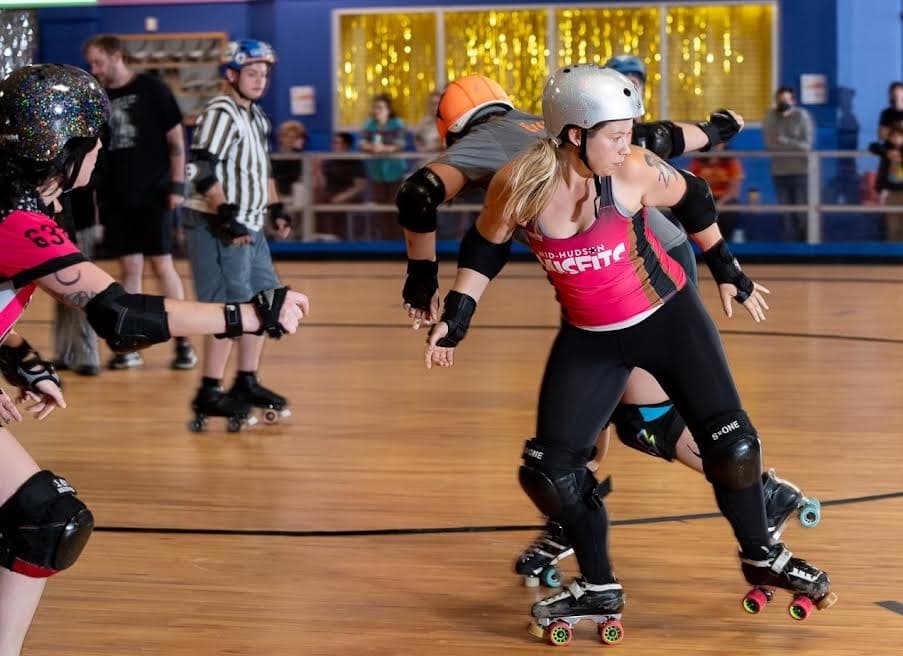
El Paso Roller Derby builds community, confidence, and resilience on flat track
El Paso Roller Derby is more than a bout night. Its nonprofit flat-track model has turned hard skating, trust, and local access into a durable community anchor.
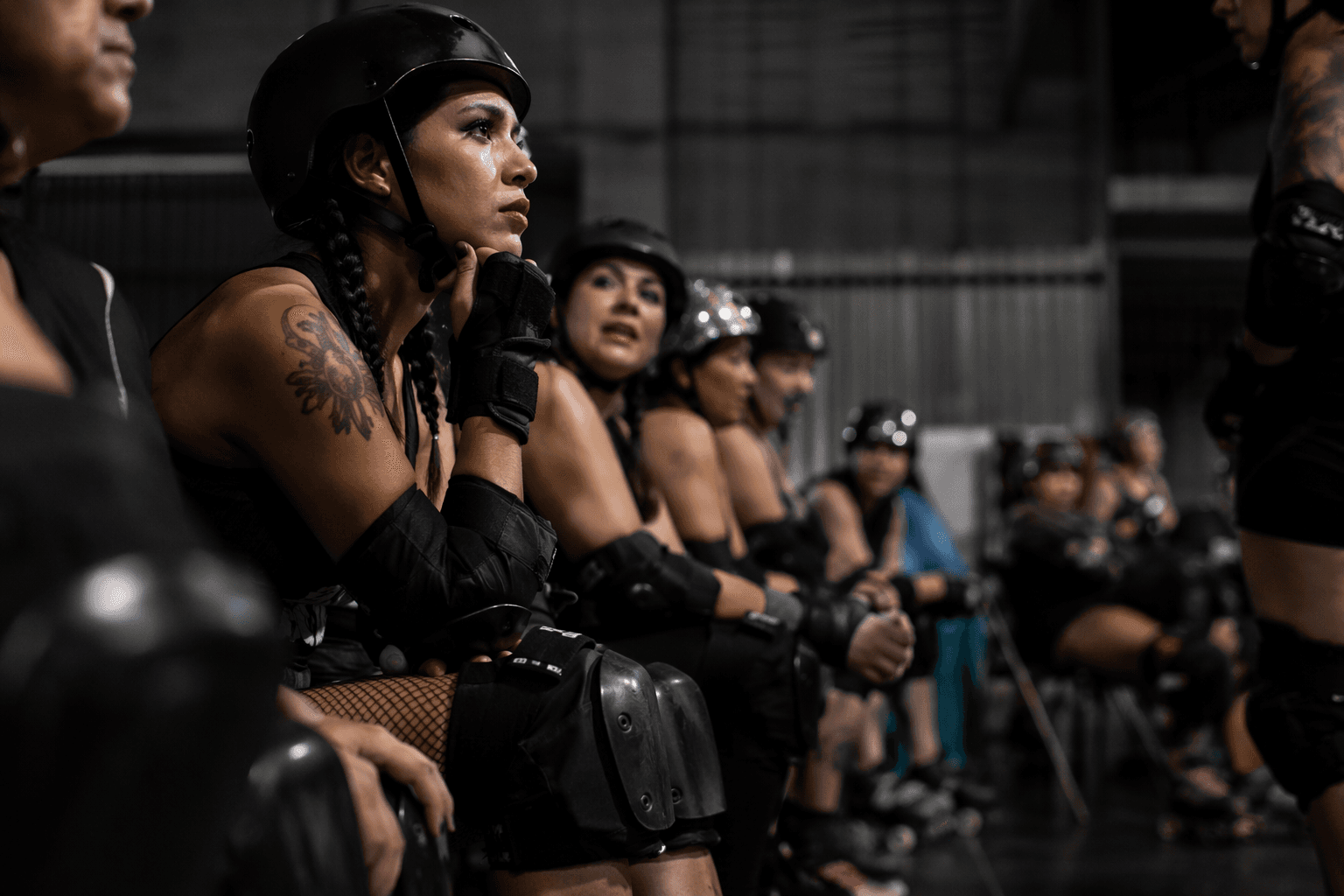
El Paso Roller Derby has spent 16 years showing that a flat track can double as a community anchor. The league describes itself as El Paso’s original nonprofit flat-track roller derby league, “empowering skaters and fans since 2010,” and the structure matters as much as the contact. It is built for competition, but it keeps skaters coming back because the practices, the roster culture, and the local identity all point in the same direction.
A nonprofit league with a fixed home base
El Paso Roller Derby is a 501(c)(3) nonprofit, which puts it in a different lane from a typical rec league or a casual pickup group. The league practices and plays at Nations Tobin Sports Center, 8831 Railroad Dr. in El Paso, and also lists outdoor practice at Radford, 900 Radford St. in El Paso. Those are not abstract mailing addresses. They are the physical footprint of a league rooted in Northeast El Paso and spread across the city in a way that keeps derby visible, local, and accessible.
The league says it first rolled onto the flat-track scene in September 2010, and that timeline matters because longevity is part of the story here. In a sport where many teams come and go, El Paso Roller Derby has built continuity through a nonprofit model that allows the league to operate as a community institution, not just a lineup on a schedule. That setup helps explain why the league can talk about athleticism, confidence, and community in the same breath without sounding like it is reaching for a slogan.
Where El Paso fits in the wider derby map
The Women’s Flat Track Derby Association began in 2004 and serves as the international governing body of women’s flat track roller derby. El Paso Roller Derby’s place inside that system gives the league a competitive lane that extends well beyond city limits. WFTDA lists El Paso Roller Derby as the only roller derby league in El Paso County that plays flat track roller derby at a competitive, WFTDA-ranked, national level.
That distinction is the real marker of what this league has become. It is local, but it is not isolated. The league’s affiliation history shows an apprenticeship period from January 1, 2012 to March 11, 2014, then full WFTDA status from March 11, 2014 to the present. That progression tells you the league did not just survive long enough to matter. It moved through the structure, earned status, and stayed active inside the sport’s broader competitive framework.
TexPistols keep the competitive edge alive
The league’s stats page identifies TexPistols as El Paso Roller Derby’s team, and the recent schedule shows a program that is still very much on the clock. El Paso hosted Tucson on April 11, 2026, and the next bout listed is September 12, 2026 against Juarez at Nations Tobin Recreational Center. Those dates matter because they show a league that is not merely preserving a tradition. It is still tracking opponents, booking bouts, and competing against regional opponents in a live derby calendar.
For fans who follow the sport closely, that kind of continuity is the tell. A league like this does not build credibility only through its name or its history. It builds it by showing up for sanctioned competition, keeping a team identity around TexPistols, and maintaining a schedule that connects El Paso to the wider Southwest derby circuit. The track work is the proof.
Why skaters stay after the first hit
The strongest human detail in the league story comes through Kamikaze, a second-year skater who joined with a friend and stayed because the league gave them community and a way to channel the pressure of a stressful job into something demanding and confidence-building. That is the part of derby that outsiders miss when they reduce the sport to hits and speed. The physical intensity is real, but the deeper value is that the sport gives skaters a controlled place to convert pressure into performance.
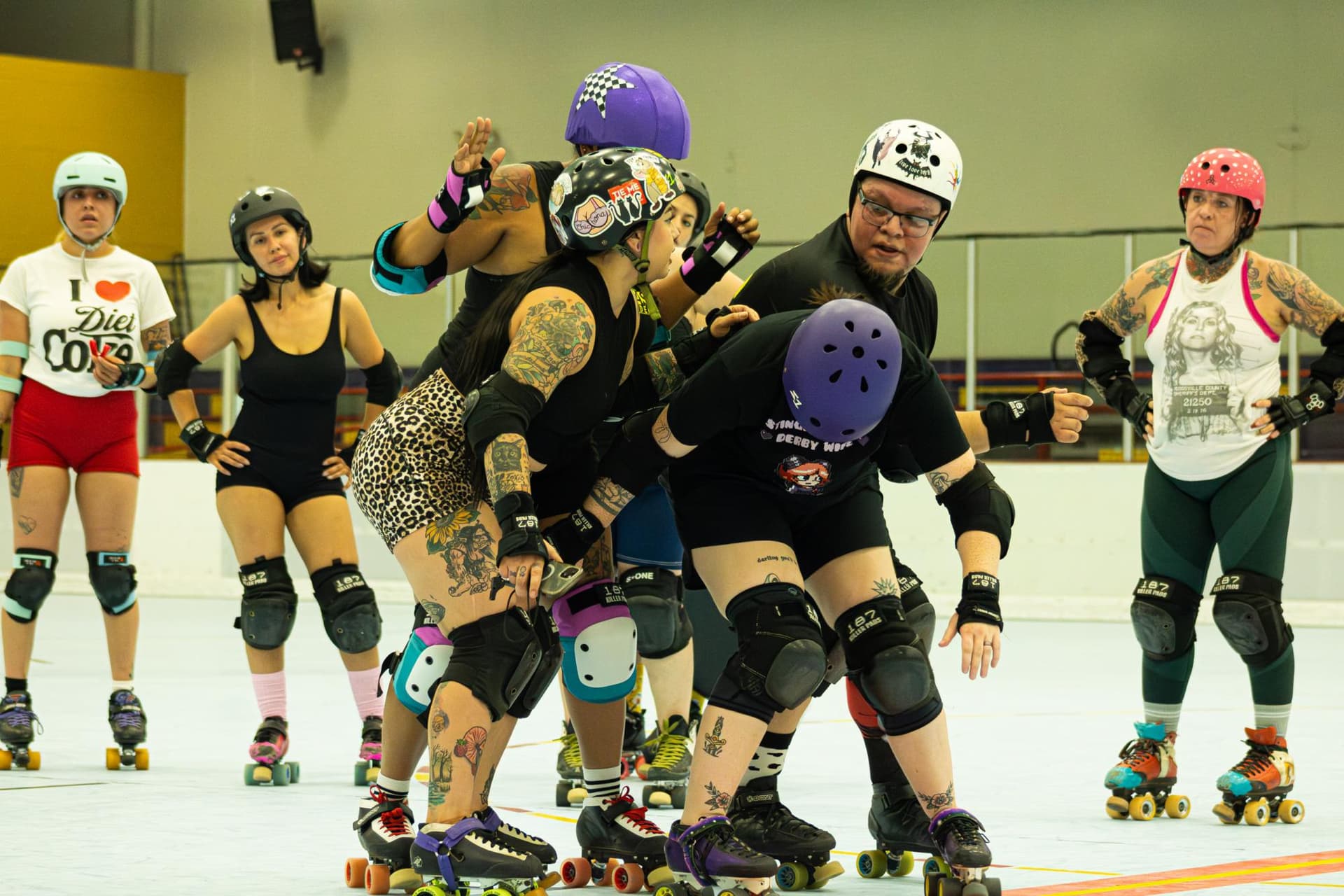
That is why derby often functions as more than competition. It becomes a support system, an identity anchor, and a place where athletic growth and emotional resilience are built at the same time. In El Paso, that connection is especially clear because the league’s nonprofit structure gives skaters room to support one another while staying tied to a larger local mission. The track is where the contact happens, but the payoff shows up in confidence, commitment, and the sense that people are building something together.
Nicknames, inclusion, and the door into the sport
Skater nicknames are one of derby’s most recognizable cultural markers, and in El Paso they are treated as something personal and meaningful rather than a gimmick. That tradition gives skaters an identity that feels earned, chosen, and often more expressive than what they carry into the rest of their lives. It is one reason derby still stands apart from more conventional amateur athletics.
The league’s public materials also say it welcomes all genders, which expands the path into the sport beyond a narrow idea of who belongs on skates. A member intake event listed for August 6, 2025 welcomed skaters, refs, non-skating officials, and volunteers, required participants to be 18 or older, and said no experience was needed. That matters because it shows how the league functions as a pipeline, not just a roster. People can enter through skating, officiating, or volunteering, then grow into a role that keeps them connected to the league.
El Paso Roller Derby’s value is not limited to the scoreboard, and that is exactly why it endures. With TexPistols still competing, a September 12, 2026 bout against Juarez on the calendar, and a base built on nonprofit access and WFTDA legitimacy, the league keeps proving that the best community sports programs do two things at once: they compete hard, and they make room for people to become more than they were when they arrived.
This article was produced by Prism’s automated news system from verified source data, official records, and press releases, then run through automated quality and moderation checks before publishing. The system is built and supervised by the people who set the standards it runs under. Read our full AI policy.
Did this article answer your question?